A ceasefire in name only doesn't save lives. It just shifts the timing of the bombs. That is exactly what families across southern Lebanon are realizing as the latest round of military orders makes one thing clear: the diplomatic breathing room engineered weeks ago is rapidly suffocating.
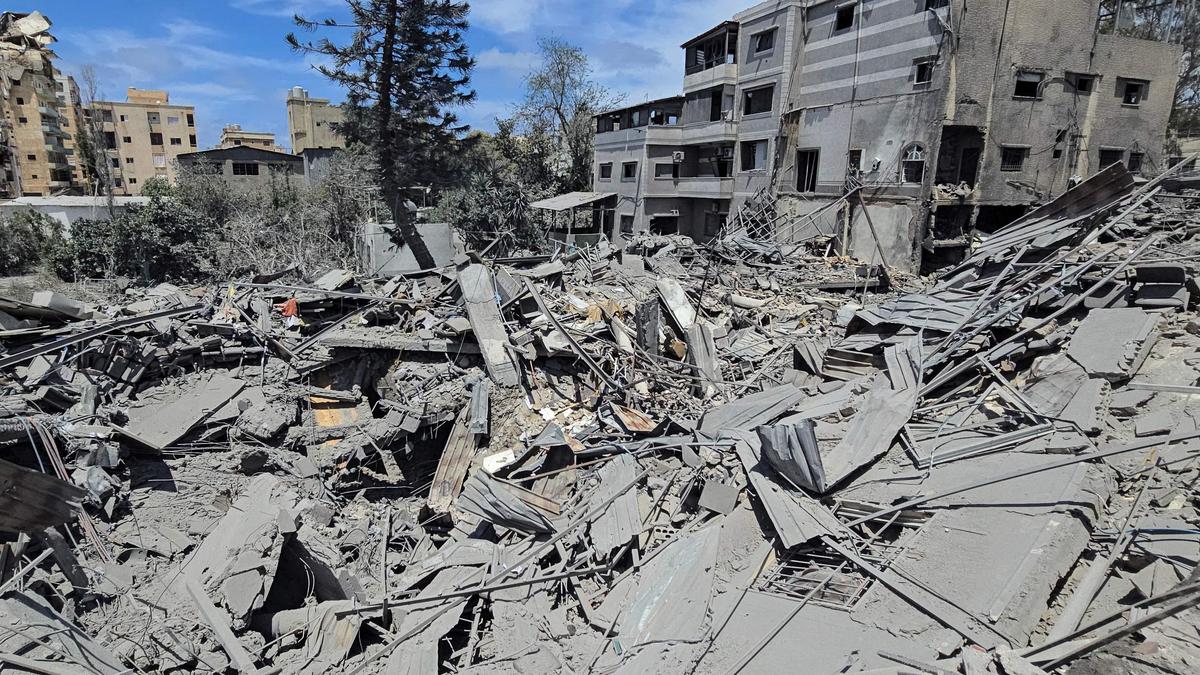
The Israeli military just issued an urgent, sweeping evacuation order for 12 towns and villages in southern Lebanon. It’s a direct signpost that a major kinetic escalation is happening despite the active truce brokered back in April. If you think a ceasefire means the guns go silent, you aren't paying attention to how modern regional conflicts are actually fought. Recently making headlines in this space: The Architecture of Digital Repression Analyzing Indonesias State Sponsored Information Operations.
Let’s unpack what is happening on the ground, why the diplomatic narrative doesn't match reality, and what this means for the civilians stuck in the middle.
The Illusion of a Truce
When a temporary ceasefire was extended, there was a brief collective sigh of relief. But on the ground, it’s been a phantom peace. The Israel Defense Forces (IDF) Arabic-language spokesman, Col. Avichay Adraee, posted a blunt message on X telling residents of specific southern hubs to pack up and get out immediately. More information on this are explored by USA Today.
The target list includes heavy-population zones and strategic crossroads:
- Toura
- Nabatiyeh at-Tahta
- Habboush
- Al-Bazouriyah
- Tayr Debba
- Kfar Houneh
- Ain Qana
- Libbaya
- Jibshit
- Ash-Shehabiyah
- Burj al-Shamali
- Houmine al-Faouqa
The military directive wasn’t subtle. Residents were told to move at least 1,000 meters away from any zone near Hezbollah operatives, assets, or tactical equipment. The IDF explicitly blamed "Hezbollah's continued violations of the ceasefire" as the forcing mechanism for the new offensive operations.
But if you look at the timeline, neither side ever really stopped.
Why the Diplomatic Math Fails on the Ground
We keep seeing the same loop play out. Diplomats sit in well-appointed rooms in Washington or European capitals, draft a text, sign a piece of paper, and declare a temporary halt to hostilities. Meanwhile, the actual conditions that trigger the fighting remain entirely untouched.
Israel claims its current wave of airstrikes and ground actions are defensive responses to continuous ceasefire breaches by Hezbollah. They aren't entirely wrong about the incoming fire. Right on cue, Hezbollah announced it launched a swarm of attack drones targeting Israeli troop concentrations and military vehicles inside northern Israel and along the border zones. Sirens are still howling in northern Israeli towns, and the IDF recently confirmed intercepting an unmanned aerial vehicle (UAV) crossing the frontier.
It’s a classic chicken-and-egg dilemma of modern warfare. Israel says it strikes because Hezbollah won't stop moving assets and firing drones. Hezbollah says it fires drones because Israeli jets are still conducting overflights, launching targeted missile strikes, and running massive demolition operations inside Lebanese territory.
The structural problem is the "yellow line." Israeli ground forces have established an operational zone extending roughly 10 kilometers north of the border. Within this perimeter, engineering units have been systematically flattening structures to deny cover to militant groups. To the Lebanese government and Hezbollah, an active occupation and demolition campaign during a supposed truce is an active act of war. To Israel, it’s a non-negotiable security buffer. You can't square that circle with a diplomatic press release.
The Human Cost by the Numbers
Let's look at the hard data, because the numbers tell a far grimmer story than the official political statements. The Lebanese Health Ministry updated its tracking metrics, confirming that the death toll inside Lebanon has hit 3,020 people since this specific phase of the war ignited on March 2.
The demographic breakdown of those losses highlights the collateral reality of fighting in dense municipal areas:
- 211 children and minors under the age of 18 have been killed.
- 116 healthcare and rescue workers have lost their lives while operating in the strike zones.
On the flip side of the ledger, the IDF has reported the loss of 20 soldiers and one civilian contractor inside the southern Lebanese theater since ground operations commenced.
Behind these numbers lies a massive economic catastrophe. Lebanon was already dealing with a multi-year financial meltdown before the first artillery shells dropped. Now, the entire southern agricultural belt is a no-go zone. Businesses in Tyre, Nabatiyeh, and even parts of Beirut have completely shuttered. Inflation is spiking again, supply chains are broken, and over 1.6 million people are internally displaced. People aren't just fleeing bombs; they're fleeing the total collapse of their daily survival systems.
The Fragmented Leadership Dilemma
If you want to know why a permanent solution feels impossible right now, look at the internal politics on both sides. Lebanese President Joseph Aoun explicitly stated his framework for an actual peace deal: a total Israeli withdrawal, a structural ceasefire, the exclusive deployment of the regular Lebanese Army along the southern border, the organized return of displaced citizens, and emergency international economic aid.
Aoun openly admitted he is trying to "do the impossible" to stop the bleeding. But here’s the problem: Aoun doesn't control the weapons in the south. Hezbollah does.
Hezbollah operates as a state within a state, answering to its own command structure and its patrons in Tehran rather than the official government in Beirut. The militant group has explicitly stated its opposition to the ongoing diplomatic talks hosted in Washington. When the official government of a country enters a negotiation but has zero physical capability to enforce the terms on the dominant armed faction inside its borders, the negotiations are essentially theatrical.
What Happens Next
If you are a civilian or an analyst trying to navigate this landscape, don't look at the ceasefire declarations. Look at the logistical movements. When a military tells 12 distinct municipalities to empty out and move a kilometer away from any potential target, an escalation in heavy artillery and airstrikes is imminent.
Here is what you need to watch over the coming days:
- The Sidon Bottleneck: The primary evacuation route for citizens fleeing these 12 towns leads directly toward the Sidon district. Expect severe humanitarian congestion, strained local resources, and immediate supply shortages in those receiving zones.
- Drone-Airstrike Escalation Cycles: Watch for a tightening pattern of localized tit-for-tat strikes. A Hezbollah drone attack on northern Israeli infrastructure will almost certainly be answered by deeper, high-payload strikes on southern Lebanese towns, irrespective of any nominal truce agreements.
- The Diplomatic Posture: Pay attention to whether the negotiation tracks in Washington dissolve completely or if the mediators attempt to patch together yet another short-term extension. If the political tracking fails completely, the current localized operations will quickly expand back into a full-scale regional air and ground campaign.
The immediate reality is brutal. If you are anywhere near the designated red zones in southern Lebanon, the only rational move is to treat the ceasefire as non-existent and follow the physical evacuation paths northward. Relying on diplomatic semantics in an active combat theater is a luxury no one on the ground can afford right now.