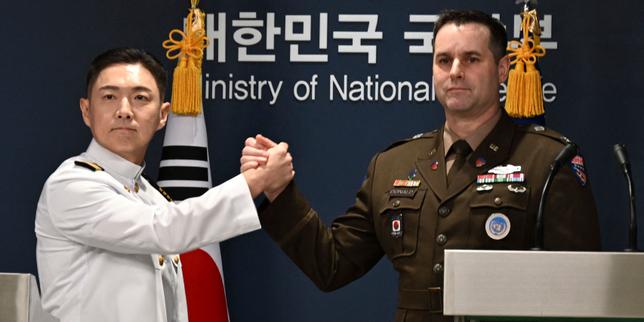
The Ulchi Freedom Shield exercises represent a structural adjustment in the defensive posture of the United States and the Republic of Korea. Rather than a routine iteration of previous training cycles, this exercise configuration acknowledges a fundamental shift in the regional threat model: the integration of lessons derived from the Ukraine conflict by the Democratic People’s Republic of Korea (DPRK). The objective is no longer merely to preserve conventional parity, but to insulate command-and-control infrastructure against an adversary possessing combat-tested insights into modern asymmetric warfare.
The Three Drivers of Doctrine Modification
The tactical focus of the current exercises is determined by three variables that have reached a critical threshold.
- Field-Tested Asymmetry: The DPRK’s participation in the Ukraine theater provides its military personnel with firsthand exposure to high-intensity, drone-centric combat. This is a qualitative leap. An adversary that has observed the tactical deployment of inexpensive, lethal unmanned systems and refined its understanding of integrated air defense suppression presents a new challenge to traditional static defense concepts.
- Infrastructure Vulnerability: Electronic warfare (EW) capabilities, specifically GPS interference and signal disruption, have demonstrated the fragility of networked military systems in Eastern Europe. The current exercise structure prioritizes hardening resilient communications to ensure that, in the event of a kinetic strike or severe electronic interdiction, decentralized units remain operational.
- Cross-Domain Integration: Defensive planning now requires a multi-vector response. The incorporation of cyber-defense exercises alongside physical maneuver simulation reflects the reality that modern conflict initiation often occurs in the digital domain to paralyze decision-making loops before the first artillery shell is fired.
Quantifying the Strategic Risk
The security dilemma on the Korean Peninsula rests on a volatile feedback loop. Seoul and Washington categorize these exercises as defensive measures to ensure deterrence continuity. Conversely, Pyongyang interprets the same maneuvers as a precursor to an offensive operation.
The core risk is not merely the exercise itself, but the "lessons learned" variable. If Pyongyang effectively operationalizes the integration of drone swarms with precision-guided munitions—a synthesis witnessed in the current European theater—the defensive calculations for the Seoul metropolitan area become significantly more complex. The potential for a sudden, decentralized strike capability forces the ROK-US Combined Forces Command to move away from rigid, centralized command structures toward a framework that emphasizes rapid, autonomous local response.
Analytical Breakdown of Operational Priorities
The shift toward a "new level of deterrence" necessitates a specific allocation of resources and training focus.
- Cyber-Kinetic Hardening: The training simulates scenarios where digital infrastructure, including government administrative systems, faces simultaneous disruption. The intent is to maintain civilian-military continuity, ensuring that societal collapse does not track with tactical military failure.
- Decentralized C2 (Command and Control): The reliance on large, vulnerable communication nodes is being audited. The emphasis is now on small-unit autonomy, where tactical decision-making can proceed even when satellite-linked assets are compromised.
- Sensor Saturation Management: The proliferation of cheap drone technology creates a "fog of war" that blinds command centers. Training now mandates the use of non-GPS navigation backups and optical reconnaissance to maintain situational awareness in a degraded electronic environment.
Constraints and Failure Points
No defensive posture is comprehensive. The limitation of current strategic planning lies in the speed of technological diffusion. Defensive countermeasures are inherently lagging; they respond to existing capabilities rather than emerging ones. If Pyongyang accelerates the integration of AI-driven targeting or sophisticated automated logistics alongside the lessons learned in Ukraine, the defensive gap could widen despite these exercises.
Furthermore, the domestic political cost of maintaining high-readiness exercises, compounded by international pressures from neighbors who view these drills as provocative, limits the duration and intensity of the simulation. Sustaining long-term readiness requires consistent institutional memory within the command structure, yet the rotating nature of personnel in the 28,500-strong US contingent creates periodic voids in localized knowledge.
Strategic Action
Focus on the development of "low-signature" defense networks. The tactical mandate for the ROK-US alliance must be the total removal of reliance on singular, high-value assets for battlefield intelligence. Strategic investment should prioritize the mass deployment of low-cost, redundant, and autonomous sensing arrays that can survive a high-intensity electronic disruption environment. By saturating the battlefield with inexpensive, distributed sensing capabilities, the alliance minimizes the impact of localized drone swarms or EW attacks, forcing the adversary into a war of attrition they cannot win.