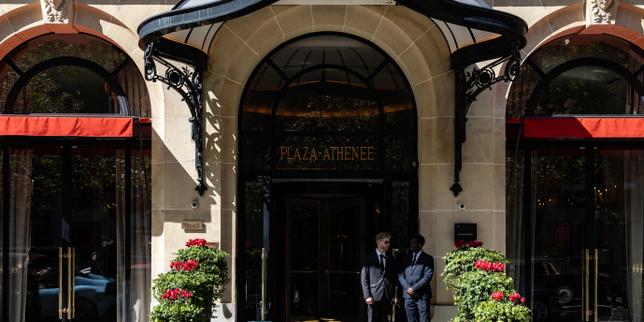
Luxury hospitality thrives on an invisible paradox. The entire business model of a five-star Parisian palace depends on offering absolute sanctuary while keeping the entry doors porous enough for high-spending global elites. When Malian businessman Oumar Gambi checked into a renowned luxury hotel in the French capital, he walked into a high-stakes arena where this paradox fractured completely. A meticulously orchestrated heist stripped him of valuables estimated at one million euros, transforming a private suite into a crime scene that laid bare the vulnerabilities of Europe's most exclusive establishments.
The incident was not merely a random street mugging or a clumsy smash-and-grab. It was an inside-track operation executed with clinical precision in an environment where guests pay thousands of euros per night specifically to avoid such realities. Security protocols that look impenetrable on corporate brochures crumbled under the weight of professional targeting.
To understand how a seven-figure theft occurs inside a fortress guarded by private security and closed-circuit television networks, one must look past the police reports and examine the economic ecosystem of high-end European tourism.
Parisian palaces operate on discretion. Staff members are trained to be ghosts—helpful, omnipresent, yet socially invisible. This cultural imperative of privacy creates a massive operational blindspot. When discretion becomes the highest corporate virtue, verification often takes a backseat. Porters, valets, maintenance crews, and room service personnel form a complex chain of subcontractors and permanent employees. In many cases, luxury properties rely heavily on outsourced staffing agencies to manage peak seasons or VIP influxes, diluting background-check rigor.
Professional thieves study these operational chains for months. They do not target a hotel on a whim. They map out shift changes, blind spots in hallway camera coverage, and the exact physical architecture of historical buildings where modern electronic locks must coexist with 19th-century structural constraints.
Oumar Gambi’s profile fits a specific target category. High-net-worth individuals from emerging markets often travel with portable wealth—high-end watches, rare jewelry, and significant cash reserves—due to the complexities of international banking transfers or simply as a status marker within elite transnational networks. When these assets are stored in standard room safes rather than heavily guarded basement vaults, they become prime targets for individuals who know exactly what tools to bring.
The physical mechanics of the theft reveal a high degree of technical competence. Modern hotel room safes are rated for security, but the electronic override systems and master maintenance codes are frequently vulnerable to administrative exploitation or sophisticated signal interception. Whether the perpetrators used a cloned master key, an encoded electronic bypass, or exploited a momentary lapse in physical security while the suite was unoccupied, the result was absolute efficiency.
Beyond the immediate financial loss, the incident triggers a quiet panic within the executive suites of the luxury hospitality sector. Paris remains the global capital of luxury tourism, but security incidents involving high-profile international guests threaten the city's reputation as a safe harbor for global capital.
Insurance markets are tightening their grip on these properties. Underwriters are demanding rigorous compliance audits, forcing general managers to choose between maintaining the illusion of effortless hospitality and implementing intrusive, airport-style security measures. Neither option is commercially attractive. Guests paying premium rates do not want to walk through metal detectors or submit to bag checks in the lobby. Yet, leaving traditional vulnerabilities unaddressed invites catastrophic losses and devastating public relations fallout.
Law enforcement agencies handling the investigation face a delicate diplomatic and technical challenge. High-profile robberies involving foreign business figures often intersect with transnational organized crime syndicates operating across Eastern Europe, North Africa, and Western European capitals. These networks specialize in fencing high-value luxury goods within hours of a heist, routing stolen watches and bespoke jewelry through shadowy secondary markets where provenance documents are easily forged or ignored.
The investigation into the Oumar Gambi case highlights the limitations of municipal policing when confronted with ultra-mobile, highly specialized criminal cells. By the time local authorities secure forensic footprints, the physical evidence has often crossed international borders, buried deep within a clandestine economy that treats luxury theft as a low-risk, high-return enterprise.
For the hospitality industry, the path forward requires a brutal reevaluation of risk management. The era of relying solely on polite discretion and basic door locks is over. High-end hotels are increasingly forced to invest in predictive threat intelligence, biometric access logs for staff-only zones, and advanced interior motion analytics that do not infringe upon guest privacy while neutralizing internal and external vectors of compromise.
Until these measures become universal standards rather than optional upgrades, the luxury palaces of Paris will remain glittering targets for those who view elite hospitality not as a sanctuary, but as an open vault.