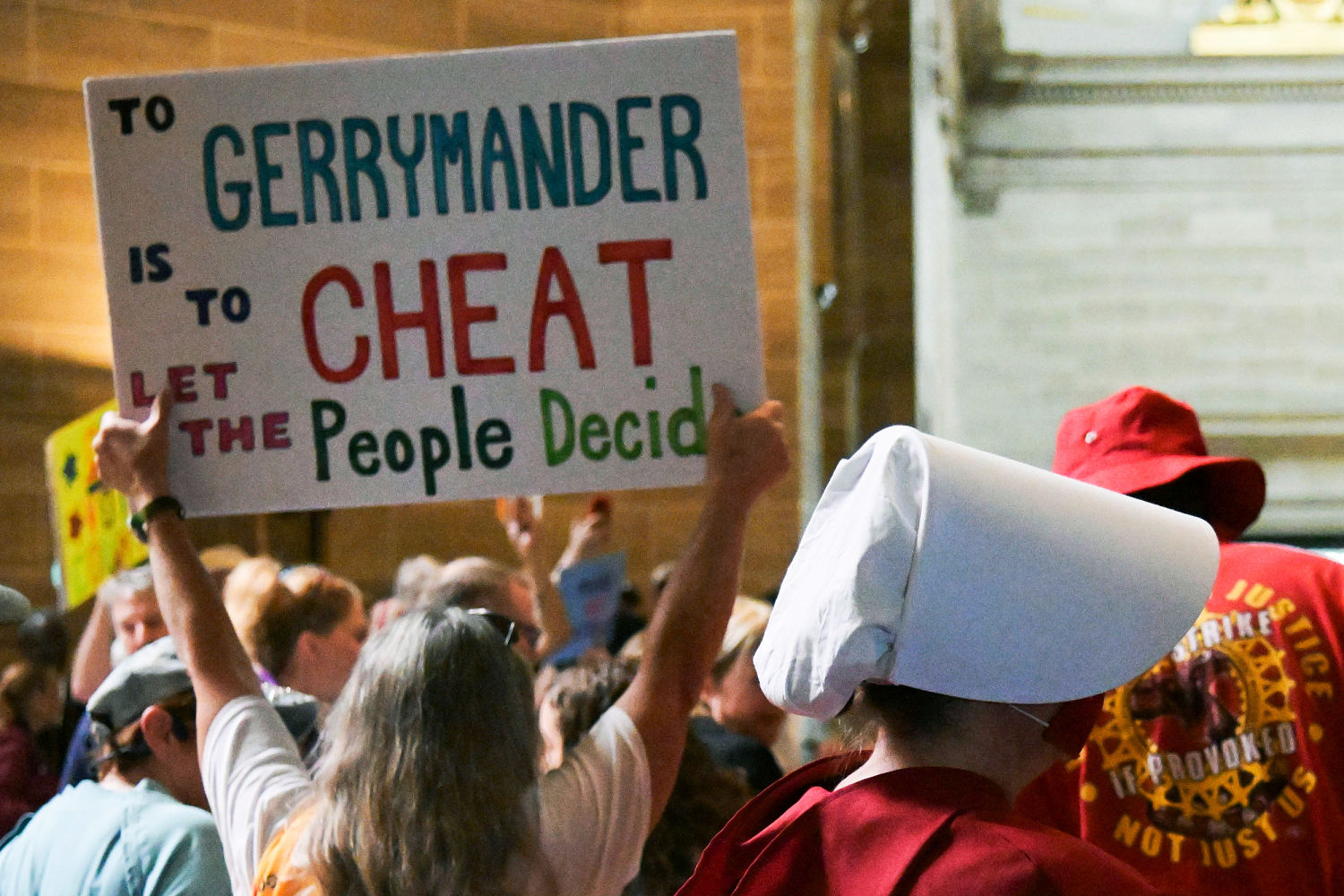
Missouri voters thought they had a voice. They were wrong.
Secretary of State Denny Hoskins just slammed the door shut on a massive citizen-led petition aimed at undoing the state's aggressive Republican-drawn congressional map. If you've been watching how state lines get weaponized ahead of the midterms, this move shouldn't shock you. But the mechanics behind how Hoskins killed the ballot measure reveal a growing playbook for bypassing direct democracy.
Let's break down what actually happened, why organizers are furious, and what this means for the electoral map moving forward.
The Battle Over House Bill 1
Last year, the Missouri legislature pushed through a newly redrawn map—often called the "Missouri First" map—shifting the state's congressional breakdown from a 6-2 Republican advantage to a blistering 7-1 split. The primary target of this shift? The Kansas City-area 5th Congressional District, long held by Democratic Representative Emanuel Cleaver. By stretching that district into rural, conservative counties, lawmakers practically guaranteed a GOP sweep in that territory.
Voters pushed back hard. A coalition named People Not Politicians launched a massive petition drive to force a veto referendum. They needed roughly 106,000 signatures to get the question on the November ballot.
They didn't just meet that goal. Back in December, organizers handed in over 305,000 signatures. That is nearly three times the requirement.
Why Hoskins Ruled the Petition Out
On the state's legal deadline, Hoskins refused to certify the petition. Crucially, he didn't argue that the signatures were fake or that the group fell short of the headcount.
Instead, he argued that the referendum itself is fundamentally unconstitutional.
Hoskins claimed that under the Missouri Constitution and the U.S. Constitution's Election Clause, citizens cannot use a veto referendum to overturn a congressional redistricting map. In his view, drawing congressional boundaries belongs strictly to the General Assembly.
"The referendum itself is null and void," Hoskins told reporters.
By making this ruling on the exact day of the state's primary elections, Hoskins achieved a strategic victory for his party. The primaries ran using the redrawn 7-1 map. With the decision dropping right at the deadline, running a different map for the November general election becomes an administrative nightmare, even if courts eventually intervene.
The Pushback and What Happens Next
Organizers aren't backing down. Richard von Glahn, the executive director of People Not Politicians, called the decision a desperate attempt to silence Missourians. The coalition immediately signaled plans to challenge Hoskins' decision in court.
Yet time is running out. Courts move slowly, but election calendars move at lightspeed. Even if a judge decides that Hoskins overstepped, the practical reality of printing ballots, testing machines, and managing voter rolls makes a map swap before November extremely difficult.
This saga highlights a brutal reality of modern American politics. When citizens use the ballot box to check legislative power, officials can sometimes use administrative gatekeeping to run out the clock. Keep an eye on the state courts over the next few weeks, because this legal fight is far from dead—even if the ballot spot is currently empty.