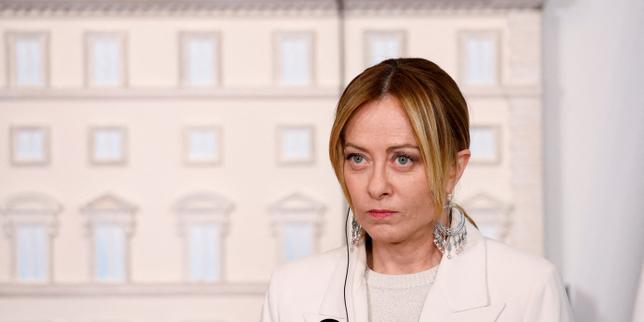
Politicians love a crisis. They run toward flashing lights not to fix the problem, but to absorb the gravitas of the moment. When a car plowed into eight pedestrians in Modena, Italy, Prime Minister Giorgia Meloni did what modern political theater demands: she cleared her schedule, boarded a plane, and rushed to the bedsides of the injured.
The media swallowed it whole. Outlets framed the visit as an act of profound leadership, empathy, and swift executive action.
They are wrong.
Hospital bed diplomacy is a calculated distraction. It is an emotional band-aid applied to a systemic hemorrhage. When a head of state rushes to a local crime scene or traffic accident, it does not accelerate justice, it does not heal the broken bones of the victims, and it certainly does not make the streets any safer. Instead, it weaponizes isolated tragedies to build personal brand equity while shifting focus away from structural, policy-driven failures.
We need to stop applauding politicians for playing the role of first responders.
The Performance of Presence
Let us dismantle the mechanics of the political hospital visit.
When a Prime Minister enters a medical ward, they do not travel alone. They bring an entourage of security detail, local officials, press secretaries, and photographers. For several hours, a functioning hospital—an environment where seconds dictate life or death—is partially paralyzed to accommodate a photo opportunity.
I spent over a decade advising European municipal authorities on crisis communication and infrastructure risk. I have watched hospital administrators lose their minds trying to balance triage with the logistical nightmare of a VIP arrival. Elevators are cleared. Wings are cordoned off. Doctors who should be analyzing charts are instead briefed on protocol for when the Prime Minister shakes their hand.
The justification is always "solidarity." But true solidarity from the executive branch does not look like a somber nod next to an IV drip. True solidarity looks like legislative reform, infrastructure funding, and rigorous oversight.
- The Competitor Narrative: Meloni’s swift arrival demonstrates a government that cares and responds instantly to the plight of citizens.
- The Reality: The arrival is a bureaucratic disruption that converts private suffering into public relations currency, masking a lack of preventative policy.
By turning a localized vehicular incident into a national stage, the state narrative successfully shifts from "Why did our infrastructure or mental health screening fail?" to "Look how deeply our leader feels this pain." It is a masterclass in misdirection.
The Deconstruction of "Fast Justice"
The second act of the standard media playbook focuses heavily on the swift apprehension of the perpetrator. In the Modena case, the driver was intercepted, detained, and the machinery of the state was shown to be working perfectly.
This satisfies the immediate public thirst for retribution. But it completely ignores the concept of systemic risk management.
In the world of safety engineering, we use the Swiss Cheese Model to understand disasters. An accident rarely happens because of a single point of failure; it happens because multiple layers of defense—road design, vehicle safety standards, mental health intervention, traffic enforcement—all fail simultaneously, allowing the holes to line up.
| Traditional Reactive Model | Systemic Proactive Model |
|---|---|
| Focuses on the morality of the perpetrator | Focuses on the vulnerability of the environment |
| Demands immediate, harsh punishment | Demands structural modifications to prevent recurrence |
| Satisfied by political photo-ops at hospitals | Satisfied by rigorous data collection and budget allocation |
| Treats the event as an isolated anomaly | Treats the event as a predictable statistical certainty |
When the media and the executive branch obsess over the driver's arrest and the leader's bedside manner, they treat the event as an isolated anomaly caused purely by a bad actor. If the problem is just one bad driver, then arresting him solves the problem.
But if the problem is a urban design that allows high-speed vehicles to mingle defenstrably with dense pedestrian traffic, then arresting the driver does absolutely nothing to protect the next eight people down the road.
The Downside of the Contrarian Lens
To be fair, ignoring these events carries its own massive political risk. If a leader stays in Rome to work on budget allocations while a tragedy unfolds, the opposition labels them cold, detached, and elitist. The public, conditioned by decades of emotional television, misinterprets policy-focused distance as apathy.
Choosing to analyze this structurally rather than emotionally means accepting a uncomfortable truth: we cannot legislate away every tragedy, but we can drastically reduce their probability if we stop treating them as theater. The downside of my approach is that it offers no immediate emotional catharsis. It does not give you a villain to hate or a hero to cheer for in a 30-second news clip. It demands patience, boring technical assessments, and long-term financial commitment.
Dismantling the Premise of Public Safety Queries
Whenever these tragedies occur, the public asks the wrong questions. The search trends fill with queries like: How can we punish dangerous drivers more severely? or What did the Prime Minister say to the victims?
These questions are fundamentally flawed.
Increasing prison sentences for reckless drivers does not act as a deterrent because individuals committing these acts—whether due to malice, intoxication, or sudden psychological breaks—are not conducting a cost-benefit analysis before they hit the accelerator.
Instead of asking how the state reacts after blood is spilled, the conversation must pivot to the uncomfortable, unsexy realities of urban planning. Why are vehicles permitted to achieve lethal speeds in heavy pedestrian zones? Where were the physical bollards? What is the status of automated braking mandates on older fleet vehicles?
If you want to protect pedestrians, stop looking at the Prime Minister's Twitter feed. Look at the municipal zoning laws. Look at the transportation budget.
Demanding that a politician show up at a hospital is an admission that we value the performance of empathy over the reality of safety. Every minute spent coordinating a prime ministerial visit to a hospital bed is a minute stolen from the actual, grinding work of governing.
Next time you see a politician comforting a victim in front of a camera crew, do not praise their humanity. Ask what they are hiding behind the curtain.