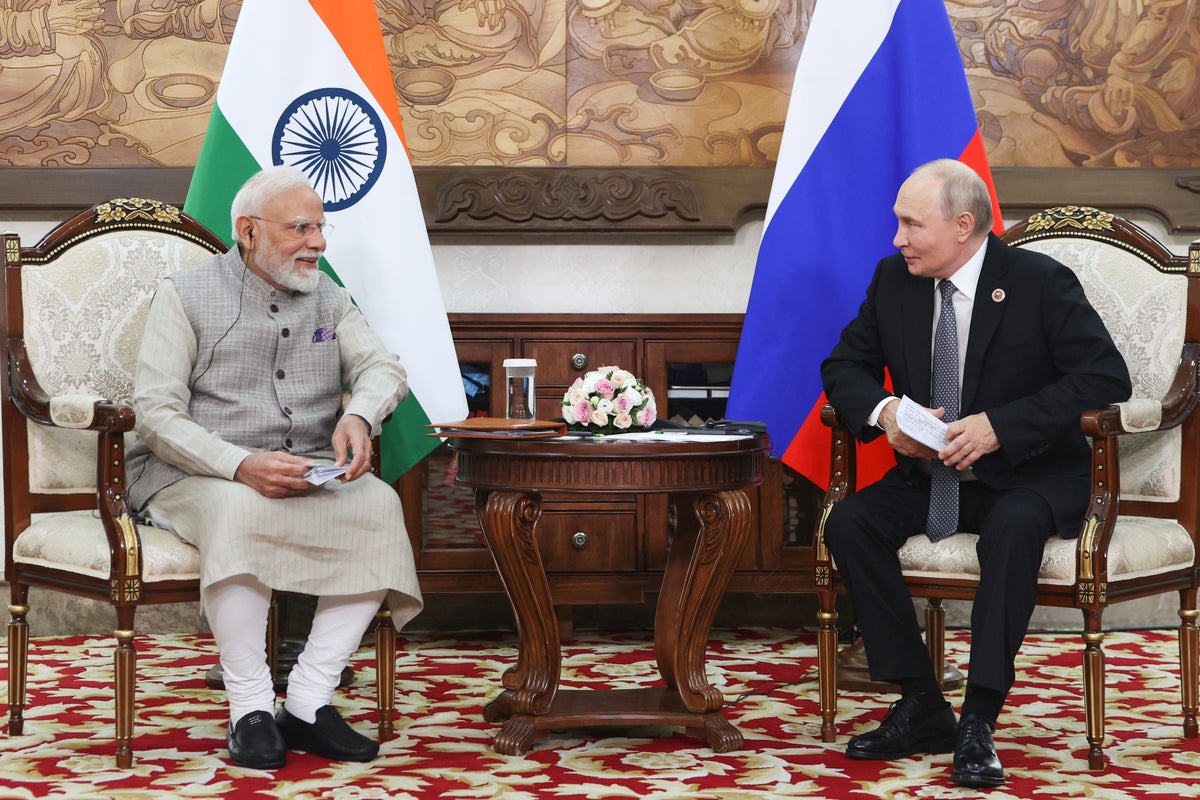
The media fell over themselves praising the optics. Narendra Modi sits across from Vladimir Putin, looks him in the eye, and drops the line that every Western editorial board dreamed of hearing. The war in Ukraine must end. Humanity demands it. Democracy wins again. It makes for a great headline on CNN, but it ignores the brutal, transactional reality of modern geopolitics.
Western pundits analyzed that exchange through a lens of moral victory. They assumed Modi was joining the choir of international condemnation, signaling a slow break between New Delhi and Moscow. That interpretation relies on a fundamental misunderstanding of Indian foreign policy, the architecture of energy markets, and the mechanics of strategic autonomy. Discover more on a connected topic: this related article.
Modi did not scold Putin. He played a calibrated role in a multi-polar balancing act, and treating that conversation as a moral turning point is dangerously naive.
The Lazy Consensus of Moral Diplomacy
Every major news outlet framed the Samarkand meeting as a rebuke. They looked at the phrase "today's era is not an era of war" and read it as an ideological alignment with Washington and Brussels. This is wishful thinking dressed up as analysis. More analysis by The Washington Post delves into related views on this issue.
International relations are not run on Hallmark card sentiments. When a leader of a developing nation with a population of 1.4 billion speaks to an isolated wartime president, the conversation is about leverage, supply chains, and survival. India imports the vast majority of its defense equipment and a rapidly growing share of its crude oil. Cutting ties to satisfy Western sensibilities would mean economic suicide for New Delhi.
The lazy consensus assumes that because India is a democracy, it naturally shares the geopolitical reflexes of the West. It does not. India's historical memory includes decades of Western indifference, weaponized sanctions, and military support for its regional adversaries. Trust is scarce. Interests are permanent.
What the Pundits Missed About Crude Economics
Let us look at the numbers the editorial boards conveniently gloss over. Before 2022, India bought virtually zero Russian crude oil. Within months of the invasion, that figure surged to over a million barrels a day. Refineries in Gujarat and Odisha turned heavily discounted Russian Urals into diesel and jet fuel, selling it right back to the global market, including European buyers who claimed they were boycotting Moscow.
Imagine a scenario where Modi actually applied the kind of pressure Western commentators pretend he did. Imagine India cutting off diplomatic and trade channels, joining the sanctions regime, and paying spot-market prices for Middle Eastern oil. Inflation in India would skyrocket. Industrial output would choke. Poverty alleviation programs would stall. No responsible prime minister sacrifices his domestic economy to validate a moral talking point for foreign cable news.
Modi’s comment was not a break with Putin; it was a public reassurance to the West that India maintains independent channels of communication while simultaneously securing its own national interests through cheap energy. It is cakeism of the highest order, and New Delhi executes it brilliantly.
Strategic Autonomy in a Bifurcated World
To understand why Modi's words carried zero punitive weight, you have to understand the doctrine of strategic autonomy. Western analysts love to talk about the rules-based international order as if it were a universal law of physics. To the rest of the world, it looks like a set of rules written by the West, for the West, to be broken whenever convenient.
India remembers the Iraq invasion. India remembers Libya. When developing nations look at Ukraine, they see a tragedy, but they also see breathtaking Western hypocrisy regarding sovereignty violations that happen outside of Europe.
By telling Putin to stop the war "for humanity," Modi was speaking the mandatory diplomatic language required to keep relations with Washington functional while preserving the partnership with Moscow. It is a safety valve. It allows the Biden administration to claim that India is on the right side of history, while allowing Moscow to know that trade remains open for business.
This is not hypocrisy. This is cold, hard realism.
The Myth of the Global South Alignment
Western foreign policy establishments spend billions of dollars trying to convince themselves that the Global South is falling into line behind their anti-Russia coalition. They point to UN General Assembly votes as proof of moral consensus.
That is an illusion. When developing nations abstain or vote cautiously, they are protecting their supply of Russian fertilizer, wheat, and weapons. India cannot afford to alienate Russia because its military inventory is roughly sixty to seventy percent Soviet or Russian-origin hardware. You cannot swap out tanks, fighter jets, and missile defense systems on a whim. The transition takes decades and billions of dollars.
When Putin hears Modi talk about peace, he does not hear a threat. He hears a customer who needs the war to end not because of Western values, but because high inflation and volatile shipping lanes complicate trade. Putin can live with that kind of pressure. In fact, he welcomes it, because it proves Russia is not entirely isolated on the world stage.
Stop Asking the Wrong Questions
The media keeps asking whether Modi can act as a peace broker between Moscow and Kyiv. The question itself is structurally flawed.
India has no desire to mediate a conflict it cannot control. Mediation requires leverage over both parties. While New Delhi has economic leverage over Moscow as a primary buyer of its commodities, it has zero leverage over Kyiv or Washington regarding NATO expansion or security guarantees. Inserting itself into the quagmire of European security would be a strategic blunder of epic proportions.
Instead of asking whether India will isolate Russia, ask how long the West can sustain a global economic strategy that punishes developing nations for refusing to fight proxy wars they did not start.
Modi’s meeting with Putin was a masterclass in diplomatic positioning. It satisfied the optics required for international summits while altering nothing about the flow of oil, money, and weapons. Anyone who saw a turning point in those remarks was watching the performance, not the mechanics. The war continues, the tankers keep sailing from Primorsk to Vadinar, and New Delhi keeps winning by refusing to pick a side in a fight that isn't theirs.