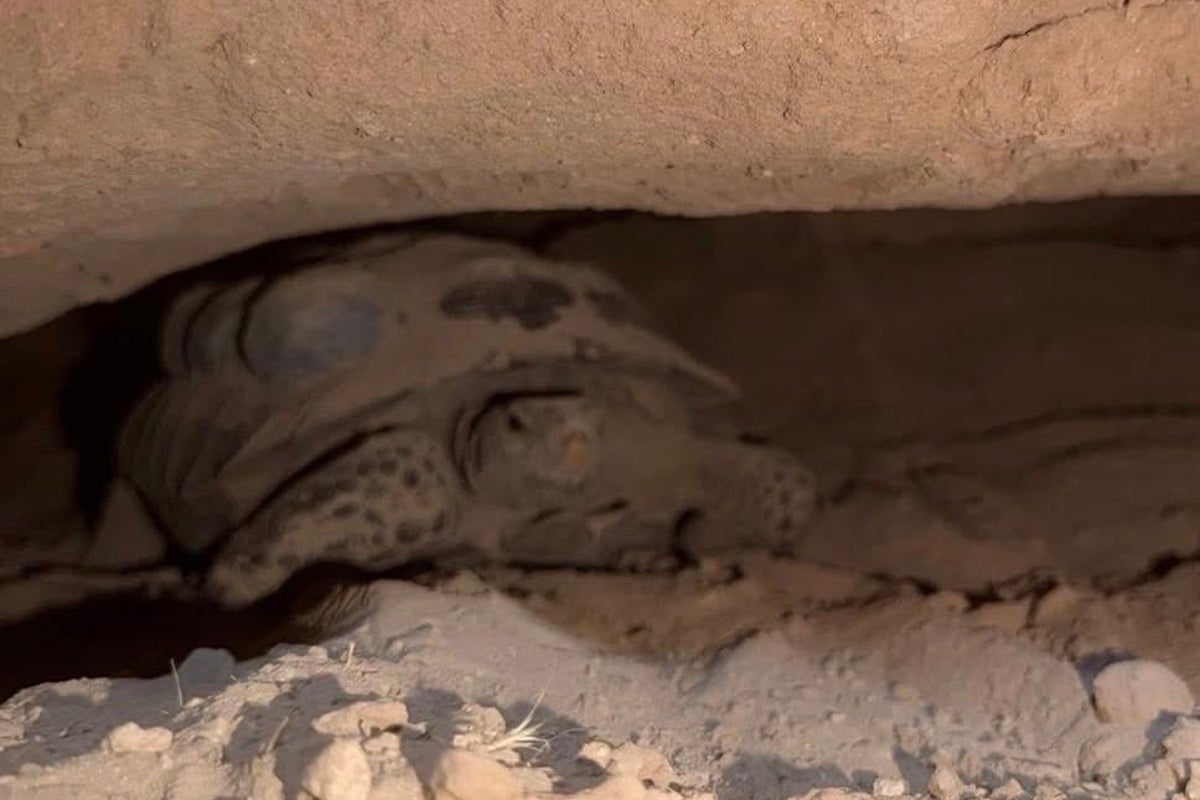
The desert doesn't care about your calendar. While a crowd in Pennsylvania waits for a groundhog to look at his own shadow—a tradition that feels more like a hat-store commercial than actual science—the American Southwest looks to a tortoise. Mojave Max is the real deal. He doesn't get pulled out of a heated burrow by men in top hats. He wakes up when the biology of the Mojave Desert says it’s time.
This year, Max took his sweet time. He stayed underground longer than almost any other year on record. It wasn't until late April that the famous desert tortoise finally emerged from his burrow at the Red Rock Canyon National Conservation Area. People were starting to wonder if winter would ever end in the Las Vegas Valley.
When Max stays down, you listen. His emergence is the official signal that spring has arrived in the desert. It’s a biological clock tuned to soil temperature and light. It’s also a much more accurate way to track the changing seasons than relying on a rodent in the Northeast who has a coin-flip's chance of being right.
The Science of the Big Sleep
Max isn't just sleeping. He’s in brumation. That’s the reptile version of hibernation. His heart rate drops. His metabolism slows to a crawl. He survives on the water stored in his bladder and the energy tucked away in his fat. For a tortoise, coming out too early is a death sentence. If there aren't enough plants to eat or if a late freeze hits, he’s in trouble.
The soil temperature has to hit a specific sweet spot. Experts at the Clark County Desert Conservation Program track this closely. They know that once the ground stays warm enough for long enough, Max will stir. This year, the ground stayed cool. The nights remained crisp. So, Max stayed under.
The delay tells us a lot about the shifting weather patterns in the West. We've seen wild swings in temperature lately. A late emergence like this usually follows a winter with significant rainfall or unusual cold snaps that keep the earth insulated and chilled. It’s a reminder that nature operates on its own timeline, regardless of when we want to start wearing shorts.
Why Punxsutawney Phil is Just Marketing
Let’s be honest about the groundhog. Phil is a celebrity, not a scientist. The stats show he’s only right about 40% of the time. You’d literally get better weather predictions by flipping a quarter in your kitchen.
Mojave Max represents a localized, ecological reality. The desert tortoise is a keystone species. Everything in the Mojave revolves around their timing. When Max comes out, the wildflowers are usually peaking. The insects are active. The entire ecosystem shifts gears.
Phil lives in a climate-controlled environment most of the year. Max lives in the dirt. He feels the vibrations of the earth. He senses the change in barometric pressure. When he sticks his head out, it’s because the environment has earned it. It’s an authentic reaction to the world around him.
Tracking the Record Late Emergence
In the decades we’ve been watching the Mojave Maxes—there have been a few tortoises to hold the title since the program started in 1995—we’ve seen a wide range of dates. Some years he’s out in mid-February. Other years, he lingers into April.
This year’s late signal is a data point we can't ignore. It’s one of the latest on record, rivaling the 2012 date of April 17. Why does this matter? Because it affects the "Mojave Max Emergence Contest." Thousands of local students try to guess the exact minute he’ll appear. It’s a massive educational tool that teaches kids about the delicate balance of the desert.
When the date slides this far back, it sparks a conversation about climate variability. It shows that even in a warming world, we can still have these outlier years where winter refuses to let go. It’s a lesson in patience.
The Reality of Desert Tortoise Conservation
Max isn't just a weather vane. He’s an ambassador for a species that’s struggling. The desert tortoise is threatened. Habitat loss, Raven predation, and illegal "pet" collections have decimated their numbers.
By following Max’s wake-up call, the public gets a front-row seat to the life of a creature that has lived in this region for millions of years. These animals are built to last. They can live to be 80 years old or more. They’re tough. But they’re also sensitive to the smallest changes in their surroundings.
If you’re visiting the Southwest, you have to respect the rules. Stay on the trails. Don't touch wild tortoises. If they get scared, they’ll empty their bladders. In the desert, that lost water is often the difference between life and death. Max’s fame helps spread this message better than any government brochure ever could.
What Happens Now
Now that Max is topside, the desert is officially "open" for spring. You’ll see the desert marigolds blooming. The Joshua trees might be finishing their cycles. The snakes and lizards will be out in force.
It’s the busiest time of year for the ecosystem. Max will spend the next few months eating as much as possible. He needs to fuel up before the brutal heat of July and August sends him back into a different kind of sleep called estivation.
Don't wait for a groundhog in Pennsylvania to tell you what's happening outside your window. Look at the local indicators. Watch the plants. Watch the reptiles. Max has spoken, and he says spring is finally here, even if he took the long way getting here.
If you want to help the Mojave Max program, look into the Clark County Desert Conservation Program. They do the heavy lifting. They manage the habitat. They keep the contest running. You can even check their live cams to see if Max is currently snacking on some greens or just soaking up the sun. The best thing you can do is learn the "Leave No Trace" principles and apply them every time you step into the sand. The desert gave us a late start this year, so make the most of the season while it lasts. Use the official Mojave Max website to see the historical data of his emergence dates and compare them to the weather patterns of those specific years. It’s a fascinating look at how nature reacts to a changing planet.