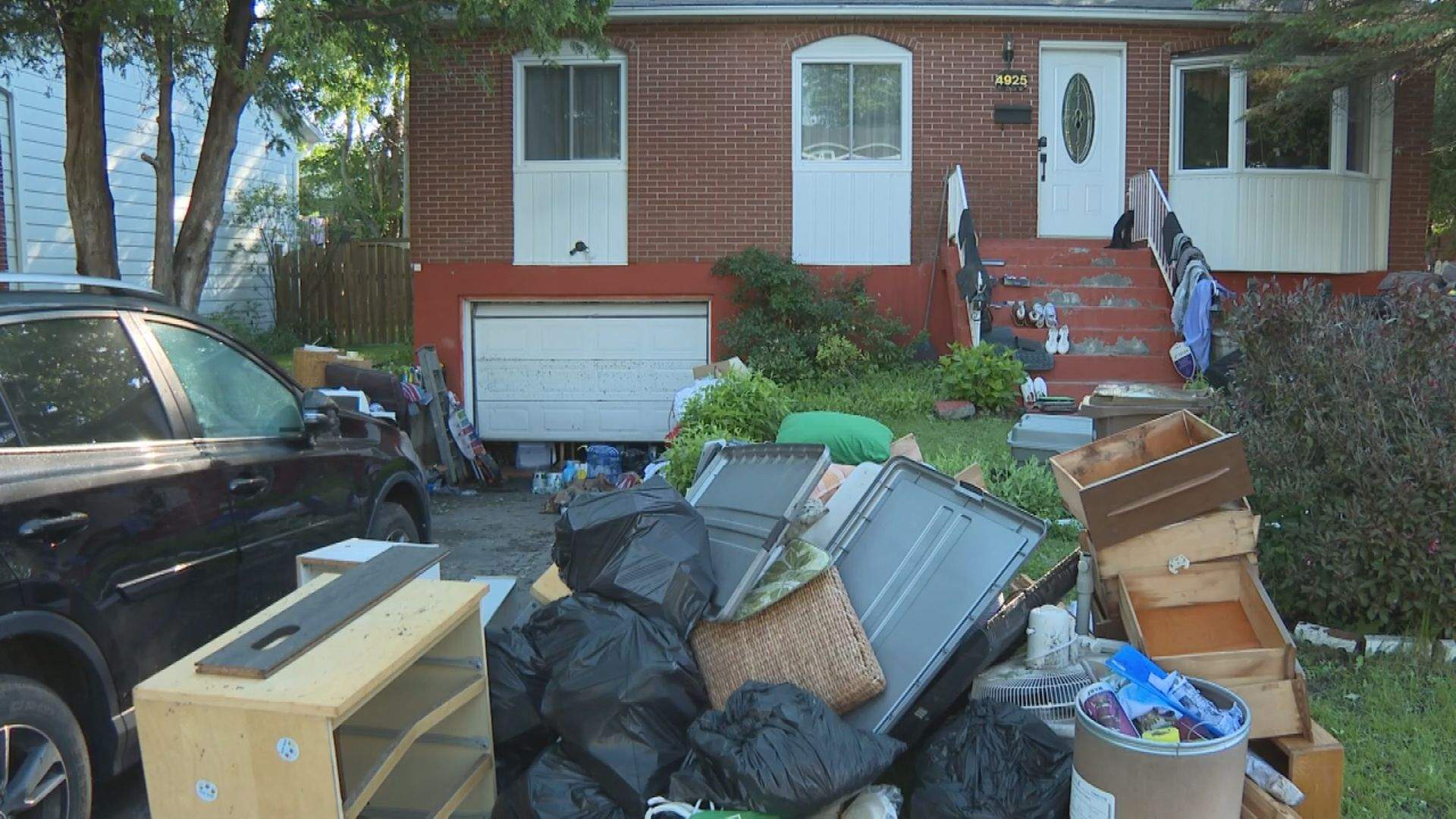
You can smell the disaster before you see it. On Perron Street in Pierrefonds, the air is thick with the scent of damp drywall, stagnant river water, and rotting carpet. Lawns are buried under mounds of waterlogged mattresses, ruined sofas, and bags of destroyed personal belongings.
On Saturday, June 20, 2026, a massive storm dumped between 150 to 170 millimetres of rain on the Pierrefonds-Roxboro borough in less than two hours. Environment Canada confirmed that western Montreal and the South Shore took the brunt of the downpour. It wasn't just a heavy rainstorm; it was an absolute wall of water that overwhelmed the local drainage networks instantly, leaving hundreds of basements flooded and cars submerged.
For residents of the West Island, this nightmare is painfully familiar. The sewer systems have been completely overburdened twice in just the last two years. Local resident Jason Klien described hearing hail, and within seconds, watching water pour into his basement. Mother Nature won this round, but residents are getting tired of losing the match.
The Sump Pump Trap and the Rising Water Table
Many homeowners thought they were prepared. They had backwater valves. They had sump pumps. But when the torrential rain hit, the power grid failed, plunging thousands of Hydro-Québec customers into darkness.
Without electricity, standard sump pumps stopped spinning. Residents like Stephen Lister watched helplessly as water rose through the floorboards, destroying family memories, books, and furniture. Even for those with battery backups, the sheer volume of water presented a secondary, invisible problem that most people don't think about until it's too late.
According to Pierrefonds-Roxboro borough Mayor Jim Beis, the ground became so saturated so quickly that the water table pushed upward from underneath foundations. When the water table rises with that much hydraulic pressure, water finds every microscopic crack in a concrete basement floor or foundation wall. It infiltrates from below, meaning a home can flood even if the street outside looks completely clear. Downslope driveways acted like direct funnels, guiding flash flood waters straight toward garage doors and basement windows.
Why City Sewers Can't Handle the New Climate Reality
During a press conference on Monday, June 22, Montreal Mayor Soraya Martinez Ferrada addressed the structural failures directly, stating that traditional city infrastructure simply cannot respond to these types of intense storms.
The math behind old civil engineering just doesn't work anymore. Most suburban storm networks were built to handle "one-in-twenty-year" or "one-in-fifty-year" storms based on historical data from the late 20th century. When 150 mm of rain falls in 120 minutes, it completely chokes the underground pipes. The water has nowhere to go but backward, pushing up through residential sewer lines and storm drains.
The city is now pushing for a mandate with the Communauté métropolitaine de Montréal (CMM) and the provincial government to completely remodel rainfall risks. The goal is to transform Montreal into what urban planners call a "sponge city."
Instead of relying entirely on concrete pipes to whisk water away, sponge cities use permeable pavements, rain gardens, and urban wetlands to absorb heavy rainfall naturally. Mayor Beis also suggested creating specific canals to divert overflow water away from residential zones, though he acknowledged that structural infiltration remains a major hurdle for older homes.
The Reality of Provincial Compensation
As residents dry out their properties, the financial panic is setting in. Quebec Premier Christine Fréchette announced that the province is offering financial assistance for individuals who are underinsured or completely lack flood coverage.
The provincial disaster financial assistance program caps compensation at $385,000 for individual homeowners and $485,000 for local businesses. While those numbers look substantial on paper, they rarely cover the true cost of structural remediation, mold prevention, and replacing mechanical systems like furnaces and water heaters.
Many West Island residents feel abandoned by the slow pace of infrastructure upgrades. Daniel Khoury, a Pierrefonds resident whose new home took on six feet of water before he could even move in, pointed out that local municipalities can't solve this alone. Khoury, who also went through the catastrophic 2019 spring floods, stressed that the Quebec government needs to make funding infrastructure overhauls an absolute priority so cities have the capital to build larger retention basins and upgraded storm mains.
Crucial Next Steps for Impacted Homeowners
If your home was caught in the weekend's flash flood, you need to act systematically to secure your health and your financial claims. Do not wait for provincial adjusters to show up before starting the mitigation process.
- Document everything immediately: Take clear photos and videos of the high-water marks inside your basement before ripping anything out. Photograph model numbers on ruined appliances.
- File insurance claims first: Contact your private insurer immediately to get a formal refusal or acceptance letter. You cannot access the provincial compensation fund of up to $385,000 without showing what your private insurance did or didn't cover.
- Strip wet materials within 48 hours: Mold begins to grow exponentially after two days. Cut away drywall at least two feet above the highest water line, pull up carpets, and discard saturated insulation.
- Install a secondary defense system: If you are rebuilding a West Island basement, look into a water-powered backup sump pump. Unlike battery backups that run out of juice after a few hours, water-powered systems run on your home’s municipal water pressure and will operate indefinitely during a power outage.
- Track all expenses: Keep every single receipt for dumpster rentals, dehumidifier purchases, fans, and professional cleanup crews. You will need these for tax deductions or government compensation packages.
Local municipal buildings, including the Pierrefonds Library, the Cultural Center, and the Marcel Morin Community Center, remain closed as city crews work to clear out minor flooding in public facilities. City officials are urging residents to avoid calling 311 for general inquiries to keep lines open for urgent municipal dispatches. For active emergencies, dial 911 immediately.