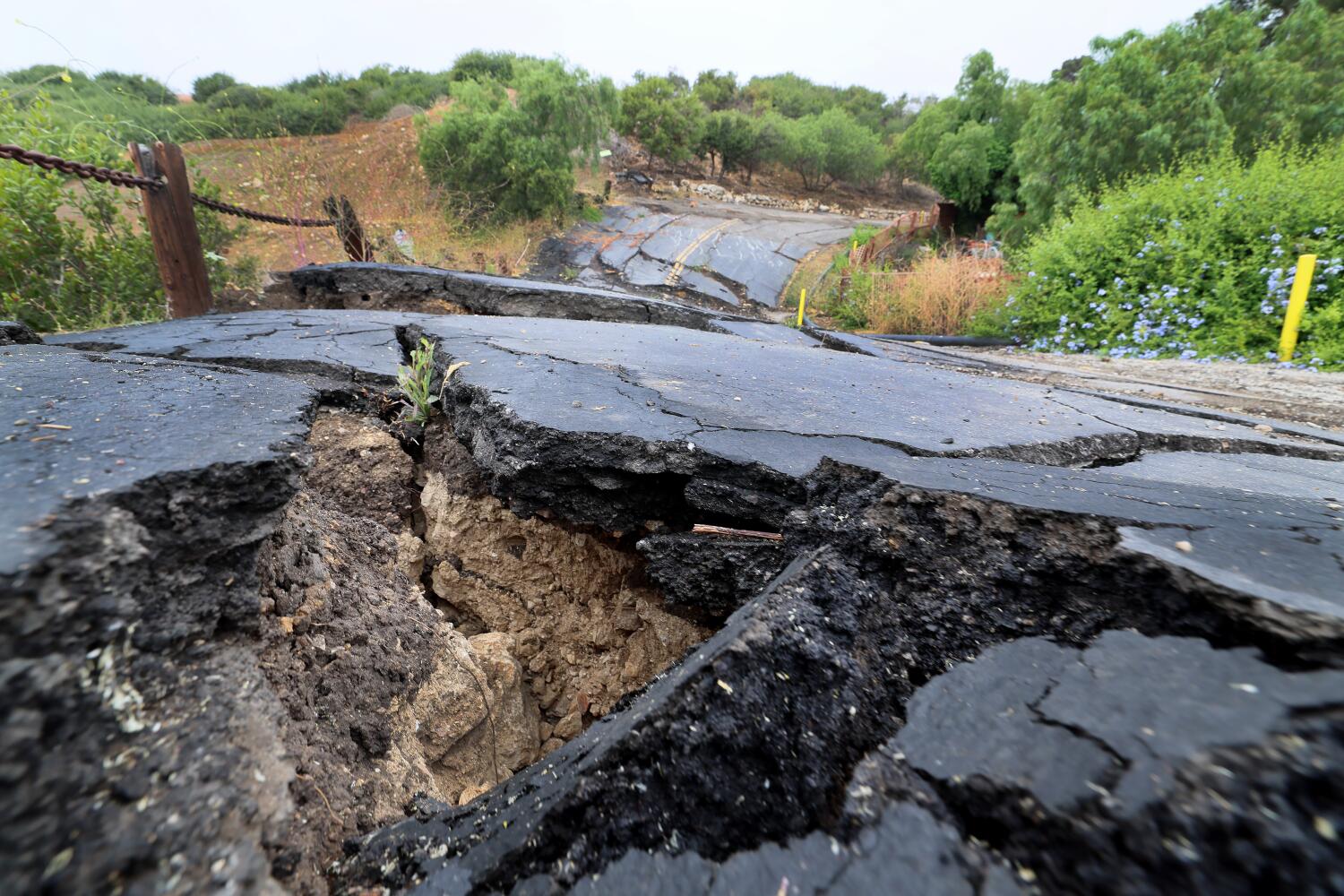
The Poverty of the Individual Responsibility Argument
The standard "Letter to the Editor" regarding coastal erosion or wildfire zones is always the same. It drips with a self-righteous brand of fiscal conservatism: "I didn't choose to build on a cliff, so why should my tax dollars bail out the person who did?" It sounds logical. It sounds fair. It is also remarkably shortsighted.
This line of thinking assumes that real estate is an isolated game of individual choices. It isn't. Real estate is a massive, interconnected web of collateral that underpins the entire global financial system. When you demand that we "stop paying for others' bad choices," you aren't just advocating for personal responsibility. You are advocating for a systemic margin call that would crater the economy—including your own "safe" suburban bungalow.
The "lazy consensus" is that we are subsidizing the wealthy to live by the sea. The reality? We are subsidizing the stability of the municipal bond market, the solvency of regional banks, and the very concept of property value as a store of wealth.
The Trillion Dollar Contagion
Let’s look at the mechanics. If the government or the National Flood Insurance Program (NFIP) were to suddenly price risk "correctly"—meaning premiums that reflect the actual probability of total loss—entire zip codes would become uninsurable overnight.
When a property becomes uninsurable, it becomes unmortgageable. When it becomes unmortgageable, its value drops by 50% to 80% instantly. This isn't a localized tragedy for one "risky" homeowner. It is a contagion.
- The Appraisal Death Spiral: Appraisers use "comps" (comparable sales). If three beachfront homes sell for pennies on the dollar because they can't get insurance, the "safe" homes three blocks inland—your homes—see their valuations slashed.
- Municipal Bankruptcy: Coastal and high-risk properties often provide the lion's share of property tax revenue for their counties. If those valuations collapse, the school district, the police department, and the road crews lose their funding.
- The Banking Domino: Small and mid-sized banks hold these mortgages. A mass devaluation leads to a balance sheet crisis that freezes lending for everyone, everywhere.
I’ve spent twenty years watching markets react to "unforeseen" risks. The loudest voices calling for an end to subsidies are usually the first ones screaming for a bailout when the liquidity trap snaps shut on their own assets.
The Actuarial Fallacy
Critics love to cite the NFIP’s debt—currently hovering around $20 billion—as proof of failure. They claim that if we just let the "free market" handle insurance, the problem would solve itself.
This is a fundamental misunderstanding of what a market is. Private insurers are retreating from Florida and California not because the risk is too high, but because the risk is unpriceable. A private insurer needs to spread risk across time and space. But climate-driven disasters are "correlated risks." A hurricane doesn't hit one house; it hits 50,000 houses at the exact same second.
If we move to a purely private model, we aren't "fixing" the market. We are deleting it. Without a public backstop, there is no market. There is only a wasteland of "as-is" cash sales and a permanent underclass of people trapped in stranded assets.
The Myth of the "Choice" to Live on Unstable Land
The "they chose to live there" argument is intellectually lazy. It ignores the history of American development.
For decades, state and federal governments incentivized this exact behavior. They built the bridges. They laid the sewers. They offered the tax breaks. To suddenly pivot and say, "Actually, you're on your own now," is a breach of the social contract that would trigger a legal firestorm.
Imagine a scenario where the government decides that because you live in a "high-traffic area" or a "smog-heavy city," they will no longer provide Medicare coverage for respiratory issues. You "chose" to live there, right? You knew the risks.
We don't apply this logic to any other sector of the economy because we know it leads to chaos. We subsidize corn in the Midwest, tech in Silicon Valley, and oil in the Gulf. Subsidizing "unstable land" is simply the cost of maintaining the illusion of a national real estate market.
Why "Managed Retreat" is a Fantasy
The high-minded alternative to subsidies is "managed retreat"—the idea that we should gracefully move entire populations inland.
This is a logistical and financial impossibility that no one wants to admit. Who pays for the new cities? Where do the millions of displaced people go? What happens to the hundreds of billions of dollars in "stranded" infrastructure—the fiber optics, the power grids, the highways—that lead to nowhere?
The cost of subsidized insurance is a rounding error compared to the cost of a chaotic, unmanaged retreat. We are paying for time. We are buying years of relative stability so the economy can slowly rotate away from these assets, rather than snapping like a dry twig.
The Brutal Truth of the "Fairness" Argument
You think it’s unfair that your tax dollars help rebuild a house on a shifting sandbar? You're right. It is unfair.
But finance isn't about fairness. It’s about the management of systemic risk. The moment we start making policy based on the "morality" of a homeowner’s zip code, we invite a level of volatility that will destroy more wealth than any hurricane ever could.
If you want to stop paying for others' choices, you have to be prepared for the consequences of those people losing everything. You have to be okay with your local bank failing. You have to be okay with your 401(k) tanking as the REITs (Real Estate Investment Trusts) that hold these properties go to zero.
The "victim" in this scenario isn't just the guy with the beach house. It’s the entire economic engine of the country.
Your Actionable Reality Check
Stop looking at insurance subsidies as a gift to the rich. Start looking at them as a high-yield insurance policy for your own financial sanity.
If you are looking to "protect" yourself from the choices of others, don't lobby for the end of the NFIP. Instead:
- Diversify away from real-estate-heavy equities: If you're worried about the bubble popping, reduce your exposure to regional banks and homebuilders.
- Audit your own "safe" land: Just because you aren't on a coast doesn't mean you're safe. Flash flooding and "fire-adjacent" smoke damage are the new frontiers of uninsurable risk.
- Demand transparency, not austerity: Focus on better building codes and stricter zoning for future builds. Trying to retroactively punish current homeowners is a suicide mission.
The hard truth is that we are all subsidizing each other's existence in a thousand invisible ways. The person in the flyover state subsidizes the coastal city's transit; the coastal city subsidizes the rural state's roads.
If we start pulling the threads on "unstable land," the whole sweater comes apart. You don't want to live in a world where everyone pays the "true cost" of their choices. You couldn't afford it.
Burn the article that tells you to be angry at your neighbor. Start being terrified of what happens if that neighbor's house finally falls into the sea and takes your bank account with it.