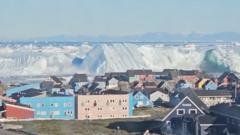
The air smells of crushed stone and ancient brine. Up here, where the Arctic sun skims low across the water and refuses to set, silence is not the absence of sound. It is a presence. It weighs on your chest.
I remember standing on the deck of a research vessel off the western coast of Greenland, watching the horizon slice sharp and blue against a sky the color of a bruised plum. For days, the icebergs had been our silent companions. They drifted past like cathedral ruins, glowing from within with a strange, impossible turquoise light. You look at them and your mind refuses to accept their scale. You think you are looking at a house. Then you realize you are looking at a mountain. And nine-tenths of that mountain is hiding beneath the dark, freezing skin of the ocean.
Then came the sound.
It did not start with a roar. It started with a groan. A deep, subterranean shriek of tortured crystal, vibrating upward through the hull of the ship and right into the soles of our boots.
Ice does not break politely. It shatters.
A few miles away, a colossal monolith of frozen freshwater—a mountain-sized behemoth that had stood sentinel for centuries—began to lean. Just a fraction of a degree. But physics is unforgiving. As the underwater base melted away, hollowed out by warming currents we could barely measure, the center of gravity shifted.
Consider what happens next.
The entire towering structure rolls. Slowly at first, defying belief. The ancient, weather-beaten face, scarred by millennia of wind and snow, dips downward. It meets the water. And the ocean does not simply splash; it erupts.
A wall of white water, hundreds of feet high, detaches from the collapsing giant. It races outward in expanding concentric rings, a violent pulse of displaced energy that can swallow a fishing boat whole within seconds. The air pressure drops. A sudden, terrifying gale of freezing wind howls outward from the epicenter, carrying a blinding mist of atomized ice.
We watched through binoculars as millions of tons of pristine white stone rotated completely upside down. The side that had gazed at the polar sky for generations was suddenly plunged into the dark, crushing brine of the deep. In its place, a glistening, eerie underbelly emerged—smooth, unblemished, and burning with a neon-blue fluorescence that hurt the eyes.
For a long time, nobody spoke.
The mechanics of this violent turnover are deceptively simple, yet they point to a reality that is difficult to process. Glaciers and icebergs are not static sculptures. They are dynamic, unstable engines of change. When an iceberg calves or rolls, it is reacting to an environment that is shifting beneath its feet. The water is warming. The air is thinning. The ancient equilibrium that kept these frozen titans stable for ages is fracturing.
Imagine standing on that shore. You realize that what looks permanent is only temporary.
Scientists call this hydro-fracturing and buoyancy readjustment. But those clinical words strip the event of its terror and its poetry. They turn a catastrophe of nature into a data point. When a giant iceberg turns over near the coast of Greenland, it is a visceral reminder that the planet is breathing, shifting, and reshaping itself while we watch.
The wave eventually reached our vicinity, rocking the vessel gently, a distant echo of a monstrous birth. The water settled back into a dark, mirror-like calm. The overturned iceberg floated there, unrecognizable, a stranger in its own skin, gleaming in the midnight sun like a freshly polished jewel.
We turned the ship around and headed south. But the sound of that ice breaking stayed in my ears. It was the sound of a world refusing to stand still.