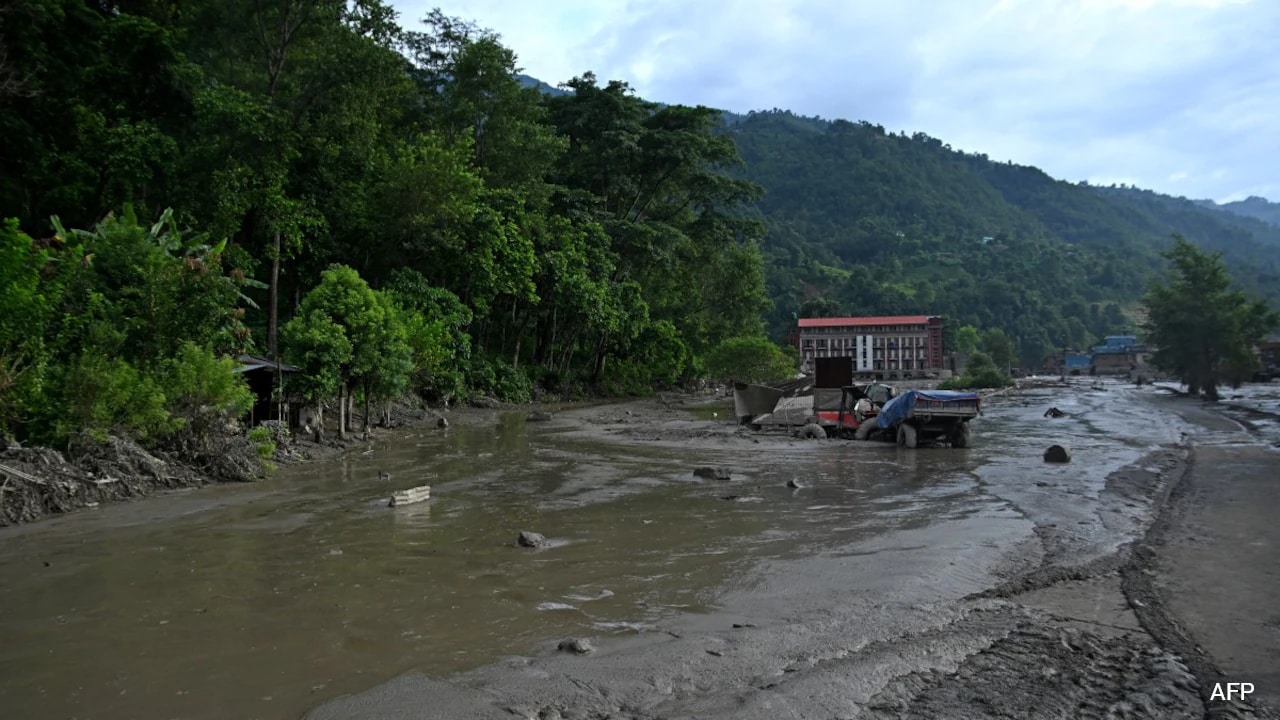
Water does not always announce itself with a roar. Sometimes, it starts as a low, ventral shudder in the earth, a vibration felt through the soles of the feet before it reaches the ears. Then comes the wall.
In the high-altitude passes where the air grows thin enough to taste iron, the boundary between a sacred pilgrimage and sudden catastrophe is razor-thin. For Dr. G. Satheesh Reddy, the former chief of India's Defense Research and Development Organisation, and his wife, what began as a deeply spiritual journey toward the holy heights of Mount Kailash transformed overnight into a test of raw endurance. They were among thirty-one pilgrims trapped near the Nepal-Tibet border when the sky emptied its fury and the rivers forgot their banks. Discover more on a similar issue: this related article.
The statistics coming out of the region are staggering. Hundreds confirmed dead, hundreds more vanishing into the gray mud of a landscape rewritten by sudden violence, and families thousands of miles away staring at blank phone screens. But numbers flatten human grief. They turn a daughter-in-law, a retired scientist, or a traveler seeking peace into a digital ticker tape.
Consider what happens when the mountain paths dissolve. Additional analysis by TIME delves into related perspectives on this issue.
For days, the lines of communication went dark. Relatives sitting in air-conditioned apartments in Chennai, Kolkata, and Hyderabad found themselves anchored to news channels, parsing every fragmented update for a familiar name. Stories began to filter through the static. A hurried video call showing shelter near a military outpost. A voice message crackling over satellite frequencies, insisting on safety just before the batteries died.
The geography of the disaster is unforgiving. Glacial collapses and sudden downpours turned quiet tributaries into raging torrents of grey sludge, sweeping away bridges, roads, and the fragile infrastructure connecting remote settlements. In these high-altitude zones, power is an illusion and isolation is absolute. When you are cut off at the roof of the world, title and status mean nothing. A former defense chief and a local yak herder face the exact same biting wind, the exact same scarcity of clean water, and the exact same terrifying quietude while waiting for the mud to clear.
Rescue operations are underway, but they move at the speed of bruised earth. Helicopters fight against unpredictable updrafts and heavy cloud cover, trying to spot movement in valleys that have been reshaped beyond recognition. Ground crews pick their way through debris fields where trails used to run, searching for pockets of survival among the ruins of tourist camps and local homesteads.
Behind every stranded name in the official bulletins lies an ordinary domestic reality interrupted. A suitcase packed weeks in advance, checked off item by item. Goodbyes said at departure gates with light hearts and promises of photographs. A ticket bought to fulfill a lifelong vow of faith, turning instead into an exercise in survival psychology.
The human mind struggles to bridge the gap between routine existence and sudden catastrophe. One moment you are adjusting your backpack against the chill of a Himalayan morning; the next, you are watching the ground beneath your feet become a moving river.
Rescue teams eventually reached the group in Saga County, confirming that the former defense chief and his fellow travelers weathered the immediate danger, sheltered and accounted for after successfully navigating the flood-scarred border zones. Yet, across the broader valleys, the search continues for hundreds who remain unaccounted for, leaving families suspended in that most agonizing of spaces between hope and despair.
The mountains remain ancient, indifferent, and impossibly beautiful. They do not care who climbs them, nor do they remember who passes through their shadows. They simply stand, silent witnesses to the fragility of those who dare to walk their paths.