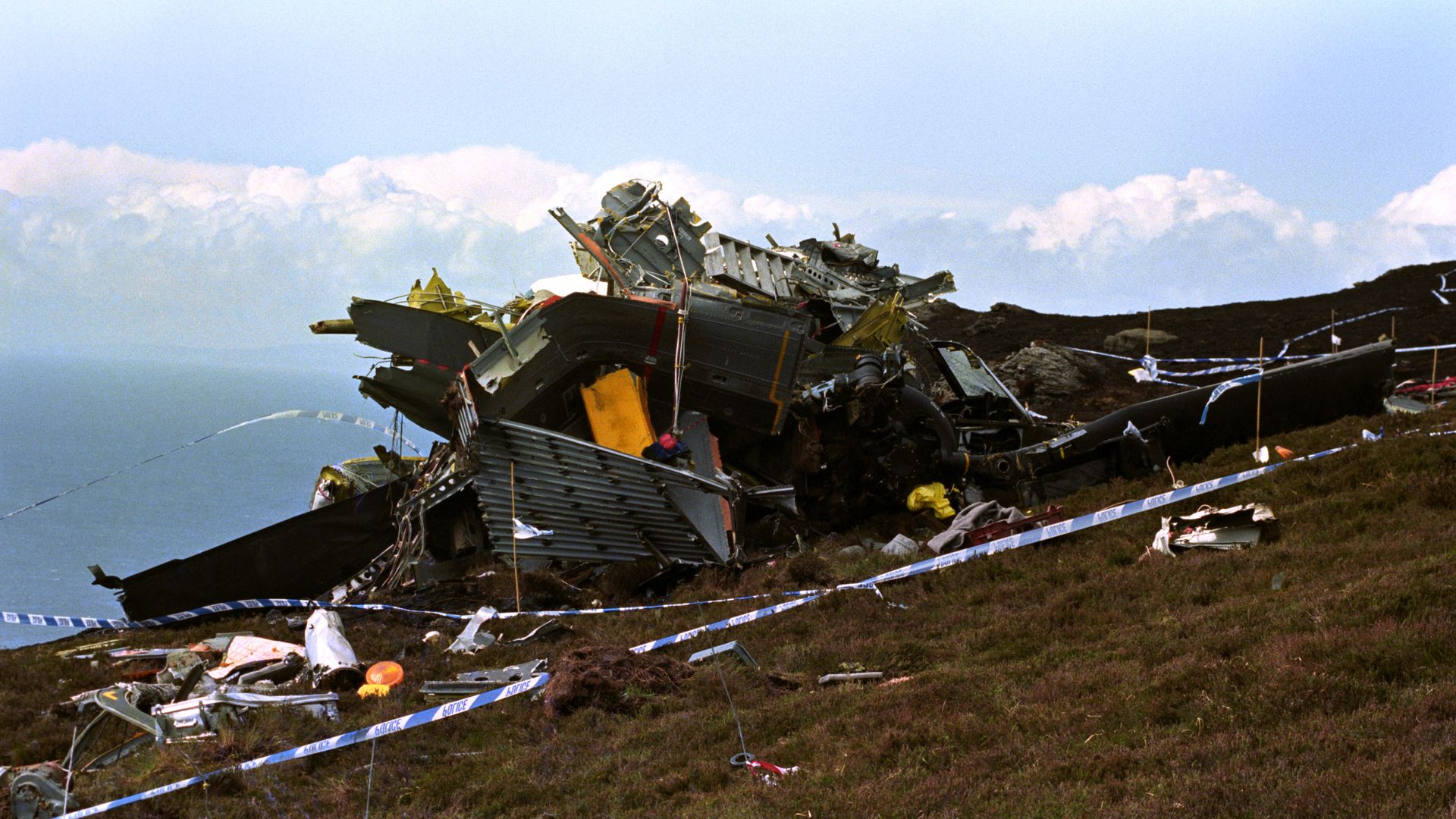
The families of the 29 people killed in the 1994 Mull of Kintyre Chinook helicopter crash are facing a familiar wall of resistance as they demand a fresh independent inquiry. The Ministry of Defence continues to stand by its historical handling of the disaster, despite the 2011 Mull of Kintyre Review having already overturned the initial findings of gross negligence against the pilots, Flt Lts Richard Cook and Jonathan Tapper. This current standoff is not merely a dispute over an old tragedy; it represents a fundamental clash between institutional self-preservation and the accountability required in military aviation. The families argue that vital technical evidence regarding the Chinook HC2’s airworthiness was obscured, and they refuse to let the ministry quieten the demands for a thorough, judicial examination of the systemic failures preceding the crash.
The Ghost of the HC2 Airworthiness Crisis
To understand why the families refuse to back down, one must look past the immediate aftermath of June 2, 1994. The crash killed 25 senior Northern Ireland intelligence experts and four crew members. It remains the RAF's worst peacetime disaster. The initial inquiry by two air marshals blamed the pilots, citing gross negligence for flying too fast and too low in thick fog.
That verdict stood for 17 years. It took a relentless campaign by the families, independent engineers, and politicians to force the 2011 Lord Philip review, which concluded that the finding of negligence should never have been made because there was "no malicious intent" and "no absolute certainty" as to the cause.
Yet, clearing the pilots' names did not uncover the actual cause of the crash. The Ministry of Defence treats the Philip review as the final chapter. For the families, it was merely the prologue. The underlying issue remains the rushed introduction of the Chinook HC2 fleet.
In the months leading up to the disaster, the HC2 upgrade was plagued by severe software glitches in the FADEC (Full Authority Digital Engine Control) system. The software was so unstable that the Royal Air Force’s own test establishment at Boscombe Down refused to clear the helicopter for operational flying. Test pilots had experienced uncommanded engine surges and shutdowns. The engineering staff at Boscombe Down actually resigned their clearance duties for the aircraft type just days before the crash, stating that the software was unquantifiable and therefore unsafe.
The RAF hierarchy overrode these warnings. They deployed the HC2 to a critical theater of operations anyway. When the aircraft flew into the mist-shrouded cliffs of Kintyre, the ministry quickly pointed the finger at human error, effectively shielding the procurement decisions and the manufacturers from deeper scrutiny.
The Strategy of Institutional Inertia
The Ministry of Defence operates on a principle of administrative exhaustion. When a major failure occurs, the standard bureaucratic playbook involves delaying disclosures, rationing information, and relying on the passage of time to deplete the financial and emotional resources of campaigning families.
This is not an isolated tactic. It is a structural feature of state departments. By insisting that previous reviews have settled the matter, the ministry creates a circular defense. They argue that because a review happened, no further investigation is needed, while ignoring that those previous reviews were restricted in scope.
The 2011 review was explicitly tasked with examining the justification for the negligence verdict, not with conducting a full-scale forensic reconstruction of the aircraft's mechanical state at the moment of impact. Consequently, critical questions about the potential binding of the helicopter's steering controls or a FADEC-induced power surge remain legally unaddressed.
Campaigners have recently pointed to unreleased internal memos from 1993 and 1994 that highlight deep anxiety within the procurement executive regarding the legal liability of the software code. These documents suggest that senior officials knew they were operating outside standard safety margins. If a new inquiry were granted, these documents would be subjected to cross-examination, creating a precedent that current defense officials are desperate to avoid. Accountability within military procurement cannot exist when the organization regulating safety is the same organization purchasing the equipment and managing the political fallout of its failure.
The Fragility of Independent Oversight
The ongoing dispute highlights a systemic flaw in how military accidents are handled in the United Kingdom. Unlike civilian aviation, where the Air Accidents Investigation Branch operates with structural independence from commercial airlines and regulators, military investigations have historically been tethered to the chain of command.
Even with the creation of the Defence Accident Investigation Branch in recent years, the shadow of the old system persists. The individuals tasked with reviewing past failures are often part of the same institutional culture that produced the errors. They share the same career paths, the same loyalties, and the same instinct to protect the service's reputation from public scrutiny.
This cultural insularity distorts the understanding of complex engineering failures. In civilian crash investigations, if an aircraft component is known to have suffered critical software anomalies prior to a disaster, the burden of proof shifts to proving that the component did not fail. In the case of the Mull of Kintyre Chinook, the RAF hierarchy reversed this logic. They demanded that critics prove definitively that the software did fail, knowing that the destruction of the aircraft and the lack of an accident data recorder made absolute proof impossible.
This asymmetric standard of proof is how institutional victories are won. By setting the evidentiary bar at an unobtainable height, the state can maintain its position indefinitely, dismissing new technical analyses as speculative or redundant.
The High Stakes of Precedent
The determination of the Chinook families is driven by the knowledge that allowing the ministry to maintain its stance sets a dangerous template for future military procurement scandals. We see the echoes of this defensive posture in contemporary defense programs, where software integration issues and cost overruns are routinely obscured from parliamentary oversight until they become catastrophic.
If the Ministry of Defence successfully resists a definitive inquiry into the Mull of Kintyre disaster, it confirms that a policy of stonewalling can outlast the lifespan of a campaign. It signals to current and future procurement officials that decisions made under political or operational pressure will be protected from judicial accountability, provided the department can maintain its composure long enough for the public to lose interest.
The push for a new inquiry is a battle over the historical record and the definition of state accountability. The families are not seeking closure, a term often used by bureaucrats to signal the end of a public relations problem. They are seeking an explicit judicial acknowledgment that the operational command failed its personnel by deploying an uncertified aircraft, and that the subsequent investigation was engineered to protect the institution rather than uncover the truth. The Ministry of Defence cannot be allowed to win by default, because the price of their victory is the permanent erosion of safety standards and public trust in military leadership.


