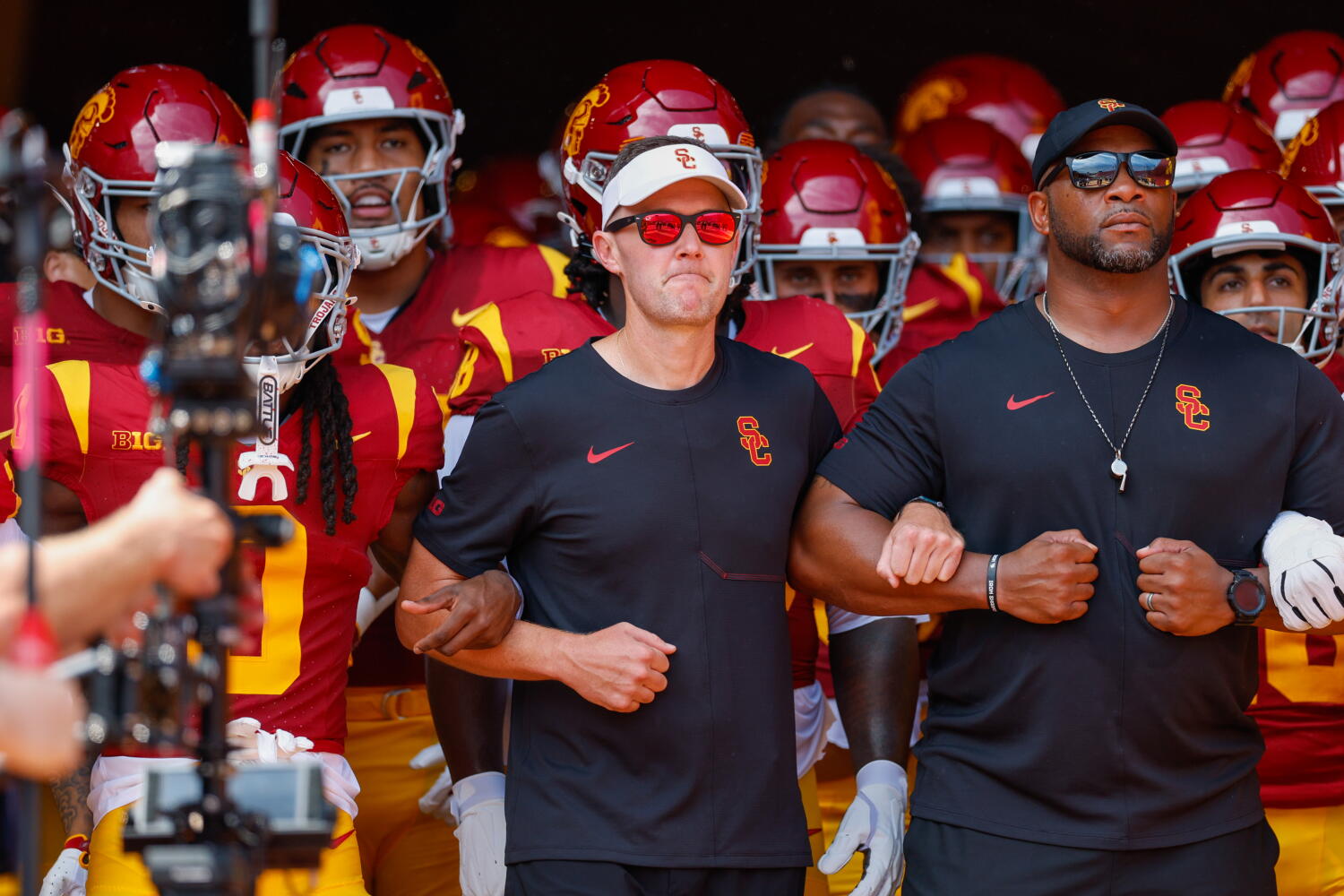
The locker room smells of damp turf, adhesive tape, and wintergreen ointment. Outside, the Southern California sun beats down on an asphalt parking lot that radiates heat well past four in the afternoon. Inside, Corona del Mar High School’s varsity football players are peeling off shoulder pads that have taken a savage beating on Friday nights.
They are undefeated. They are dominant. Yet, ask the players what they did yesterday afternoon, and you might hear about a baseline spike on a volleyball court, a butterfly stroke in a damp Natatorium, or the sharp crack of a baseball bat against a fastball in the batting cages.
Specialization has consumed youth athletics. Modern sports culture demands a child pick one discipline at age eight, abandon everything else, and grind toward a single goal until their rotator cuffs fray or their knees give out by sixteen. Corona del Mar looked at that rigid, factory-line model and decided to burn the instruction manual.
Consider what happens when a quarterback spends his spring reading a setter's eyes across a volleyball net. He is not just staying in shape. He is learning spatial geometry in real time. He is adjusting to unpredictable trajectories, timing his release under duress, and forcing his brain to process high-speed visual data from an entirely different angle. When he drops back on a third-and-long under a collapsing pocket, that cross-court vision translates directly into finding a crossing receiver through a forest of outstretched linemen.
Football has become a game of sterile efficiency. Seven-on-seven circuits year-round, private quarterback gurus, personal trainers tracking micro-movements with high-speed cameras. It turns teenagers into machines built for one specific task. But machines break when faced with chaos. Athletes adapt.
The Sea Kings football program thrives on the cross-pollination of athleticism. This is not an accident of scheduling or a lucky coincidence of local talent. It is an institutional philosophy born from the belief that the best football player is often the kid who refuses to only play football.
Step onto the campus during the off-season. The traditional high school sports silo crumbles. A starting linebacker is sprinting down a soccer pitch, learning how to track momentum and change direction on a slick grass surface without losing his center of gravity. A wide receiver is running track, discovering a whole new gear of top-end speed that no amount of linear cone drills in a football-specific camp could ever unlock.
Specialization breeds overuse injuries. Ask any orthopedic surgeon who spends their Saturdays operating on high school elbows and knees. The repetitive stress of throwing a football twelve months a year tears labrums before a kid even gets a driver's license. By encouraging players to step away from the gridiron, put down the pigskin, and embrace the radically different physical demands of basketball, track, baseball, or water polo, Corona del Mar preserves its roster. Muscles rest. Neurological pathways reset. The mind stays fresh. When August rolls around and the pads go back on, these kids are hungry. They have not spent the summer burning out in the scorching heat of pointless seven-on-seven tournaments. They have been competing elsewhere, sharpening different tools in different sheds.
It changes the culture inside the locker room, too.
In single-sport factories, the hierarchy is rigid and claustrophobic. Everyone lives in the same fishbowl. Status is measured purely by depth chart position, month after month, with no escape from the pressure cooker. When you introduce multi-sport athletes, that fishbowl shatters. On the football field, a senior might be the undisputed general, the team captain barking orders. But walk over to the basketball court in January, and that same captain might be fighting for bench minutes, learning how to be a supportive teammate from the end of the rotation.
That shift in perspective builds resilience. Ego gets checked at the door because you cannot afford to carry a fragile one when you are learning a brand-new sport from scratch every few months.
Coaches across the country often panic at the thought of their players missing weight room sessions for another sport. They hoard their athletes like dragons sitting on a pile of gold. They threaten demotions. They demand absolute loyalty to the year-round grind.
Corona del Mar took the opposite risk. They trusted that athletic intelligence compounds.
When a kid learns to read a zone defense in basketball, he is learning how to read a zone defense on the gridiron. When a swimmer develops lung capacity and core stability that defies fatigue in the final quarter of a close game, that is a direct dividend paid by the brutality of distance swimming. Athleticism is not a narrow pipe. It is an ocean. The wider the basin, the deeper the talent.
Look at the film from their latest championship run. Watch how the offense flows. It is not just about raw speed or overpowering strength, though they have plenty of both. It is about spatial awareness, improvisation, and timing. It is about kids who know how to fall safely because they learned gymnastics or wrestling. It is about hand-eye coordination forged against a curveball.
The scoreboard validates the experiment. Wins pile up. Trophies fill the glass cases in the hallway. But the real victory isn't written in the win-loss column. It is written in the lack of surgery scars on teenagers who should still be kids, not broken-down commodities.
Other programs are starting to notice. They watch the dominance unfold from the sidelines, scratching their heads, wondering what secret sauce is being cooked in Newport Beach. They look for tactical innovations, new blocking schemes, or secret recruiting pipelines. They look everywhere except at the obvious truth staring them right in the face.
The secret isn't a play. It's the player.
And the player is a kid who spent his Tuesday afternoon diving for a loose ball on a hardwood floor, his Wednesday running the anchor leg of a four-by-one-hundred relay, and his Friday night under the blinding stadium lights, reading a safety's hips with the cool clarity of someone who has played a hundred different games and mastered the art of competing in all of them.
The final whistle blows. The stadium lights hum, cutting through the marine layer rolling in off the Pacific. The players trade handshakes, pat each other on sweat-soaked shoulder pads, and trudge toward the locker room one last time this week. Tomorrow morning, the football cleats stay in the locker. The basketball shoes come out. The cycle begins again. Unbeaten, unbroken, and entirely unbound.