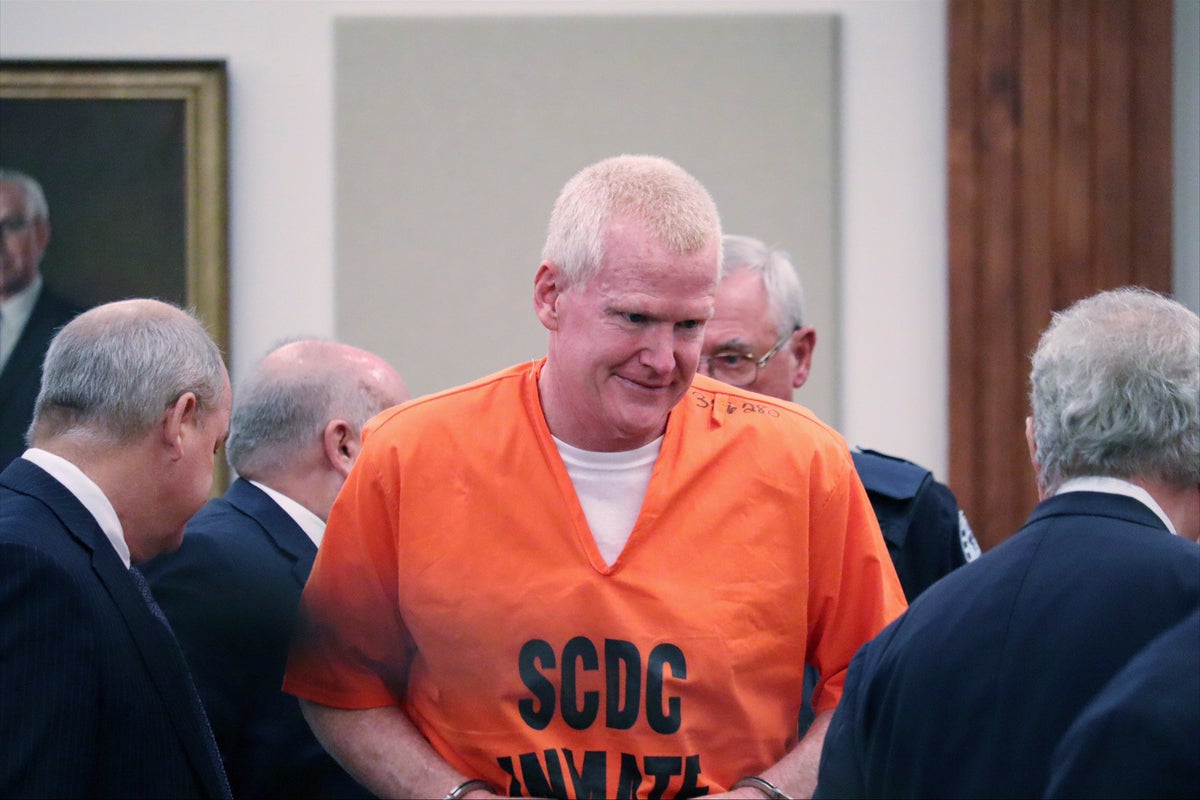
The conviction of Alex Murdaugh for the June 7, 2021, murders of his wife, Maggie, and son, Paul, represents a convergence of systemic legal fragility and high-stakes evidentiary gambles. While the 2023 trial resulted in a double-life sentence, the subsequent motion for a new trial—and the eventual decision by the South Carolina Supreme Court to review the conduct of the Colleton County Clerk of Court—shifts the focus from the defendant’s guilt to the integrity of the judicial process itself. The Murdaugh case is not merely a chronicle of a fallen legal dynasty; it is a stress test for the American jury system under the pressure of unprecedented media saturation and allegations of state-actor interference.
The Triad of Evidentiary Risk
The prosecution’s victory rested on three distinct pillars, each carrying a high degree of procedural risk. To understand why the conviction is currently under such intense scrutiny, one must first deconstruct the mechanics of the state’s strategy.
1. The Financial Nexus and Rule 404(b)
The state argued that Murdaugh’s decade-long spree of financial crimes—stealing nearly $9 million from clients and law partners—provided the motive for the murders. Under Rule 404(b), evidence of other crimes is generally inadmissible to prove character, but the prosecution successfully argued it was essential to prove "motive, intent, and identity."
This created a "trial within a trial." By spending weeks detailing complex financial fraud, the prosecution gambled that the jury would see the murders as a desperate attempt to create a distraction and "buy time" before his law firm confronted him. The risk here is "unfair prejudice": the possibility that a jury would convict Murdaugh for the murders simply because they found him to be a person of low moral character due to his financial thefts.
2. The Digital Timeline and Kennel Video
The most objective component of the case was the recovery of data from Paul Murdaugh’s phone. A video recorded at 8:44 p.m. at the family dog kennels placed Alex Murdaugh at the scene of the crime minutes before the state’s estimated time of death. This video functioned as a "technical checkmate," forcing Murdaugh to take the stand to explain why he had previously lied to investigators about his whereabouts.
3. The Credibility Pivot
When Murdaugh testified, the trial shifted from a forensic investigation into a psychological evaluation. The state relied on a "liar-in-fact" strategy. If the jury found Murdaugh lied about the kennel video, the prosecution’s logic suggested they must assume he lied about the trigger-pulling. This pivot moved the case from circumstantial forensic evidence to the subjective assessment of a defendant's demeanor under cross-examination.
The Clerk of Court Allegations and Jury Tampering Mechanics
The primary threat to the stability of the Murdaugh conviction is not the evidence of the crime, but the alleged conduct of Becky Hill, the Colleton County Clerk of Court. The defense’s appeal centers on the claim that Hill compromised the Sixth Amendment right to an impartial jury by making prejudicial comments to jurors during the trial.
The Mechanism of Influence
Jurors are sequestered from outside information to ensure the verdict is based solely on evidence presented in court. The Clerk of Court is a "gatekeeper" of the jury. Allegations suggest Hill instructed jurors "not to be fooled" by Murdaugh’s testimony and pressured them toward a quick verdict to facilitate a book deal she was writing.
In a legal context, this creates a "presumption of prejudice." If a state official—someone the jury views as an authority figure—attempts to influence the outcome, the structural integrity of the trial is compromised. Even if the evidence of guilt is overwhelming, a conviction cannot stand if the process used to reach it was fundamentally unfair.
The Standard for a New Trial
The South Carolina Supreme Court must determine if Hill's alleged comments met the threshold for "prejudicial error." Unlike a standard appeal where a defendant must prove that an error changed the outcome of the trial, allegations of jury tampering by a court official often require a lower burden of proof from the defense. The core question is whether the "sanctity of the jury room" was violated.
Forensic Limitations and the Absence of Direct Evidence
A critical analysis of the Murdaugh case reveals significant gaps in the physical evidence that would, in many other jurisdictions, have led to an acquittal.
- The Missing Weapons: The two weapons used—a 300 Blackout rifle and a 12-gauge shotgun—were never recovered.
- The Blood Spatter Paradox: Initial reports suggested high-velocity blood spatter on Alex Murdaugh’s shirt, but subsequent DNA and forensic analysis were inconclusive or directly contradicted the early claims.
- The Short Window of Opportunity: The state’s timeline gave Murdaugh less than 20 minutes to commit two murders with two different weapons, dispose of the guns, clean himself of significant biological evidence, and drive to his mother's house.
The prosecution compensated for these gaps through "momentum-based litigation." By stacking the financial crimes on top of the digital timeline, they created a narrative weight that outweighed the individual forensic inconsistencies.
The Strategic Failure of the Defense
The defense team, led by Dick Harpootlian and Jim Griffin, utilized a "reasonable doubt through chaos" strategy. They highlighted the SLED (South Carolina Law Enforcement Division) failures, such as the failure to secure the crime scene and the mishandling of certain forensic samples.
However, the defense made a catastrophic tactical error by allowing Murdaugh to testify. While they felt it was the only way to explain the kennel video lie, it exposed Murdaugh to a cross-examination that highlighted his professional skill as a trial lawyer—his ability to manipulate facts and emotions. This allowed the prosecution to frame his tears on the stand as "performative," turning his primary defense tool (his personality) into a liability.
The Road to Conviction Overturn: Statistical and Legal Realities
The overturning of a high-profile conviction in South Carolina is statistically rare but legally viable when state-actor misconduct is involved. The current legal posture is focused on a specific evidentiary hearing regarding Becky Hill's conduct.
If the conviction is overturned, the state faces a "Double Jeopardy" paradox. While they can retry Murdaugh, the second trial would be significantly different:
- Diminished Surprise: The digital forensics are now public record; the defense can prepare more effective counter-narratives for the kennel video.
- Jury Pool Contamination: Finding twelve jurors in South Carolina who have not formed an opinion on the case is functionally impossible, likely requiring a change of venue to a distant county or the seating of a jury from outside the circuit.
- The Financial Plea: Since the 2023 murder trial, Murdaugh has pleaded guilty to many of his financial crimes. In a retrial, the defense might argue that these crimes are "settled law" and should not be used to inflame a new jury regarding the murders.
The Systematic Impact on the Murdaugh Dynasty
The Murdaugh family held the office of Solicitor for the 14th Circuit for 86 consecutive years. This "legal hegemony" meant they controlled the prosecution and investigation apparatus of five counties. The collapse of this dynasty was not a gradual decline but a rapid disintegration triggered by the 2019 boat crash involving Paul Murdaugh.
The boat crash serves as the "initial condition" in the Murdaugh causality chain. It triggered the civil litigation that threatened to expose Alex Murdaugh’s financial insolvency.
- The Beach Family Lawsuit: This created the legal discovery process that would have revealed Murdaugh’s embezzlement.
- The Timeline of Exposure: The hearing to compel Murdaugh to reveal his finances was scheduled for the week of the murders.
This sequence suggests that the murders were a "tactical delay" in a larger financial war. The prosecution’s success was in convincing the jury that a man would trade the lives of his family for 48 hours of legal breathing room.
The Strategic Forecast
The South Carolina Supreme Court’s involvement indicates that the "Becky Hill factor" is being treated as a systemic threat rather than a minor procedural hiccup. If the court finds that any juror was influenced by external comments from court staff, the conviction will be vacated regardless of the evidence's strength.
The state’s current strategy is to isolate the Clerk of Court’s actions from the jury’s "independent" deliberation. However, the precedent set by Remmer v. United States suggests that any private communication with a juror during a trial about the matter pending before the jury is deemed "presumptively prejudicial."
The most likely outcome is a protracted period of appellate litigation where the state attempts to prove "harmless error"—the idea that even without Hill's comments, the jury would have reached the same conclusion. This is a difficult needle to thread in a case built on circumstantial evidence and defendant credibility.
The ultimate resolution of the Murdaugh case will not be found in the mud of the Moselle estate, but in the sterile environment of appellate record review. The case has moved past the "who-done-it" phase and into a "was-it-done-correctly" phase. In the American legal system, the latter is often more consequential than the former.
The state must now defend the conduct of its own officers with the same vigor it used to prosecute the defendant. Any failure to do so results in a mistrial by operation of law, forcing a total reset of the most expensive and publicized prosecution in South Carolina history.