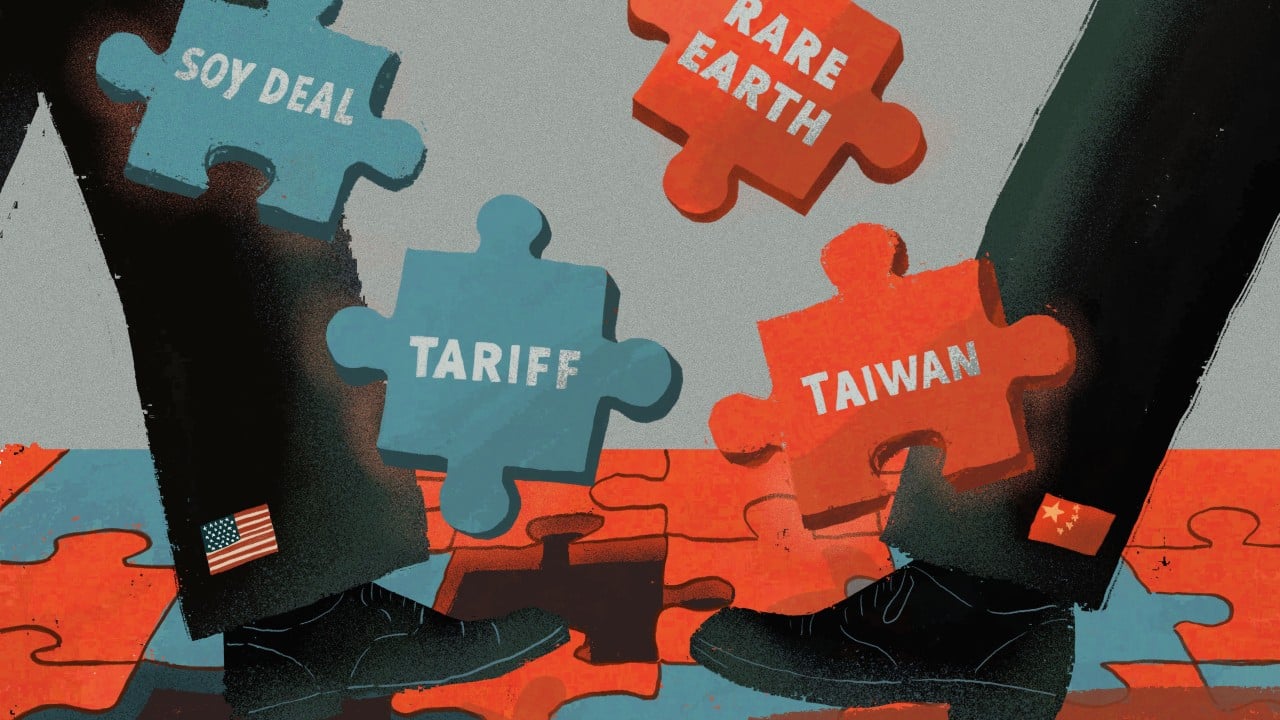
Foreign capitals run on panic whenever Washington turns inward, redrafts its trade agreements, and threatens blanket tariffs. Analysts in European ministries and Asian financial hubs spend hours wringing their hands over every erratic policy shift, treating each executive announcement as an existential shock to the international order. Yet, inside the policy compounds of Beijing, the reaction is remarkably flat.
China is not sweating the churn. While western editorial boards interpret every diplomatic standoff as a crisis, Zhongnanhai views the chaotic theater of American protectionism through a lens of cold, historical patience. Beijing is playing it cool not because leaders are indifferent, but because they have spent years weaponizing American volatility to accelerate their own structural independence.
To understand why Beijing absorbs trade disruptions without blinking, look past the daily headlines of diplomatic friction and examine the mechanics of industrial planning. Western leadership cycles every four or eight years, bringing abrupt pivots in foreign policy, legislative priorities, and trade enforcement. Beijing operates on multi-decade horizons. When an administration in Washington implements sudden tariffs or export controls, it creates immediate noise for Chinese export manufacturers, but it also confirms every suspicion Communist Party planners held about the unreliability of western markets.
Instead of scrambling for a last-minute truce, Beijing treats these external shocks as a permanent weather pattern. The strategy centers on systematic decoupling from structural vulnerabilities while quietly anchoring supply chains across the Global South. Consider how Chinese electric vehicle manufacturers, solar conglomerates, and battery technology leaders have methodically expanded production footprints across Southeast Asia, Latin America, and the Middle East. If access to North American consumer markets narrows, those alternative trade routes absorb the surplus capacity.
This calculated composure also stems from a clear-eyed assessment of America's domestic divisions. Veteran diplomats in Beijing recognize that a political system perpetually at war with itself struggles to maintain coherent, long-term economic strategies. When Washington swings wildly between aggressive interventionism and isolationist rhetoric, it signals to international partners that American commitments are inherently conditional. Beijing steps into this vacuum with predictable, state-backed capital and long-term infrastructure commitments, presenting itself as the steady hand in a fractured world.
Naturally, this approach carries its own internal contradictions. China faces severe domestic headwinds, including high debt levels, a cooling property sector, and a consumption slowdown that state subsidies alone cannot fix. Playing it cool externally does not insulate the domestic economy from structural drag. Yet, leadership views external economic pressure not as a fatal blow, but as a useful domestic disciplinary tool. When external threats mount, Beijing rallies industrial policy around self-reliance, justifying heavy state intervention in advanced sectors like semiconductors, quantum computing, and advanced manufacturing.
The western mistake is assuming that Beijing desires a return to the pre-2016 status quo. That era of open globalization, where Chinese factories assembled goods primarily for western consumption, is gone and neither side truly wants it back. Washington wants manufacturing repatriation and technological containment; Beijing wants absolute technological autonomy and a multipolar economic network that bypasses the dollar standard where possible.
By remaining calm amid the noise, Beijing achieves a psychological victory. Composure projects strength to domestic audiences and reassures hesitant trade partners across the developing world that China remains the reliable anchor of global trade. While Washington measures success in quarterly tariff adjustments and immediate trade deficit numbers, Beijing measures success in decades, watching quietly as the architecture of western hegemony frays under the weight of its own internal contradictions.