The Etiquette Trap
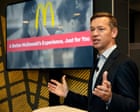
The internet is currently hyperventilating over a video of McDonald’s CEO Chris Kempczinski eating a burger. Critics are obsessed with his "awkward" technique. They’re mocking his explanation—that his mother’s strict etiquette training made him a dainty eater. They call it a PR disaster. They call it out of touch.
They are completely wrong. You might also find this related coverage insightful: The Pension Fund Collapse Nobody Talks About.
This isn't a failure of optics. It is a masterclass in unintentional brand reinforcement. The "lazy consensus" among brand consultants is that a CEO must be "one of us." They want the leader of a multi-billion dollar fast-food empire to shove a Big Mac down his throat like a hungover college student at 2:00 AM. They want "relatability."
Relatability is a poverty trap for global brands. As highlighted in detailed coverage by The Economist, the implications are notable.
The Performance of Politeness
When Kempczinski blames his mother’s training for his inability to look "normal" while eating a burger, he isn't making an excuse. He is signaling status. In the high-stakes world of global franchising, the CEO isn't the guy flipping the patties; he is the guy managing the capital.
The disconnect between the product (a $5 mass-produced sandwich) and the consumer (the man in the $3,000 suit) is exactly what shareholders want to see. You don't want a CEO who shares the lifestyle of the average customer; you want a CEO who can navigate a boardroom in Zurich or a gala in Tokyo.
His "awkwardness" is a badge of a specific upbringing. It is the friction between old-world manners and new-world industrial food. By blaming "etiquette training," he isn't apologizing for being weird. He is reminding you that he belongs to a class of people who were taught how to use a fish knife before they knew what a Chicken McNugget was.
Why Authenticity Is Overrated
We live in an era of manufactured "authentic" moments. We’ve seen the staged photos of politicians eating corn dogs at state fairs. We’ve seen the tech moguls wearing gray hoodies to look like "the help." It’s a lie, and everyone knows it.
Kempczinski’s failure to eat a burger convincingly is the most authentic thing he has ever done. It proves he isn't faking it. He is a corporate aristocrat. When he tries to engage with the product in a casual way, the mask slips because there is no mask. He is exactly who he appears to be: a man more comfortable with a spreadsheet than a sesame seed bun.
The Math of the Viral Moment
Let’s look at the actual impact.
- Brand Impression: Millions of people are looking at a McDonald’s burger.
- Engagement: The "gaffe" generates 10x more earned media than a standard "CEO visits kitchen" press release.
- Sentiment: The mockery is low-stakes. No one is boycotting McDonald's because the CEO eats like a Victorian orphan.
Imagine a scenario where the video was perfect. Kempczinski takes a massive, messy bite, smiles with grease on his chin, and gives a thumbs up. It would have stayed in the "Corporate Communications" bucket. It would have died with 400 views on LinkedIn. Instead, his "failure" has become a global talking point. In the attention economy, a polite mistake is worth more than a perfect execution.
The Fallacy of the Relatable Leader
Modern business theory is obsessed with the "servant leader" who gets their hands dirty. This is a fairy tale. I’ve seen companies blow millions on "rebranding" their executives to seem more approachable, only for the stock price to crater because the market realizes the leadership is focusing on TikTok trends instead of supply chain logistics.
The "People Also Ask" crowd wants to know: "Why can't he just eat a burger?"
The answer is: Because he doesn't have to.
If your CEO is too good at eating fast food, you have a problem. It suggests they spend more time in the drive-thru than in the data center. We should be suspicious of leaders who are too polished in their performance of "the common man." Kempczinski’s mother did him a favor, not by teaching him which fork to use, but by making him forever distinct from the masses he serves.
The High Cost of the "Everyman" Aesthetic
Look at the history of corporate collapses. Often, they are preceded by a CEO who tries too hard to be a "buddy." They trade authority for likability.
When a CEO participates in a "casual" video and fails, it reinforces the hierarchy. It reminds the world that McDonald’s is a massive, cold, efficient machine, not a family kitchen. That efficiency is what keeps the dividend checks coming.
- Logic Check: Does a CEO’s eating habit affect the flavor of the fries? No.
- Data Check: McDonald’s Q1 earnings aren't tied to Kempczinski’s bite technique; they are tied to global pricing power.
- The Reality: The "outrage" is just entertainment for people who will still buy a McDouble tomorrow.
The Nuance of the Gaffe
The competitor article suggests this is a "blame game"—that Kempczinski is throwing his mother under the bus to save face. That is a shallow reading.
It’s actually a brilliant deflection. By shifting the focus to "etiquette," he moves the conversation away from the product's nutritional value, the labor disputes, or the price hikes. He makes the story about his own quirky personality. He has successfully turned a potential discussion about corporate policy into a debate about table manners.
He didn't "blame" his mother. He used her as a human shield to pivot the narrative into the most harmless territory possible.
Stop Demanding Puppetry
We need to stop asking our leaders to be actors. The demand for "relatability" forces executives into cringeworthy performances that satisfy no one.
When we see a CEO fail a basic human task like eating a sandwich, we shouldn't mock the failure. We should appreciate the honesty of the divide. The man is a suit. He is a capital allocator. He is a representative of the shareholders. He is not your friend, and he is certainly not your dinner guest.
The obsession with his etiquette is a distraction from the only thing that matters: the cold, hard efficiency of the Golden Arches. If he can keep the stock price climbing while eating a burger with a knife and fork, let him.
The most "cringe" thing about this entire saga isn't the CEO’s bite. It’s the public’s belief that he should be "one of them" in the first place.
Buy the stock. Eat the burger. Stop worrying about the man in the corner office. He’s doing exactly what he was hired to do: remain fundamentally, unapologetically different from you.