Western media loves a good tragedy, especially when they can dress it up in the language of modern identity politics.
For years, the consensus among foreign commentators has been uniform: Japan’s Imperial House is heading off a cliff. The narrative is simple. Because the 1947 Imperial House Law restricts succession to males of the male line, and because there is currently only one young heir in the generation of Prince Hisahito, the monarchy is doomed. The "obvious" solution, we are told, is to let women take the throne.
It is a neat, comforting, and incredibly lazy argument.
The commentators screaming about a "deep royal crisis" are missing the entire point of the institution they claim to want to save. They are applying modern Western corporate governance structures to an ancient spiritual priesthood. They want the Chrysanthemum Throne to function like the British House of Windsor—a high-end celebrity PR machine.
But Japan is not Britain. The Chrysanthemum Throne is not a reality TV show. And the obsession with forcing a Western-style gender equality framework onto a 2,000-year-old shinto tradition is not progressive; it is culturally illiterate.
The Category Error of "Modernizing" the Throne
To understand why the "crisis" is wildly overstated, we have to look at what the Emperor actually is.
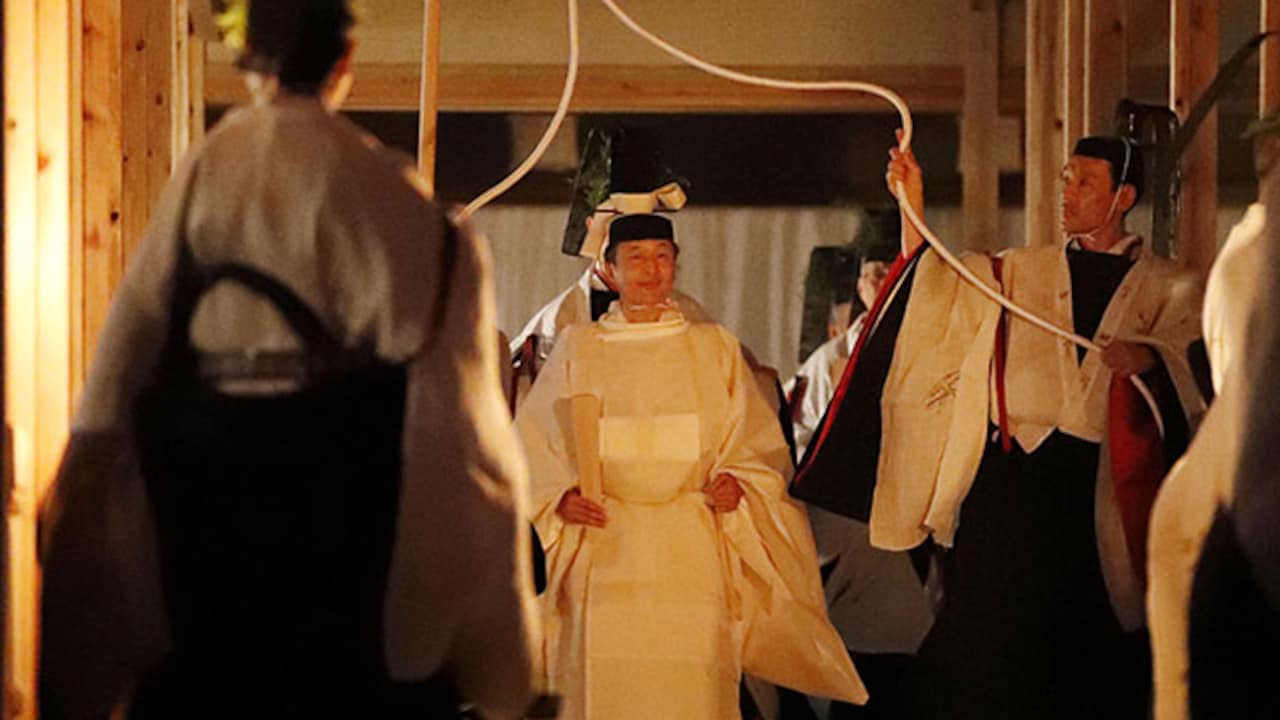
Under the post-war constitution, the Emperor is the "symbol of the State and of the unity of the People." But historically and culturally, the Emperor is the supreme priest of Shinto. The core of the imperial identity is not political power, nor is it charity patronage. It is the performance of highly private, esoteric rituals designed to maintain harmony between the Japanese people, their ancestors, and the kami (spirits).
When Western critics demand that Japan "update its rules to reflect modern society," they are committing a fundamental category error. They are treating a religious lineage like a modern board of directors.
No one looks at the Catholic Church and argues that the Papacy is in a "crisis of survival" because it does not allow female popes to ensure a larger talent pool. We recognize that the Catholic Church operates on its own internal, ancient theological logic. Yet, when it comes to Japan, the same respect for religious and cultural autonomy is discarded in favor of editorial hand-wringing.
The male-line succession (dangei) is not a policy decision made in a vacuum by a few stubborn politicians in Tokyo. It has been the unbroken rule of the dynasty for its entire documented history. Yes, there have been female reigning empresses in the past—eight of them, to be precise. But every single one of them was either the widow of a previous emperor or an unmarried daughter of an imperial male. They were temporary placeholders to prevent succession disputes, and none of them passed the throne to their own children. The male line remained intact.
Interrupting that 126-generation continuity is not a minor policy tweak. To the traditionalists who guard the institution, it would be an existential break. If you change the fundamental nature of the lineage, you do not "save" the monarchy; you create a brand-new institution and slap an old label on it.
The Real Numbers Behind the Succession Debate
Let’s look at the actual math, rather than the emotional appeals.
The panic merchants point to Prince Hisahito, born in 2006, as the solitary bottleneck of the family. They argue that relying on a single young man to secure the future of the entire dynasty is a high-stakes gamble.
They are right about the gamble. They are wrong about the solutions.
Imagine a scenario where a major global corporation faces a talent shortage. Do they completely rewrite their corporate charter and change their core product, or do they look at expanding their recruitment pipeline within their historical parameters?
The Japanese government is already looking at the latter. The obsession with female succession ignores two highly viable, traditional workarounds that are actively being discussed in Tokyo’s policy circles:
- Adopting male heirs from former imperial branches. In 1947, under pressure from the US Allied Occupation, 11 collateral branches of the imperial family (the kyu-miyake) were stripped of their royal status to cut costs. These branches share a common male ancestor with the current Emperor. Reinstating these branches, or allowing current imperial family members to adopt male heirs from these lineages, would instantly solve the numbers game without breaking the male-line rule.
- Allowing female imperial members to retain their royal status after marriage. Currently, princesses who marry commoners must leave the imperial family. By changing the law so they keep their status—and potentially allowing their husbands and children to be integrated if they come from the collateral branches—the family can maintain its administrative workload without altering the core line of succession.
These are not wild, untested theories. They are historically grounded mechanisms. Yet, you rarely read about them in Western analyses because they do not fit the clean narrative of a "backward nation refusing to modernize."
The British Monarchy is a Warning, Not a Model
The loudest voices demanding reform in Japan point to Europe as the gold standard. Look at Sweden, they say, which adopted absolute primogeniture in 1980. Look at the UK, which did the same in 2013.
But is the European model actually working?
By transforming their royal families into accessible, thoroughly modernized, media-friendly institutions, European monarchies have stripped away the very thing that makes a monarchy viable: its mystique.
The British Royal Family has spent the last decade tearing itself apart in a brutal, public cycle of tabloids, Netflix documentaries, and tell-all memoirs. They have become celebrities, and celebrity is a volatile currency. Once a royal family is judged by the same standards as Hollywood actors, their survival depends entirely on their popularity ratings. If the public gets bored or offended, the institution has no defense.
The Japanese Imperial Family has survived for two millennia precisely because it resists this democratization. It does not seek popularity. The Emperor does not do sit-down interviews with Oprah. The imperial household agency (Kunaicho) strictly controls access, maintaining an aura of sacred distance.
This distance is protective armor. By refusing to become "relatable," the Chrysanthemum Throne protects itself from the temporary political and cultural swings of the day. To drag the throne into the arena of modern gender politics is to strip it of its shield. Once the rules of succession become subject to the whims of contemporary public opinion, the monarchy ceases to be a symbol of eternal continuity and becomes just another political football.
The False Premise of Public Polls
Activists love to cite domestic polls showing that up to 80% of the Japanese public would support a reigning Empress. They present this as proof that the government is hopelessly out of step with its citizens.
This is a classic misunderstanding of how public opinion operates in Japan, especially regarding deeply traditional matters.
If you ask a random person on the street in Tokyo, "Should a woman be allowed to be Emperor?", they will say yes because they like the current princesses, and because gender equality is a generally positive concept. The answer is polite, superficial, and unbothered by historical nuance.
But if you ask that same person, "Are you willing to risk a constitutional crisis, a split in the nation's spiritual identity, and the permanent disruption of a 2,000-year tradition to force this change right now?", the response changes dramatically.
The Japanese public’s support for a female Emperor is passive. Their support for the stability of the imperial institution is active. Politicians know this. They understand that there is no grassroots movement marching through Shibuya demanding succession reform. The pressure is almost entirely external, driven by foreign journalists and a small cadre of domestic academics who make their living writing about the "crisis."
The Downside of the Traditionalist Path
To be fair, sticking to the traditionalist path has massive, undeniable drawbacks. It is a brutal system.
The pressure placed on the women within the imperial family is immense. We saw this with Empress Masako, a brilliant former diplomat who suffered from severe, stress-induced "adjustment disorder" for years because of the intense pressure to produce a male heir. We saw it again with former Princess Mako, who faced relentless media scrutiny when she chose to marry a commoner and leave the family.
The current system relies on a high degree of personal sacrifice from a very small number of individuals. It is unfair, it is archaic, and it is emotionally taxing.
But we must be honest about what monarchy actually is. Monarchy, by its very nature, is unfair. It is an institution built on the ultimate inequality: the idea that one specific family is born to rule or serve as the spiritual heart of a nation by virtue of their bloodline.
If we are going to accept the premise of a monarchy at all, we have to accept the bizarre, demanding, and often illiberal rules that allow it to function. Trying to turn the Chrysanthemum Throne into a fair, meritocratic, equal-opportunity employer is a contradiction in terms. You cannot democratize an autocracy's ghost.
Stop Looking Through a Western Lens
The Western insistence on "fixing" Japan's royal family is a form of cultural imperialism. It assumes that the Western trajectory—toward absolute individualism, secularization, and the destruction of traditional hierarchies—is the only correct path for every nation on Earth.
Japan has spent centuries successfully navigating the tension between technological hyper-modernity and cultural conservatism. It is a country where you can ride a magnetic levitation train to an ancient Shinto shrine that has been rebuilt exactly the same way every 20 years for over a millennium.
The Japanese state does not need advice on how to preserve its traditions from societies that have spent the last half-century dismantling their own.
The succession issue will be resolved, but it will be resolved on Japanese terms, using Japanese historical precedents, at a Japanese pace. It will likely involve the quiet reinstatement of the collateral branches or a highly specific legal carve-out that preserves the male line while stabilizing the family’s numbers.
It won't be televised, it won't be progressive, and it won't satisfy the editorial boards of Western newspapers. And that is exactly why it will work.