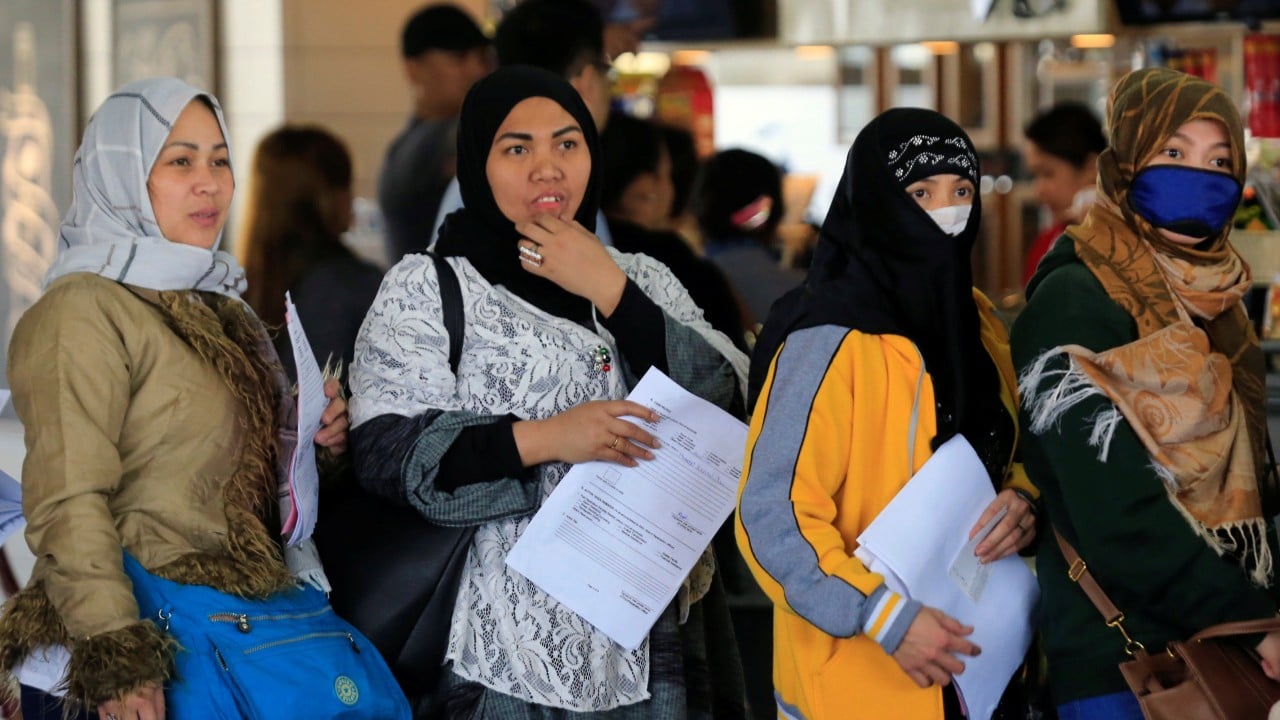
The global media has a favorite sob story, and it involves the Overseas Filipino Worker (OFW).
Every few months, a derivative feature article surfaces. The formula is predictable: paint a picture of a tearful mother at Manila's international airport, lament the "tragedy" of family separation, and wring hands over the emotional cost of sending money home. These narratives treat migration as a desperate, involuntary sacrifice—a modern form of economic exile. In other updates, read about: The Hidden Money Machine Splitting Commercial Aviation Apart.
It is a patronizing, lazy consensus. And it is flat wrong.
The traditional narrative frames the $35 billion annual remittance flow to the Philippines as a symptom of a broken system. In reality, it is one of the most sophisticated, deliberate, and successful venture capital plays on the planet. The Filipino migrant is not a victim of global capitalism; they are one of its most calculated beneficiaries. The Economist has also covered this critical topic in extensive detail.
By treating migration purely as an emotional deficit, commentators miss the entire macroeconomic mechanics of upward mobility. It is time to look at the cold, hard numbers and dismantle the myth of the miserable migrant.
The Venture Capital of the Developing World
The standard critique argues that OFWs drain the domestic economy of talent, creating a "brain drain" that leaves the Philippines permanently crippled.
This argument relies on a static view of human capital. It assumes that a nurse, engineer, or IT professional who stays in Manila will magically find the infrastructure to maximize their productivity. They won't.
When an OFW leaves, they are not just hunting for a higher salary. They are arbitrageurs. They export their labor to high-yield markets and import capital back into a low-cost environment.
Consider the actual mechanics of a typical remittance. According to Bangko Sentral ng Pilipinas data, remittances regularly account for roughly 9% to 10% of the country's GDP. But look at where that money actually goes. The lazy critique claims it is spent entirely on immediate consumption—smartphones, fast food, and imported goods.
The data tells a different story. Remittances act as a private social safety net and an investment engine that bypasses state bureaucracy entirely. It funds private education, builds micro-enterprises, and secures real estate.
The Labor Arbitrage Equation:
A mid-level accountant in Manila might cap out at 40,000 PHP per month. That same professional in Singapore or Dubai can easily clear the equivalent of 150,000 PHP to 200,000 PHP. By living in a shared space and managing expenses, they can remit 60% of their earnings.
In what other asset class can an individual achieve a 400% increase in the value of their output overnight? Migration is not a tragedy; it is the highest-yielding investment a developing-world family can make.
Dismantling the Family Breakdown Fallacy
"But what about the children?" cries the critic. The emotional cost of separation is always the centerpiece of the hand-wringing narrative. The assumption is that overseas work destroys the nuclear family, leaving a generation of alienated, adrift youth.
Let's look at the alternative. What happens to the family structure when parents stay in an underemployed domestic market? Chronic financial stress, inability to afford medical emergencies, and substandard education.
The critique of the "broken home" is deeply classist. It assumes that physical proximity is the sole metric of functional parenting. Wealthy elites send their children to boarding schools across the globe or leave them with nannies for fourteen hours a day while they climb the corporate ladder, and society calls it "networking" and "career advancement." When a working-class Filipino does it across a geographic border, it is labeled a societal crisis.
Technology changed this dynamic a decade ago. The idea of the isolated migrant writing letters that take months to arrive is a relic of the 1980s. Today, low-cost digital connectivity means asynchronous parenting happens in real-time. Homework is checked via messaging apps. Bedtime stories are read over video calls.
More importantly, the financial stability provided by overseas work builds generational resilience. The children of OFWs are statistically more likely to attend higher education institutions, access better healthcare, and break the cycle of poverty permanently. The temporary separation of one generation buys the absolute economic freedom of the next.
The Reality of the Domestic Alternative
To understand why the contrarian view is correct, you have to look at the grim reality of the domestic Philippine labor market.
Critics love to suggest that the solution is simply to "create more jobs at home." This is a fantasy that ignores the structural realities of the local economy, which has long been dominated by conglomerates and a massive service sector that cannot absorb the volume of skilled graduates entering the market each year.
The domestic market is notorious for underemployment, contractualization (the infamous "endo" system where workers are terminated every five months to avoid benefits), and stagnant wages that do not track with inflation.
If a worker chooses to stay in Manila out of a sense of national duty or fear of homesickness, they are often signing up for a lifetime of economic stagnation. They face multi-hour commutes on failing infrastructure, high utility costs, and a lack of upward mobility.
When you frame the choice accurately—not between "family bliss" and "lonely exile," but between "chronic domestic underemployment" and "accelerated global mobility"—the decision to leave becomes the only rational choice.
The Dark Side of the Counter-Perspective
An honest contrarian must acknowledge where the model breaks down. The strategy of global labor arbitrage is not without severe risks, and pretending it is flawless is just as intellectually lazy as the narrative we are destroying.
- The Middle-Income Trap for Families: Some households become entirely dependent on the remittance lifeline, failing to convert the capital into productive assets. When the migrant retires or returns, the income stream vanishes, leaving the family exactly where they started.
- Geopolitical Vulnerability: The OFW economic engine is highly exposed to external shocks. Host country policy shifts, economic downturns in the Middle East, or global health crises can result in sudden, mass repatriations that strain the domestic economy.
- The Golden Cage: The higher salary abroad often creates a lifestyle inflation loop. Workers find themselves trapped in jobs they dislike for decades because their entire extended family has grown accustomed to a standard of living that cannot be supported by local wages.
These are legitimate structural issues. But they are management problems, not fundamental flaws in the premise of migration itself.
Re-Engineering the Question
The public discourse asks the wrong questions.
We ask: "How do we stop Filipinos from leaving?"
We should ask: "How do we maximize the return on investment of the people who do leave?"
We ask: "How much does migration cost emotionally?"
We should ask: "How do we lower the friction of capital transmission so more money stays in the pockets of the workers?"
Stop treating the overseas worker as a tragic figure in a human interest story. They are international asset managers. They navigate complex foreign visa systems, master cross-cultural workplaces, and execute sophisticated financial planning across borders. They don't need pity. They need better financial instruments, cheaper remittance channels, and aggressive domestic investment vehicles that allow them to deploy their hard-earned foreign capital back home.
The narrative of the homesick, suffering migrant is dead. It is time to replace it with the reality of the global Filipino economic vanguard.