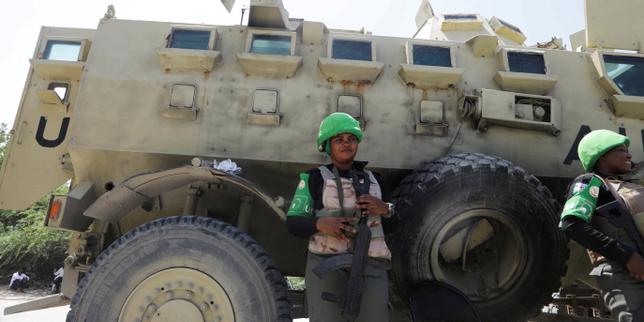
The international commentariat is having another collective panic attack over Somalia. With news circulating that Washington intends to wind down its funding for the African Union Transition Mission in Somalia (ATMIS), the predictable chorus of doom-mongers has assembled. The consensus is lazy, superficial, and entirely wrong: they claim that without Western cash underwriting African Union boots on the ground, Mogadishu will fall to Al-Shabaab within weeks.
This narrative is not just pessimistic; it fundamentally misunderstands the political economy of security in the Horn of Africa. You might also find this related story useful: The Hardeep Nijjar Investigation Proves International Diplomacy Is Soft Fiction.
For nearly two decades, the international community has treated peacekeeping missions as a permanent scaffolding for a fragile state. They view the withdrawal of foreign funds as the removal of a load-bearing wall. In reality, the current ATMIS framework has long ceased to be an effective counter-insurgency force; it has mutated into a self-perpetuating bureaucracy that disincentivizes the very state-building it was designed to protect. The reduction of American financial life support is not a death sentence for Somalia. It is the brutal, necessary catalyst required to break a twenty-year cycle of dependency.
The Lazy Consensus Exposed
Mainstream analysis treats Al-Shabaab like a conventional army waiting at the gates of Mogadishu, ready to launch a blitzkrieg the moment African Union troops step back. This viewpoint ignores how modern insurgencies operate and how Mogadishu actually functions. As extensively documented in latest coverage by The Guardian, the implications are worth noting.
First, let us look at the mechanics of the ATMIS mission. Peacekeeping forces in Somalia have spent years entrenched in static forward operating bases. They protect main supply routes and secure government green zones. This is defensive, reactive posture. It is incredibly expensive and offers diminishing returns. The idea that these static forces are the sole barrier preventing a total insurgent takeover is a myth.
Al-Shabaab does not need to capture Mogadishu militarily because it already extracts economic rent from the city through a sophisticated, shadow taxation system. The group operates more like a mafia protection racket than an invading army. A change in the funding structure of foreign peacekeeping forces does not automatically alter this underground economic equilibrium. The panic assumes a military vacuum will emerge, but it ignores the reality that local dynamics, clan militias, and the Somali National Army (SNA) have already begun shifting to fill these spaces.
The Dependency Trap of External Funding
I have spent years watching international donors pour billions into security assistance frameworks across conflict zones. The pattern is always the same. When you subsidize a sector indefinitely, you distort the local market. In Somalia, the security sector became an export economy of sorts—where the product was stability, and the buyers were Washington, Brussels, and London.
When foreign taxpayers foot the bill for regional militaries to police a country, two things happen:
- The host government faces deferred accountability. The federal government in Mogadishu has historically been able to prioritize elite political infighting over comprehensive security sector reform because ATMIS provided a baseline security guarantee.
- Troop-contributing countries develop financial interests. The nations sending soldiers to Somalia rely on donor reimbursements to fund their own domestic military budgets and provide lucrative deployments for their officers.
Consider the hard numbers behind international peacekeeping. When hundreds of millions of dollars flow annually to sustain foreign forces, there is very little structural incentive to finish the job. Success means losing the budget. By constricting the flow of uncritical funding, the United States is inadvertently forcing a correction. The premium is finally being placed on efficiency, local ownership, and actual results rather than endless mandate renewals.
The Hidden Strength of the Somali National Army
The doom-mongering narrative deliberately understates the evolution of local Somali forces. Over the past few years, operations in central Somalia—specifically in regions like Galguduud and Hiiraan—were not driven primarily by foreign peacekeepers. They were spearheaded by the Somali National Army alongside local clan uprisings, known natively as the Macawisley.
Traditional Security Model vs. The Reality on the Ground
┌──────────────────────────────────────┐     ┌──────────────────────────────────────┐
│       The Bureaucratic Myth          │     │          The Local Reality           │
├──────────────────────────────────────┤     ├──────────────────────────────────────┤
│ * ATMIS provides a total shield      │     │ * Static bases offer limited reach   │
│ * Foreign cash buys absolute safety  │ vs. │ * Clan dynamics dictate real control │
│ * Collapse is inevitable without aid │     │ * SNA elite units drive offensives   │
└──────────────────────────────────────┘     └──────────────────────────────────────┘
Elite units within the SNA, such as the U.S.-trained Danab advanced infantry and the Turkish-trained Gorgor commandos, have proven highly capable of conducting targeted, offensive counter-insurgency operations. These units possess something that no foreign peacekeeping force can ever buy: local legitimacy, language fluency, and a deep understanding of clan geography.
The real bottleneck for Somali security has never been a lack of raw manpower or the absence of foreign troops on urban street corners. The bottleneck has been logistics, sustainment, and cohesive command-and-control structures across federal and state levels. When donors stop funding the multi-national bureaucracy of ATMIS, resources can finally be reallocated toward directly scaling the logistical capabilities of the Somali forces that are actually doing the heavy lifting.
Dismantling the "People Also Ask" Panic
When news of funding cuts breaks, the public and lazy analysts ask the wrong questions. Let's correct the premise of the three most common inquiries.
Will Al-Shabaab take over the port and airport immediately?
No. The asset value of Mogadishu’s strategic infrastructure is too high for the Somali corporate elite, major clans, and regional allies to abandon. The security of the port and airport relies on commercial private security arrangements, clan pacts, and specialized state units, not just African Union patrols. The commercial class of Mogadishu pays for security; they will adjust their investments to protect their supply chains regardless of Western geopolitical fatigue.
Can the Somali government survive without Western security subsidies?
Yes, because the state's survival relies on its ability to manage domestic political bargains, not its ability to maintain a pristine Western-style standing army. Security in Somalia is decentralized. The federal government survives by cutting deals with regional federal member states and powerful clan elders. A reduction in foreign troop presence forces Mogadishu to accelerate these political settlements, creating a more sustainable, locally negotiated security architecture.
Is this another Afghanistan-style withdrawal scenario?
This comparison is historically illiterate. In Afghanistan, the United States attempted to build a highly centralized, technologically complex military apparatus from scratch that was entirely dependent on American contractors for maintenance, air support, and intelligence. In Somalia, the security ecosystem is highly fragmented, localized, and resilient. Somali forces have been fighting this war with minimal air assets and basic infantry weapons for decades. They do not suffer from the structural fragility of a military engineered entirely in a Pentagon lab.
The Risks of the Hard Pivot
Admitting a contrarian view requires acknowledging its inherent volatility. The transition away from heavily subsidized foreign peacekeeping is going to be messy. There will be tactical setbacks. Al-Shabaab will undoubtedly launch high-profile asymmetric attacks in urban centers to project strength during the transition period.
The danger is not a conventional military defeat, but a political one. If the federal government fails to institutionalize its alliances with the Macawisley militias, or if political elites weaponize the national army units against regional rivals instead of the insurgency, the security gains will fracture. But this is a political challenge for Somalis to solve, not a military problem for foreign peacekeepers to manage indefinitely.
Stop Funding the Bureaucracy of Stagnation
The international community must stop viewing the reduction of ATMIS funding as an impending catastrophe. The assumption that peace can be imported and financed in perpetuity through regional proxies has failed to yield a decisive victory for nearly twenty years.
Security cannot be rented forever. By winding down the financial architecture of an outdated peacekeeping model, the international community is clearing the path for the only strategy that has ever worked in the region: localized, clan-integrated, highly mobile offensive operations backed by a sovereign Somali state that must finally sink or swim on its own merits. The era of the permanent transition is over.