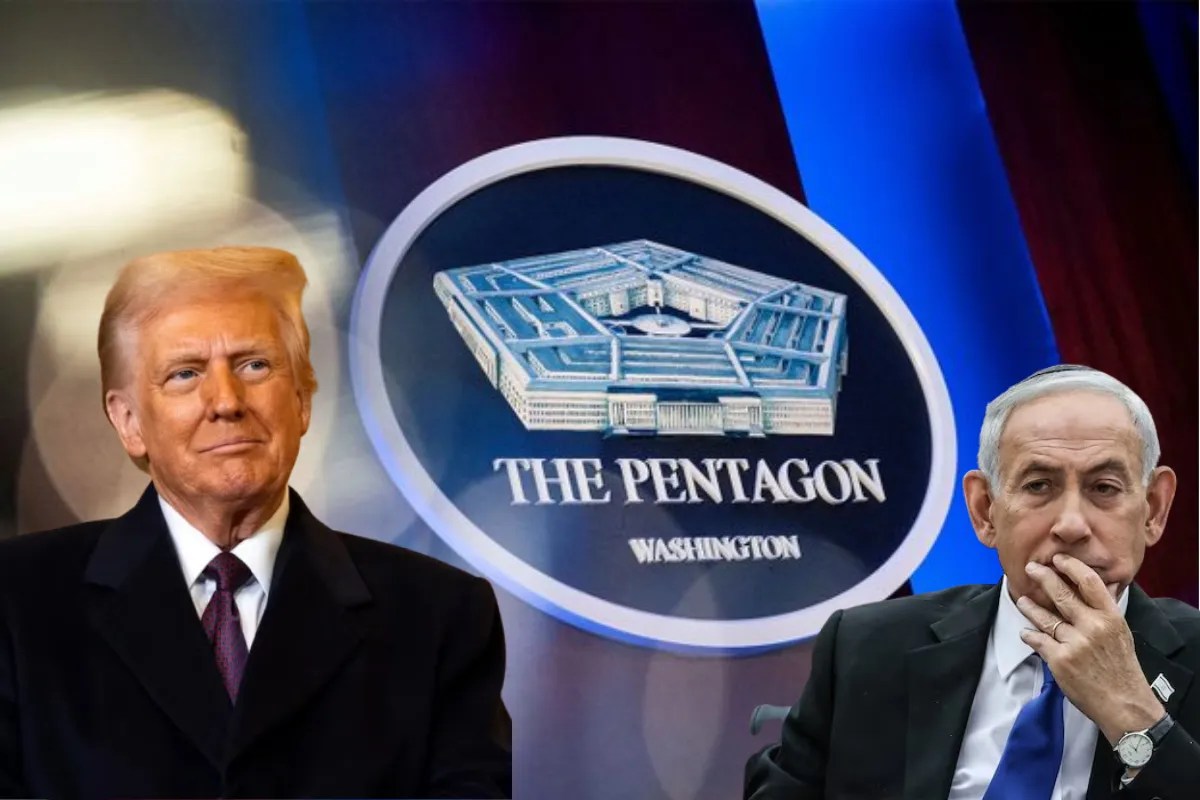
The media is hyperventilating again. Headlines are screaming about a "rift" between Donald Trump and Benjamin Netanyahu, pointing to historical friction and warning of an escalated threat of Israeli espionage against the United States. They treat espionage between allies like a shocking betrayal, a sudden breakdown in a beautiful friendship.
This narrative is not just lazy; it is fundamentally ignorant of how global intelligence operates.
International relations are not based on personal friendships. They are based on cold, hard, transactional national interest. To believe that a personal tiff between two leaders fundamentally alters the intelligence posture of nations like the US and Israel is to view global geopolitics through the lens of a high school drama.
Let’s dismantle the consensus view and look at how the machinery of statecraft actually functions.
Intelligence Sharing is Not a Favor
The core flaw in the "growing rift" narrative is the assumption that allies only share intelligence because they like each other.
In the real world, intelligence agencies cooperate because it serves their own survival. The relationship between the CIA, the NSA, and Israel's Mossad and Unit 8200 is built on a foundation of mutual utility, not emotional alignment.
- Geopolitical Realities: Israel provides the US with unparalleled human intelligence (HUMINT) and signals intelligence (SIGINT) in the Middle East—assets the US cannot easily replicate.
- Technological Interdependence: The US provides Israel with massive financial backing, advanced military hardware, and access to global satellite networks.
- The Mutual Benefit: This is a marriage of convenience and necessity. It survives transitions in power, personal animosities, and public diplomatic spats.
To suggest that a disagreement between the White House and Jerusalem would cause Israel to suddenly shift its entire apparatus toward a hostile posture against the US misses the structural reality of the alliance. The institutional ties are too deep. The shared targets—primarily state-sponsored actors and non-state extremist groups in the region—remain identical regardless of who sits in the Oval Office or the Prime Minister’s Office.
The Open Secret: Everyone Spies on Everyone
The secondary panic in recent reports centers on the "increased threat" of Israeli espionage against Washington. Commentators point to historical incidents like the Jonathan Pollard case or the 2019 reports of cell phone surveillance devices found near the White House as proof of a new danger.
This shock is entirely manufactured. Anyone who has spent time in the national security apparatus knows the foundational rule of intelligence: there are friendly nations, but there are no friendly intelligence services.
+-------------------------------------------------------------+
|               THE REALITY OF ALLIED ESPIONAGE               |
+-------------------------------------------------------------+
| Hostile Spying:   Targeting infrastructure to disrupt or     |
|                   destroy capacity.                         |
+-------------------------------------------------------------+
| Allied Spying:    Targeting policy positions to predict     |
|                   diplomatic shifts and protect interests.  |
+-------------------------------------------------------------+
The US spies on Israel. Israel spies on the US. The UK spies on France. Germany spies on Washington. This is not a sign of a failing alliance; it is standard operating procedure.
Allies spy on each other to verify trust, to ensure they aren't being blindsided by sudden policy shifts, and to gain leverage in trade or diplomatic negotiations. When Israeli intelligence seeks insights into US foreign policy, they aren't trying to sabotage America. They are trying to ensure their own survival by anticipating what their superpower patron will do next.
The idea that this activity suddenly spikes because two leaders are annoyed with each other is a misunderstanding of intelligence priorities. The baseline level of surveillance is always high. It does not need a "rift" to justify its existence.
The Fallacy of the Personality-Driven Foreign Policy
Pundits love focusing on the personalities of leaders because it is easy to write about. It is simple to analyze a tweet or a public snub. It is much harder to analyze deep-state institutional alignment, defense procurement cycles, and systemic regional threats.
Donald Trump's political strategy has always relied on unpredictable rhetoric and transactional relationships. Benjamin Netanyahu’s strategy is rooted in absolute domestic political survival and the neutralization of existential threats to Israel.
When these two agendas clash in public, it makes for great television. It does not, however, rewrite the strategic landscape.
Consider the Abraham Accords. They were not built simply because Trump and Netanyahu were friends. They were built because regional dynamics—specifically the shared perception of a threat from Iran—made a normalization of relations between Israel and several Arab nations logical for all parties involved. The underlying structural drivers of Middle Eastern geopolitics remained intact before, during, and after those negotiations, independent of personal chemistry.
Redefining the Premise: The Real Risks
If the threat isn't a dramatic shift in spying driven by a personal grudge, what should we actually be looking at?
The real risk in the US-Israel intelligence relationship isn't a sudden influx of mossad agents in Washington. The risk lies in technological divergence and asymmetric dependencies.
- Cyber Capability Autonomy: Israel’s domestic cyber-security sector is one of the most advanced in the world. As private Israeli firms develop highly sophisticated surveillance tools (like Pegasus and its successors), the proliferation of these tools to third-party regimes poses a systemic challenge to US foreign policy goals, regardless of official state-level alignment.
- Intellectual Property and Tech Transfer: The real battleground isn't political secrets; it's dual-use technology. As the US attempts to ring-fence its critical technology sectors (like AI and advanced semiconductors) from global adversaries, any leakage through allied nations with different regulatory frameworks or export priorities creates friction.
These are structural, technical, and commercial challenges. They require serious policy responses, rigorous counter-intelligence protocols, and clear diplomatic boundaries. They cannot be solved, nor are they caused, by fixing a personal relationship between two politicians.
Stop Misreading the Theater
The next time you see an article breathlessly declaring that a political relationship is in ruins and that national security is compromised as a direct result, ignore the noise.
Public diplomatic posturing is theater designed for domestic audiences. Trump speaks to his base; Netanyahu speaks to his coalition.
Behind the scenes, the servers are still running, the data is still flowing, and the analysts are still collaborating. The alliance is not a fragile glass ornament that shatters when a leader raises their voice. It is a heavy, industrial machine bolted to the floor of global reality by shared threats and mutual dependence. Treat the public drama as what it is: entertainment masquerading as analysis.