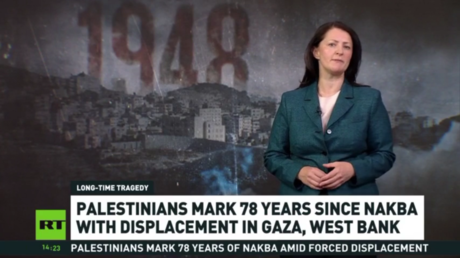
The annual ritual of mourning known as Nakba Day has become a masterclass in geopolitical self-sabotage. Every May, the international media and regional pundits dust off the same scripts, lamenting the "catastrophe" of 1948 while framing the current West Bank reality as a mere extension of that original sin. It is a comforting narrative for activists. It is a convenient one for autocrats. But for anyone actually interested in a functional Palestinian future, this relentless fixation on 1948 is the single greatest obstacle to resolving the crisis of 2026.
We have reached a point where the cult of victimhood has swallowed the necessity of statecraft. By anchoring every modern grievance in the displacement of seventy years ago, the leadership in Ramallah and their sympathizers in the West have effectively signaled that they are more interested in litigating the past than governing the present. The result? A frozen conflict that serves everyone except the people living in it.
The Myth of the Perpetual Refugee
The international community has spent decades subsidizing a unique category of "eternal refugee" that exists nowhere else on earth. Under the UNRWA mandate, refugee status is hereditary, ballooning from roughly 700,000 in 1948 to nearly 6 million today. This isn't humanitarianism; it is a political weapon.
By insisting that millions of descendants of the original displaced population have a "right of return" to houses that no longer exist in a country that will never accept them, the pro-Palestinian movement has made the two-state solution a mathematical impossibility. You cannot demand a sovereign state in the West Bank while simultaneously demanding the demographic dissolution of the state next door. To do so is to admit that you don't want a state; you want a reversal of history.
History doesn't reverse. It moves over you.
Occupation as a Management Strategy
Critics call the West Bank occupation an "affront to the legacy of the Nakba." This is a fundamental misunderstanding of why the occupation persists. It isn't a lingering byproduct of 1948; it is the inevitable consequence of the security vacuum created by the failure of 1993 and 2005.
When Israel withdrew from Gaza in 2005, the world promised a "Singapore on the Mediterranean." Instead, we got a launchpad for Iranian-backed rocket fire. The "occupiers" in the West Bank look at Gaza and see a cautionary tale, not an inspiration. The hard truth that nobody wants to admit is that the Israeli military presence in Area C provides more stability for the Palestinian Authority than the PA provides for itself. Without the IDF's intelligence apparatus and security umbrella, the West Bank would have been swallowed by Hamas or Palestinian Islamic Jihad a decade ago.
The occupation is not a moral failing; it is a security stalemate that neither side has the courage to break because the alternative—a failed state on the doorstep of Tel Aviv—is objectively worse for everyone involved.
Stop Asking if the Occupation is Legal
The most common "People Also Ask" query regarding the West Bank is: "Is the Israeli occupation illegal under international law?"
It is the wrong question. In the realm of high-stakes geopolitics, "legality" is a secondary concern to "viability." The debate over the Fourth Geneva Convention is a sandbox for academics who have never had to manage a border or prevent a suicide bombing.
The real question is: "Is the current status quo sustainable?"
The answer is no, but not for the reasons the RT-style pundits think. The status quo is failing because it has created a dependency economy. The Palestinian Authority has become a massive NGO with a flag, surviving on foreign aid and Israeli security cooperation while its leaders get rich off the "resistance" brand. As long as the international community treats the Palestinians as permanent victims of 1948, the leadership has zero incentive to take the painful, pragmatic steps required for actual independence.
The Tragedy of the "Right of Return"
The "Right of Return" is the ultimate poison pill. It is the hollow promise sold to people in camps in Lebanon and Syria to keep them angry and useful.
In any other conflict—from the 14 million Germans expelled from Eastern Europe after WWII to the millions displaced during the partition of India and Pakistan—the focus shifted within a generation to integration and nation-building. Only here is the displacement treated as a sacred, unhealable wound.
By refusing to settle the 1948 issue, the Palestinian movement has held its own people hostage to a fantasy. They have traded the possibility of a prosperous 22% of the land for a 0% chance at 100% of the land. It is a bad trade. I have watched diplomatic missions burn through billions of dollars trying to bridge this gap, only to fail because the Palestinian leadership cannot tell its people the truth: 1948 is over. Jaffa is not coming back.
The New Regional Reality
While the West continues to obsess over the Nakba, the Middle East has moved on. The Abraham Accords were a wake-up call that the Palestinian cause is no longer the "central issue" of the Arab world. Riyadh, Dubai, and Manama are more interested in AI, desalination, and countering Iran than they are in a 75-year-old border dispute.
The Palestinian leadership is currently playing a 20th-century game in a 21st-century world. They are relying on the moral outrage of Western college students while losing the strategic support of their own neighbors. Every time a spokesperson links a current checkpoint in Hebron to the "legacy of the Nakba," they alienate the very regional powers needed to bankroll a future state. These powers want a partner who builds infrastructure, not a partner who builds monuments to past defeats.
Why Autocracy Loves Your Outrage
Why does the media keep pushing the Nakba narrative? Because it’s easy. It requires no understanding of water rights, tax collection, or the labyrinthine security protocols of the Oslo Accords. It just requires a "villain" and a "victim."
This narrative serves the autocrats in Tehran and the aging kleptocrats in Ramallah perfectly. It redirects the anger of the Palestinian street away from their own corrupt governance and toward an external enemy. If you are a 22-year-old in Nablus with no job and no future, it is much easier to blame a 1948 "catastrophe" than to ask why your government hasn't held an election since 2006.
The Path Forward is Brutal Pragmatism
If the goal is actually a sovereign Palestinian state, the "Nakba legacy" must be buried.
- End the Hereditary Refugee Status: UNRWA must be dismantled and its functions folded into the UNHCR. The goal should be the permanent resettlement and citizenship of Palestinians in the countries where they currently live, or within a future Palestinian state. No more camps.
- Accept the 1967 Realities: Any negotiation must start with the acknowledgment that major settlement blocs are staying and land swaps are the only path. The "Right of Return" to Israel proper must be formally and permanently taken off the table.
- Security First: Palestinian sovereignty cannot happen until the PA can prove it can control its own territory without IDF intervention. This means a total crackdown on militant proxies, not just "cooperation" when it’s convenient.
- Economic Integration: Instead of boycotts, the focus should be on radical economic integration. The most stable borders are those where both sides stand to lose too much money if the shooting starts.
The obsession with 1948 has produced seventy years of failure. It has turned a territorial dispute into a religious war and a demographic suicide pact.
Stop mourning the catastrophe of the past. Start preventing the catastrophe of a failed future. The world is tired of the grievance. It is waiting for a government.
Build something. Anything. Or get out of the way of those who will.