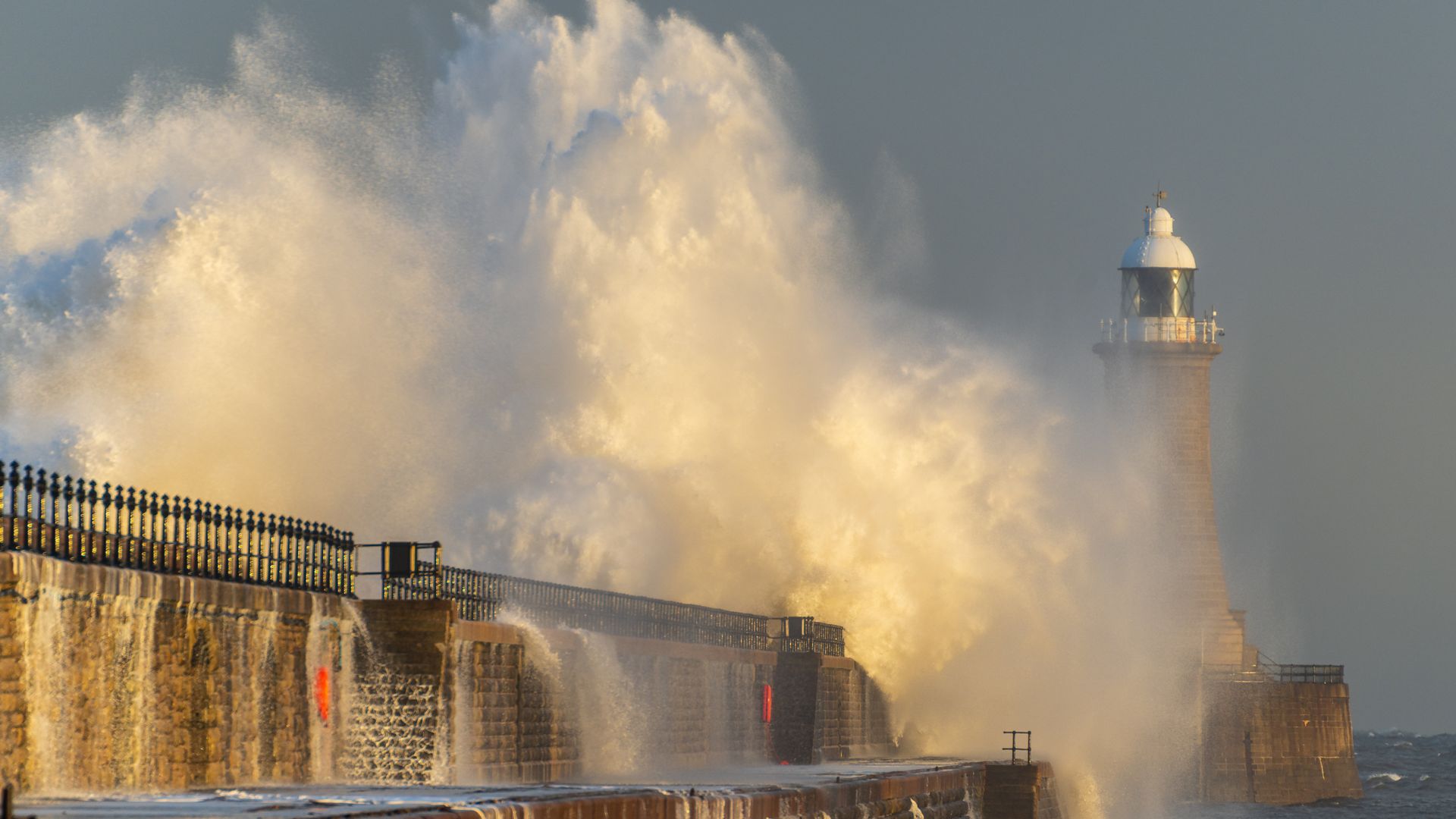
Static crackles on the kitchen radio. Outside, the midday sky bruises a violent, unnatural shade of violet-gray, the kind of light that makes your teeth ache and your skin prickle with sudden, cold sweat. On the counter, a transistor radio spits out a frantic warning: a rotation has been spotted, a front is colliding, a warning is red.
Then comes the name.
It is a completely ordinary collection of syllables. Arthur. Or Eleanor. Maybe Vincent. But hearing a human name attached to an engine of mass destruction changes the entire physics of fear. It shifts a nameless, terrifying atmospheric anomaly into something with an address, an identity, and an appointment with your zip code.
Most people never stop to ask why we baptize our catastrophes. We just accept it. A season rolls in, a meteorological office drops a fresh alphabetized list, and we spend the next six months tracking alphabetical violence as it churns across warm ocean waters. We watch the maps. We root for the low-pressure systems to stall out, or we hold our breath as they gather teeth.
Behind that casual familiarity lies a strange, quiet human obsession. We refuse to let our monsters remain anonymous.
For a long time, we tried. Sailors whispered rumors of storms that swallowed galleons whole, marking them only by the feast day of the saint on whose calendar they struck. The Hurricane of Santa Cruz. The Great Gale. These were theological tags, prayers disguised as chronology, ways to bargain with a sky that would not answer. Later, pragmatic men of science tried numbering them by latitude and longitude coordinates. A cold, clinical row of digits. 23.4 North, 75.8 West.
It did not work.
Numbers bounce off the human brain. They slide away. You cannot hate a coordinate. You cannot look at a spreadsheet of grid lines and feel the tightening in your chest that makes you pack a go-bag, tape your windows, or drive your family inland. So, in the mid-twentieth century, meteorologists surrendered to psychology. They gave the sky a voice. They gave the wind a face.
(Note: This personification is a deliberate psychological survival tactic. The storm does not care what we call it, but we care deeply because names tether chaos to our shared language.)
Enter Clement Wragge. A flamboyant late-nineteenth-century government meteorologist in Australia who grew tired of tracking invisible pressure gradients across vast, empty oceans. He started borrowing names from Polynesian mythology, mixing in local politicians he happened to dislike at the moment. If a particularly destructive cyclone was named after a rival member of parliament, well, that was just a happy meteorological coincidence.
The practice evolved. By the Second World War, military forecasters tracking Pacific typhoons began casually tagging systems with the names of their wives and girlfriends. It was intimate, affectionate, and utterly informal. It was also deeply exclusionary.
By 1979, the World Meteorological Organization and the National Hurricane Center intervened. They dragged the naming convention into the modern era by introducing alternating male and female names, drawing from a culturally diverse roster that reflected the actual nations lying in the path of destruction.
Today, those lists are curated years in advance. They rotate every six years. If a storm is particularly lethal or causes catastrophic economic ruin, its name is permanently retired—bravado erased by a death toll, a linguistic monument to a tragedy we never want to repeat. Andrew is gone. Katrina is gone. Maria is gone. You do not reuse the name of a ghost.
Consider the machinery required to build these lists.
Committees sit in sterile rooms in Geneva, Miami, Tokyo, and Dakar, debating syllables. They look at linguistic fluency across multiple languages. They consider cultural sensitivities. They ensure that a name destined for international news broadcasts will not accidentally translate into an embarrassing or insensitive pun in another tongue. They balance regional representation, ensuring that names common in the Caribbean sound just as natural on a weather report in Louisiana as they do in Puerto Rico.
It is an exercise in bureaucratic empathy.
We forget this when the alerts start pinging on our phones. We see a cute graphic on a local news broadcast, a playful font spelling out a title across a swirling satellite map, and we laugh. We make memes. We post jokes about hiding our wine or stocking up on bread and milk—the universal secular sacraments of impending disaster.
Humor is our armor.
When the air pressure drops so fast your ears pop, and the wind begins to shriek through the eaves like a living thing, you need that armor. You need to look at the name on the screen and feel like you know your adversary.
Arthur is coming.
Beryl is turning north.
Francine has teeth.
Language is the oldest technology we have for domesticating the wild. Long before we built concrete sea walls or Doppler radar towers, we told stories about the sky. We invented gods with hammers. We carved names into stone. Today, we type them into computer terminals and broadcast them across fiber-optic cables, but the impulse remains identical.
We name the things that can kill us because calling them by name proves we are still here to speak.
The next time you hear a meteorologist roll a new name off their tongue with practiced gravity, listen closely. Beneath the official cadence of forecasts and wind-speed vectors, you are hearing humanity doing what it has always done in the dark.
We are lighting a match. We are drawing a boundary. We are looking at the open, howling vacuum of the unchained atmosphere, and we are talking back.