The Antarctic Balloon Myth
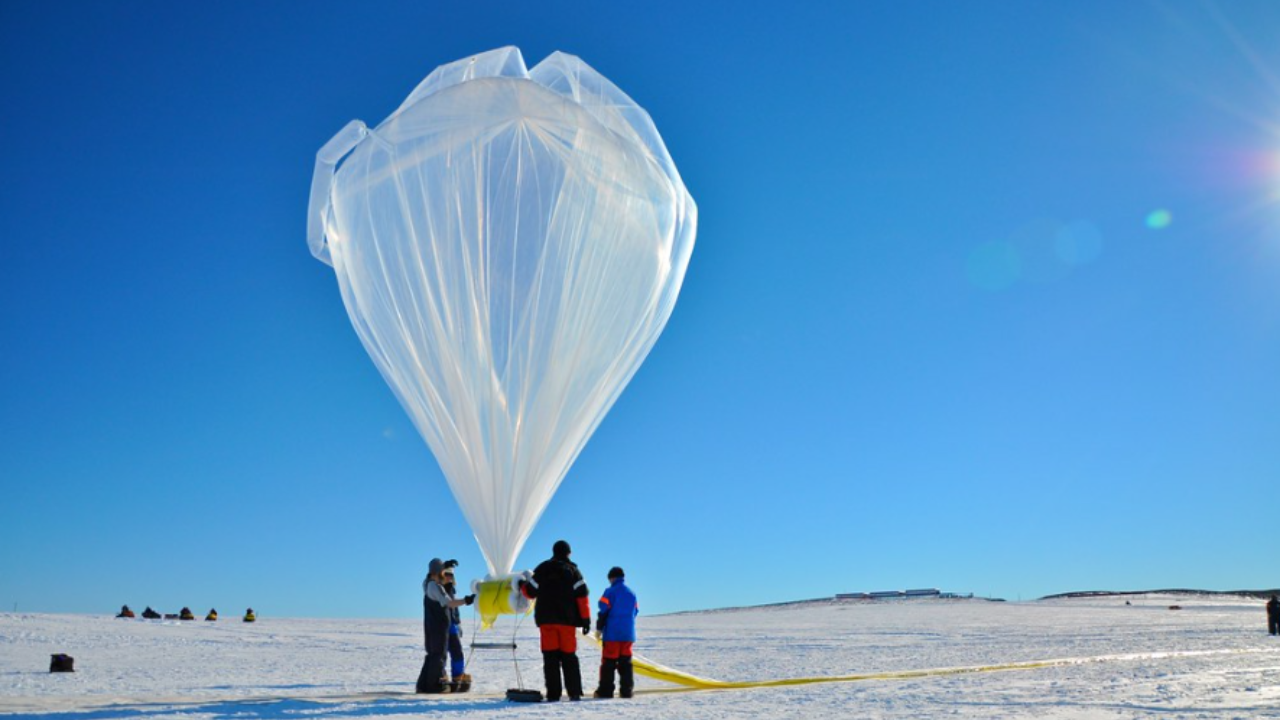
Every few years, the internet drags up a dusty headline about NASA sending twenty giant balloons soaring over the Antarctic ice in 2013. The media treats it like some triumphant sci-fi epic. You read the standard write-ups. They tell you brave scientists chased cosmic rays, hunted elusive dark matter particles, and unlocked the secrets of the early universe using glorified weather balloons drifting on polar winds.
It sounds majestic. It is also a sanitized fairy tale.
I have spent decades watching aerospace budgets bleed out on high-risk, low-return atmospheric stunts. I have seen agencies greenlight vanity projects because orbital hardware costs too much and political optics demand a win.
The 2013 Antarctic balloon campaign, specifically the Antarctic Impulsive Transient Antenna project, known as ANITA, gets held up as a masterclass in clever engineering. It is actually a cautionary tale about chasing dead ends just because the data happens to fit a convenient narrative.
Let us strip away the public relations gloss. NASA did not launch those helium leviathans because balloons are the best way to do astrophysics. They did it because putting a payload on a long-duration balloon costs a fraction of a rocket launch, and when your funding depends on continuous visibility, you take what you can get. The problem is that physics does not care about your budget constraints.
The Physics Problem Nobody Wants To Talk About
The lazy consensus says that stratospheric balloons give you near-space vantage points without the crushing price tag of a satellite. At thirty-seven kilometers high, you sit above most of the atmosphere. That sounds great until you look at what those balloons were actually trying to catch.
ANITA was built to detect ultra-high-energy cosmic neutrinos crashing through the ice. When these ghost particles interact with the Antarctic sheet, they trigger a radio flash via the Askaryan effect. The antennas dangling beneath the balloon listen for that ping.
Here is what the press releases leave out. The atmosphere is not a clear window. It is a messy, turbulent soup of thermal noise, radio interference, and shifting density gradients.
Imagine a scenario where you are trying to hear a single pin drop in a packed stadium while standing outside in a hurricane. That is what listening for faint radio pulses from the edge of space via a swinging, swaying polyethylene balloon looks like.
The directional accuracy is atrocious. Position tracking at forty kilometers altitude sounds precise on paper, but stratospheric wind shears twist and warp the balloon tether in ways telemetry models struggle to predict. You end up with pointing uncertainties that span degrees, not arcseconds. In high-energy particle physics, an error of a single degree turns your precision instrument into a glorified pinball machine.
The Anomalous Signals That Broke The Paradigm
If the hardware was flawed, the results were chaotic. Years after the 2013 flight, ANITA data spat out anomalies that sent theorists scrambling. They detected signals coming up out of the ice rather than down from the sky.
To a layman, this sounded like the discovery of parallel universes or brand-new particles defying the Standard Model. Internet outlets ate it up. Physics blogs churned out clickbait about mirror worlds where time runs backward.
The actual reality is far more mundane and far more embarrassing.
When you fly uncalibrated radio receivers over a reflective, jagged sheet of ice under shifting atmospheric conditions, you get multi-path reflections. Signals bounce off subsurface layers, refractive index boundaries, and surface crusts. Instead of admitting that the payload orientation data was noisy or that the ice surface was playing tricks on the radio waves, researchers stretched existing models to accommodate impossible interpretations.
I have watched engineers fall in love with their own anomalies. When your instrument design has systemic blind spots, every strange glitch looks like a revolution.
Independent analysts tore the anomalous upward-going particle claims apart within months, pointing out standard glaciological reflections and localized anthropogenic radio interference. Yet, the myth of the miraculous Antarctic balloon discovery persists because the initial press release was too sexy to retract.
Why We Keep Repeating The Same Mistake
Why do space agencies keep returning to the polar vortex for these missions?
The stratospheric wind pattern over Antarctica forms a stable polar vortex during the austral summer. It acts like a giant atmospheric racetrack. A balloon launched from McMurdo Station can circle the continent in roughly one to three weeks, returning close to its launch site.
It is cheap. It is convenient. It allows university labs to get flight heritage for their hardware without waiting a decade for a slot on a rocket.
Those are valid administrative goals. They are terrible scientific justifications.
When you optimize for low cost and operational convenience, you compromise on baseline data fidelity. You accept massive error bars. You accept environmental interference that requires heroic, post-hoc statistical gymnastics to clean up.
If you want to map high-energy neutrinos properly, you put detectors under the ice where the environment is stable, cold, and quiet, just like the IceCube Neutrino Observatory at the South Pole. You do not hang antennas from a thin plastic bag swinging in the jet stream and hope the wind behaves.
The Cost of Mediocre Metrics
We tolerate these compromises because big science institutions have become risk-averse when it comes to fundamental methodology, yet oddly reckless with public relations.
When a balloon mission fails to find what it was looking for, the narrative shifts. It gets reframed as a technology pathfinder. Every null result gets spun as a success because the balloon stayed aloft for twenty-eight days.
That is a dangerous deflection. Staying aloft is an engineering metric, not a scientific one. If your instrument is up there for a month gathering noisy, contaminated data, you have not achieved anything except burning taxpayer cash to fill academic journals with inconclusive noise.
True innovation requires brutal honesty about the limits of your tools.
How To Fix High-Altitude Research
If we want to stop repeating the cycle of overhyped balloon flights, we need a complete shift in how we evaluate stratospheric projects.
- Stop funding physics experiments on platforms designed for meteorology. Balloons are fine for measuring ozone levels or ambient temperature. They are fundamentally unsuited for precision high-energy astrophysics.
- Demand hardware redundancy that accounts for rotational drift. If your antenna payload cannot maintain a stable, verified orientation within fractions of a degree, do not launch it.
- Separate engineering milestones from scientific validation. Surviving a circumpolar flight does not mean the data collected holds any objective value.
- Prioritize subsurface and space-borne architecture over near-space compromises. If a signal requires space-level clarity, stop trying to cut corners in the stratosphere.
The 2013 NASA campaign over Antarctica proved that we can float heavy payloads around the South Pole. It did not prove that we can do breakthrough particle physics from a drifting party balloon.
Until the scientific community stops confusing operational convenience with methodological rigor, we will keep celebrating expensive weather balloon stunts while real discoveries wait for better instruments.
Stop funding the circus. Build better detectors.