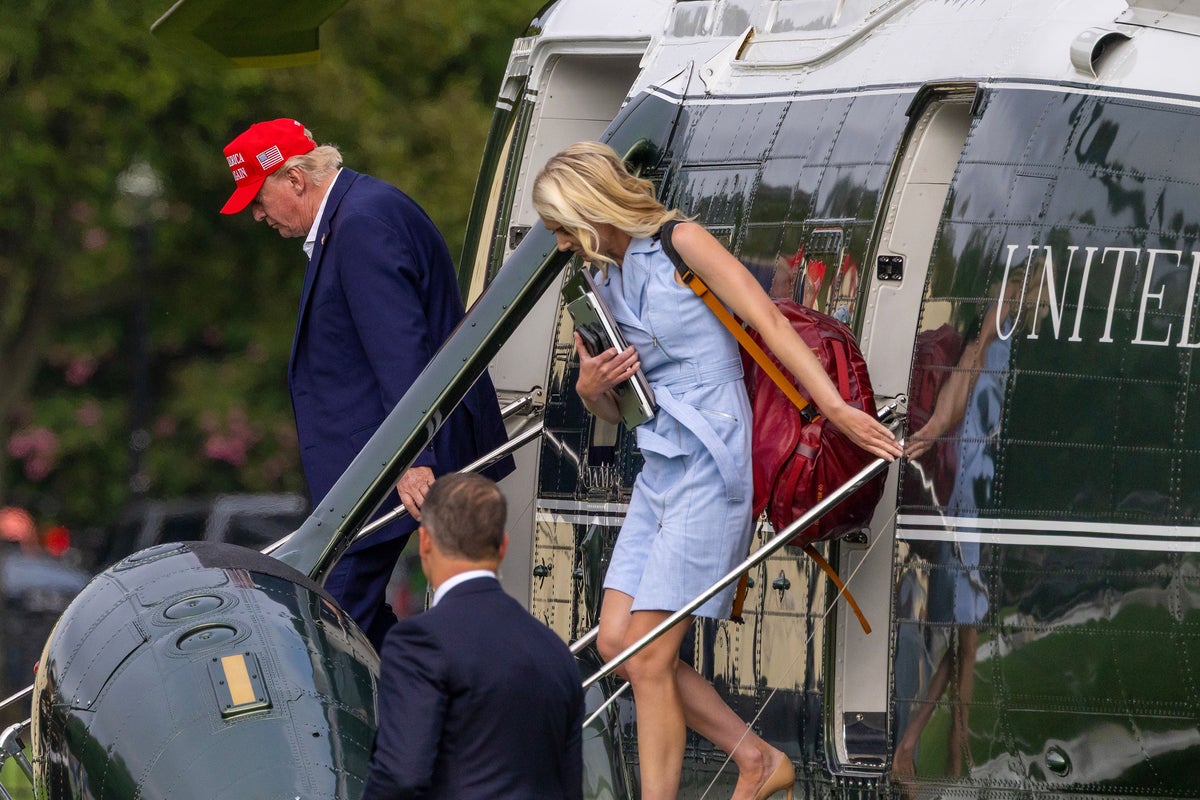
Inside the upper echelons of the Trump administration, there’s an aide who does what few others can: she dictates the flow of information to the president. You’ve likely heard her referred to as the "human printer," a moniker that started as a practical observation of her job and morphed into something more loaded. While the nickname highlights her role in feeding Donald Trump the hard-copy news he prefers, it masks a much more complex reality about how influence is actually traded in 2026.
Natalie Harp isn't just an assistant. She is a conduit, a gatekeeper, and for some, an alarmingly unchecked variable in the West Wing. Recently making news recently: The Smoke Knows No Borders.
The Origins of the Human Printer
If you want to understand how Harp secured her position, you have to look at the intersection of Trump’s specific work habits and her own unwavering devotion. Trump has a well-documented preference for paper briefings. He doesn't want links or summaries on an iPad. He wants physical documents he can hold, mark up, and read while on the move or at his desk.
Harp realized this early on. During the campaign trail, she was frequently spotted carrying a portable printer and a laptop. If there was a news story, a social media post, or a briefing document that needed his attention, she didn't wait for a formal chain of command. She printed it and walked it to him. More insights regarding the matter are detailed by NBC News.
This is the essence of her role. It’s not just about logistics; it’s about timing. By bypassing traditional channels, she became the filter for what the president sees. If she decides an article is worth his time, he reads it. If she chooses to include it in the stack, it has his attention. In a high-stakes environment where access is the ultimate currency, that level of proximity is basically unparalleled.
The Power of the Truth Social Feed
Perhaps the most public—and controversial—aspect of Harp’s work is her management of the president’s digital voice. After transitioning into her role as executive assistant in 2025, she inherited control over Trump’s Truth Social account.
This isn't just a social media management job. It’s an exercise in broadcasting impulses. Aides have long noted that Harp doesn't always vet her posts with the broader communications team. She’s often taken direct dictation from Trump, translating his off-the-cuff remarks into public statements.
This has caused significant friction. When you have an aide with no institutional buffer between her and the president's unfiltered thoughts, errors happen. From the "Unified Reich" video controversy to the unintended sharing of private messages, the results of her unchecked access have repeatedly forced the administration to play defense. Her defenders argue she’s simply being a loyal executor of his will. Her critics suggest she’s an enabler who lacks the political guardrails necessary for a role with that much reach.
Why the Inner Circle Is Unsettled
It’s no secret that Harp is viewed with suspicion by many in Trump’s orbit. Part of this stems from the sheer intensity of her loyalty. Letters uncovered in 2023—where she reportedly wrote things like "You are all that matters to me" and called him her "guardian and protector"—circulated among staffers who found the tone deeply unusual.
In a workplace defined by transaction and ambition, that kind of personal devotion is jarring. It creates a dynamic where other aides feel they’re competing not just for policy influence, but for a unique brand of personal trust that they can’t replicate.
There’s also the question of outside influence. Harp has become a bridge for external actors like Laura Loomer to get information directly into Trump’s hands. When you can hand a piece of paper to the president, you don't need a formal title or a confirmed appointment. You just need someone like Natalie Harp to put your message in the printer.
Is She a Gatekeeper or a Conduit
The debate over Harp ultimately boils down to a question of organizational structure. Is she an executive assistant managing a busy schedule, or is she the true gatekeeper of the modern Trump presidency?
Most veteran political staffers would argue that the most dangerous person in a room is the one who controls the flow of information. By being the person who brings the articles, prints the drafts, and manages the social account, Harp has positioned herself as a filter.
If you're paying attention to the way this administration operates, you'll notice it relies heavily on this kind of personal, non-traditional infrastructure. People who try to go through the front door are often outpaced by the information arriving via the "human printer" in the side room.
Whether this ends up being a stable long-term strategy for the administration remains to be seen. Historically, inner circles that rely on a single, highly subjective conduit tend to experience more volatility. For now, Natalie Harp remains the person at his side, holding the stack of papers that shapes the day.
If you’re looking to understand the real-time dynamics of this White House, don't focus on the official press releases or the formal briefings. Watch who is walking next to the president when he’s on the move, and look for the person holding the printer. That’s usually where the actual agenda is being formed.


