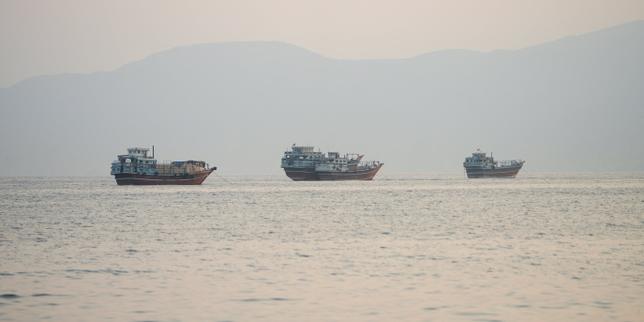
Deploying a single naval task force cannot reopen a contested maritime strait, nor does expanding an anti-piracy patrol into waters off Oman equate to entering a war. Headline claims that South Korea is simply dispatching its navy to secure the Strait of Hormuz compress complex diplomatic restraint, physical energy bottlenecks, and alliance pressure into a single misleading action. Seoul is calibrating a defensive posture—extending the operational reach of its Cheonghae anti-piracy unit toward Omani waters rather than sending combat vessels directly into the active conflict zone inside the strait. This analysis deconstructs the simplistic deployment narrative, maps the underlying energy and alliance mechanics, and establishes a decision framework for how import-dependent states manage chokepoint exposure without triggering direct retaliation.
Deconstructing the Headline Deployment Narrative
Competitor coverage around the French headline "La Corée du Sud va déployer sa marine près du détroit d’Ormuz" typically treats a naval movement as a binary choice: either Seoul stays home or it joins a maritime coalition inside the Persian Gulf. That binary framing misses three structural distinctions that govern real-world naval operations in the region:
- Geographic Buffer vs. Chokepoint Entry: Expanding maritime patrol boundaries southward toward Oman keeps vessels outside the narrowest transit lanes and immediate line of fire inside the Strait of Hormuz.
- Mission Mandate vs. Warfighting: An anti-piracy and merchant-escort posture operates under distinct rules of engagement and legal justifications compared to kinetic sea-control or mine-clearing operations inside an active war zone.
- Alliance Signaling vs. Force Projection: A single surface combatant with support assets functions primarily as a diplomatic signal to Washington and a shield for commercial shipping, not a standalone force capable of guaranteeing unobstructed flow across roughly 20 million barrels per day of oil trade.
A common analytical error in fast-turnaround reporting is conflating proximity with participation. Moving a patrol boundary closer to the Arabian Sea alters transit times and reaction ranges, yet it deliberately preserves plausible deniability and escalatory distance from direct belligerents.
The Energy Chokepoint Exposure Function
South Korea's strategic calculus starts with physical trade concentration. Roughly 70 percent of South Korea's crude oil imports have historically originated in the Middle East, with the bulk transiting the Strait of Hormuz. Globally, around one-fifth of petroleum and liquefied natural gas trade passes through this narrow corridor, with roughly 80 percent of transiting oil bound for Asian markets.
When a chokepoint faces disruption, market exposure is governed by four interacting variables:
- Import Share Concentration: Higher reliance on Persian Gulf crude and LNG narrows a country's immediate substitution options when tankers face delays, rerouting, or insurance spikes.
- Bypass Pipeline Capacity: Overland pipelines—such as Saudi Arabia's East-West system to Yanbu on the Red Sea and the Abu Dhabi Crude Oil Pipeline to Fujairah—offer partial relief, with total regional bypass capacity estimated in the 3.5 to 5.5 million barrels per day range. Because that bypass volume covers only a fraction of normal Hormuz throughput, physical rationing and price repricing still occur during severe disruptions.
- Strategic Inventories and Release Mechanisms: National petroleum reserves and coordinated inventory releases buy time—often weeks or months rather than years—by smoothing short-term supply shocks while supply chains rewire.
- Maritime Insurance and Freight Rates: Even without a total physical blockade, elevated war-risk premiums, crew hazards, and longer transit routes raise landed energy costs across the entire economy.
Consider a refinery operator in Ulsan running medium- and heavy-sour crude blends calibrated for Gulf grades. Switching abruptly to Atlantic Basin or North American crudes is not merely a procurement task; crude assays affect distillation yields, sulfur handling, and refinery margins. Even when alternative barrels exist globally, blending constraints and tanker availability create friction that a single destroyer cannot resolve.
Alliance Burden-Sharing vs. Escalation Risk
Why, then, adjust naval deployment boundaries at all if one ship cannot unstick global oil markets? The answer lies in two-front risk management between Washington and regional adversaries.
From Seoul's perspective, the strategic dilemma is asymmetric. On one side sits its security treaty and broader deterrence posture with the United States, where allies face recurring pressure to contribute visible assets to regional maritime security. On the other side sits the risk of provoking retaliatory actions against South Korean commercial ships, nationals in the region, or broader diplomatic friction if Seoul appears to be acting as a co-belligerent.
How Incremental Patrol Expansion Operates
Expanding an existing anti-piracy mandate toward adjacent waters allows policymakers to test several mechanisms simultaneously:
- Credible Deterrence at the Margin: A visible naval presence discourages opportunistic piracy and harassment along adjacent sea lanes while keeping combat assets out of the highest-threat confines of the strait.
- Domestic and Legislative Calibration: Framing the mission around protecting merchant vessels and citizens against rising piracy—rather than joining a regional war—helps sustain domestic political support and parliamentary scrutiny.
- Escalation Control: Maintaining geographic separation between escort patrols and active hostilities gives decision-makers an off-ramp if tensions spike.
This approach carries clear limitations. If hostilities spill outward into the Gulf of Oman or Arabian Sea, or if commercial vessels flying flags of convenience or linked to regional trade face attacks, a lightly scaled task force faces severe force-protection constraints. Naval presence without deep air-defense coverage, minesweeping depth, and sustained logistics lines cannot guarantee safety against saturation threats.
Known Facts vs. Analytical Hypotheses
Separating verified mechanics from forward-looking projections prevents over-interpreting troop or ship movements:
- Known Fact: South Korea relies heavily on Middle Eastern crude oil transiting the Strait of Hormuz, and the Cheonghae unit has long operated as an anti-piracy and maritime security deployment rather than a standalone war-winning force.
- Known Fact: Regional pipeline capacity can divert only part of normal Strait of Hormuz oil volume, leaving global markets sensitive to prolonged chokepoint interruptions.
- Analytical Hypothesis: Extending patrol boundaries toward Oman is most likely designed to satisfy alliance expectations at minimal escalatory cost while preserving commercial shipping flexibility, rather than serving as a primary solution to crude supply shocks.
- Analytical Hypothesis: If chokepoint disruptions persist over multiple quarters, non-military levers—such as long-term supply diversification, inventory management, and industrial energy efficiency—will carry more weight in protecting South Korea's economy than incremental surface deployments.
Step-by-Step Decision Framework for Chokepoint Crises
For analysts, corporate risk teams, and policymakers evaluating how an import-reliant economy responds to a maritime chokepoint threat, four sequential steps clarify where real leverage sits:
- Map Physical Dependency by Commodity: Separate crude oil, refined products, and LNG exposures, noting which industrial sectors lack short-term fuel switching or alternative feedstock contracts.
- Quantify Buffer Duration: Calculate how many days of normal demand strategic stockpiles, commercial inventories, and redirected pipeline flows can offset before refinery runs or power generation face cuts.
- Audit Non-Kinetic Chokepoints: Track marine insurance availability, vessel routing delays, and port bottlenecks, which often tighten economic conditions before physical barrels run out.
- Match Naval Posture to Risk Tolerance: Align any maritime deployment strictly with clear rules of engagement, logistics sustainment, and escalation thresholds so tactical signaling does not outrun strategic capacity.
Strategic Recommendation for Seoul and Market Planners
South Korea should treat incremental naval expansion near Omani waters strictly as a secondary escort and signaling measure, anchoring national resilience instead in contract diversification, refinery flexibility, and coordinated inventory buffers. Relying on naval presence to insure energy security confuses sea-lane policing with macroeconomic supply resilience; durable protection requires locking in multi-basin supply agreements and stress-testing industrial supply chains well before a chokepoint closes.
(Signing in to a Google Account lets you save this analysis and return to your research thread later.)


