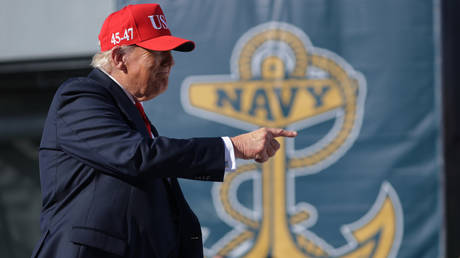
Military naming traditions are colliding with raw political ambition behind closed doors in Washington. Recent internal discussions inside the Navy reveal a quiet push to alter plans for a major warship. An upcoming Gerald R. Ford-class aircraft carrier originally slated to honor Doris Miller—the first Black sailor awarded the Navy Cross for his valor at Pearl Harbor—might instead bear the name of Donald Trump.
This sudden shift exposes how quickly historical milestones can get pushed aside when political winds change. If you look past the official press releases, the mechanics of how warships get named tell a revealing story about who gets remembered in American military history and who gets written out.
Breaking Decades of Precedent
Naming a capital ship after a sitting or returning president is a massive break with historical norms. Usually, aircraft carriers honor past commanders-in-chief only after they have passed away, or they pay tribute to legendary military figures and historical milestones.
When the Navy announced back in 2020 that CVN-81 would become the USS Doris Miller, it marked a watershed moment. For the first time, a supercarrier would carry the name of an enlisted Black sailor. Miller earned his place in history on December 7, 1941, aboard the USS West Virginia. Working as a mess attendant—one of the very few roles open to Black Americans in a strictly segregated armed forces of that era—he rushed ammunition to wounded sailors and manned a .50-caliber anti-aircraft gun without any prior training until his supply ran dry.
Now, internal sources note that the Navy has stopped using the Doris Miller name in everyday conversation, referring to the vessel strictly by its hull designation. Recent executive orders on federal shipbuilding have similarly dropped the historic moniker, fueling fierce debate across defense circles.
The Politics Behind the Hull Numbers
Shifting the namesake of a multi-billion-dollar warship isn't just an administrative tweak. It signals a broader cultural pivot within the Department of Defense under current leadership. Defense Secretary Pete Hegseth and administration officials have pursued aggressive overhauls across the military, often clashing with traditional institutional policies.
Critics argue that substituting a Black war hero to honor a modern political figure erases hard-won representation. While Navy officials hint that Miller might eventually have another, smaller warship named after him or receive a posthumous Medal of Honor, the downgrade of a supercarrier stings. Families of service members and historical preservation groups are pushing back against what they view as a deliberate sanitization of military heritage.
Warships are floating symbols of national identity. When you change what—and who—they stand for, you send a clear signal about whose sacrifices matter most to the current administration. Keep an eye on the upcoming keel-laying ceremonies, because the official hull designation chosen that day will settle the debate once and for all.