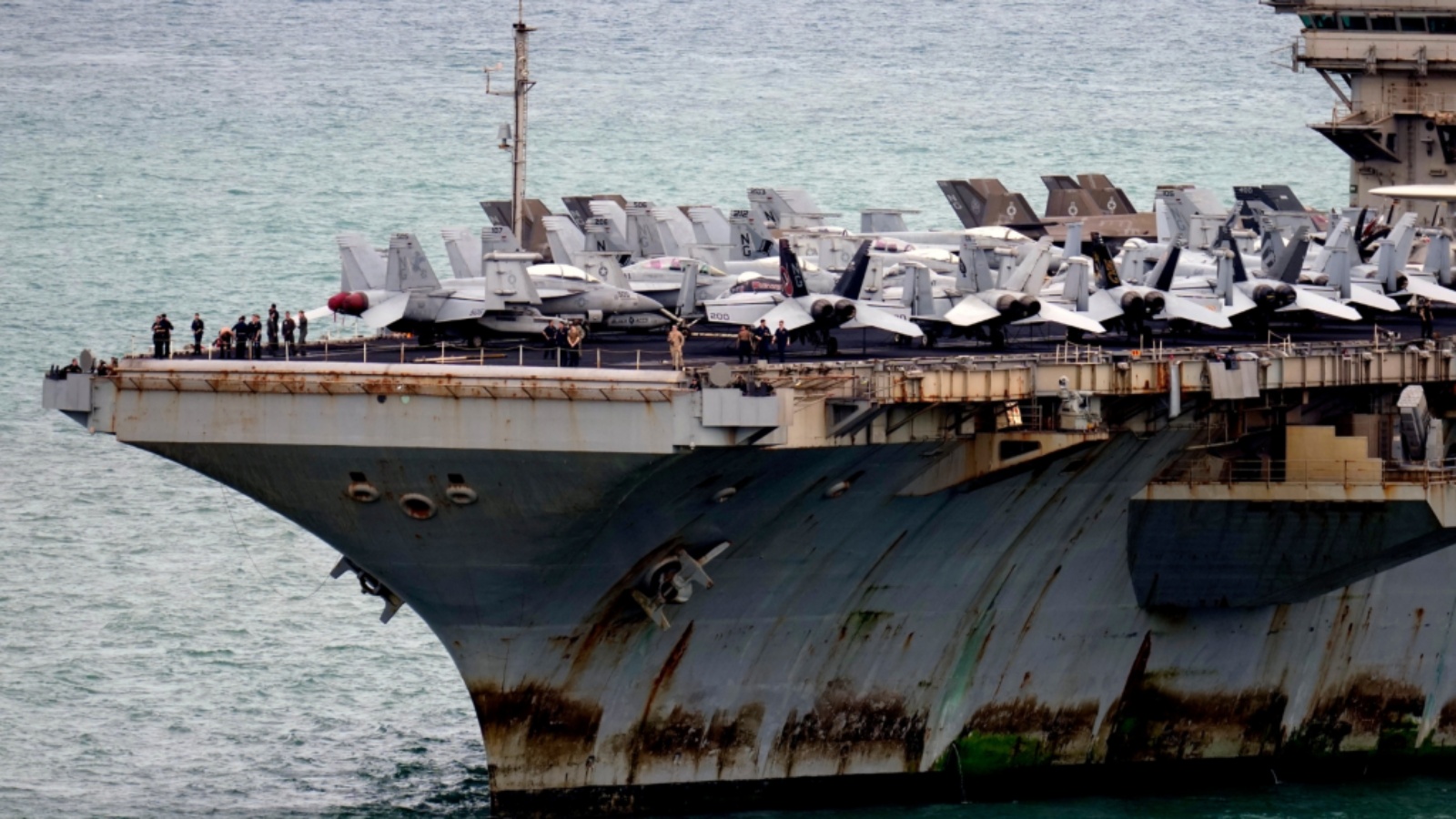
When a warship stays at sea for over 260 consecutive days without a port visit, human limits get tested. That is the reality behind the recent disclosures surrounding the USS Abraham Lincoln carrier strike group. Acting Navy Secretary Hung Cao confirmed that eight sailors across the strike group attempted suicide during its grueling, record-setting deployment supporting combat operations.
Public debates quickly turned into political point-scoring. Some leaders downplayed the ordeal as just another routine tour, while others insisted conditions were completely misrepresented. But if you talk to anyone who has spent months trapped inside a floating steel city under constant threat, they will tell you that the numbers only scratch the surface of a deeper institutional failure.
The Reality of 260 Days at Sea
Staying underway for nearly nine straight months changes people. The USS Lincoln left its homeport in San Diego and headed straight into high-stakes operations in the Middle East. Combat stress combined with broken desalination units, failing plumbing, and reduced meal options to create an environment of relentless attrition.
When resupply ships cannot reach you because of active tactical demands, daily life degrades fast. Fresh food runs low. Hot water becomes a luxury. Mail stops arriving. Sleep deprivation becomes the baseline norm for thousands of sailors and air wing personnel crammed into tight berthing compartments.
Most civilians cannot fathom what it means to be cut off from the outside world for close to a year. You work 16-hour shifts in blistering heat, surrounded by the deafening roar of jet engines, with zero physical escape.
Where the Support System Fails
The Navy loves to point out its staffing metrics on paper. During this deployment, the Lincoln carried a psychologist, a clinical social worker, a counselor, three behavioral health technicians, and even a therapy dog.
On a ship carrying roughly 5,000 service members, that ratio is absurd. One or two mental health providers cannot possibly absorb the psychological fallout of an entire carrier strike group facing active combat and extreme fatigue. Sailors report facing massive wait times just to get an appointment. By the time a burnt-out maintainer or young sailor gets to see a provider, they are already past the breaking point.
Worse yet, the cultural stigma surrounding mental health in the military remains toxic. Too many leaders still treat exhaustion and depression as personal weakness rather than operational injuries. When sailors try to seek help, they often fear administrative punishments, docked pay, or career-ending discharges disguised as "failure to adapt".
Punishing Desperation
The breakdown in empathy becomes glaringly obvious when things go wrong. Earlier in the deployment, a young sailor jumped overboard in an attempt to end his life. Crewmates spotted him, threw life rings, and coordinated a miraculous rescue in the dark water.
Instead of receiving compassionate long-term psychiatric care, that survivor faced disciplinary charges under the Uniform Code of Military Justice. Think about that message for a second. If you try to kill yourself and fail, the system might dock your pay and drag you through a court-martial instead of fixing the root cause. That approach does not prevent suicides. It just teaches desperate people to hide their pain until it is too late.
Fixing the Fleet Before It Breaks Again
We can argue all day about whether top defense officials sugarcoat deployment lengths or if commanders did the best they could with limited logistics. None of that changes the human toll. Extending carrier deployments past eight or nine months pushes human biology past its breaking point.
If the Pentagon wants to retain skilled technicians, pilots, and surface warfare sailors, the culture has to shift. That means capping uninterrupted deployments, scaling up mental health staffing ratios on every hull, and stripping away the punitive measures that punish troops for breaking under impossible pressure. Ignoring the problem will not keep the fleet ready. It will just empty it out.


