The crickets used to be the loudest thing in the valley after sundown. Now, it is the fans.
They sound like a 747 idling on a runway, a low and ceaseless roar that refuses to leave, no matter how tightly you pull the double-paned storm windows shut. Out here in rural Georgia, three hours past the glittering edge of Atlanta, the horizon used to belong to pine trees and the amber glow of fireflies. Today, a new kind of horizon is rising: acres of warehouse-sized tilt-up concrete boxes, windowless and fortified, humming with millions of gallons of cooling water and rows upon rows of high-density graphic processing units. If you found value in this article, you should read: this related article.
The machines are thinking. And they are very, very thirsty.
To understand why two hundred and sixty-five million dollars is suddenly flooding into the upcoming midterm elections from artificial intelligence firms and their backers, you have to stand where the residents of these host communities stand. You have to hear the transformers buzzing on utility poles that were meant to service dairy farms, not hyperscale server farms. You have to watch your well water drop four feet in a single dry August because a nearby facility needs millions of gallons a day just to keep its silicon brains from melting. For another angle on this development, refer to the latest update from The Verge.
Money moves where friction exists. For the past two years, Big Tech has encountered a severe, stubborn type of friction: people who live near the electrical grid.
Data centers do not smell like smoke, and they do not spill oil into rivers. They are clean, quiet neighbors on paper. But they are ravenous. A single modern campus can draw as much electricity as a medium-sized city. When tech conglomerates first swept into rural towns across the Sun Belt and the Midwest, they brought shiny promises of high-paying jobs and economic revitalization. Local town councils, blinking at the sheer size of the projected tax revenues, signed zoning waivers over bowls of lukewarm coffee in municipal basements.
Then the construction crews left. And the reality arrived.
A facility housing fifty thousand servers does not employ fifty thousand people. It employs twenty security guards, a handful of mechanical engineers, and a rotating crew of night-shift janitors. What it leaves behind is a strained municipal water supply, a wholesale spike in local residential electricity rates as power companies scramble to build new gas-fired peaker plants to feed the beasts, and a landscape permanently altered by the hum of cooling towers.
Resistance was inevitable.
It started slowly. A zoning board meeting here, a petition drive there. By early last year, grassroots coalitions had formed under banners nobody in Silicon Valley anticipated. Farmers, retired schoolteachers, and conservative county commissioners found themselves sharing microphones, united by a singular, fierce resentment: they were being asked to sacrifice their quiet lives to fuel a digital gold rush they would never share in.
Elected officials began to sweat. Local politicians who had eagerly waved the tech trucks through town were suddenly facing primary challengers waving electric bills and environmental impact studies at town hall meetings. The backlash became a genuine political threat, moving from municipal noise complaints to legislative bills designed to cap water usage, mandate green energy offsets, or slap heavy impact fees on digital infrastructure.
When local democracy starts to push back against a multi-trillion-dollar industry, capital does what capital has always done. It scales.
Two hundred and sixty-five million dollars is a lot of money to spend on midterm elections. But viewed through the cold lens of corporate survival, it is a rounding error. If you are building out the infrastructure for the next industrial revolution, a hostile local zoning board or a rogue state senator can cost you billions in deployment delays. Why risk a localized defeat when you can reshape the legislative chessboard from the top down?
The strategy is multifaceted, and it rarely looks like a cartoon villain sliding a sack of cash across a dimly lit table. Instead, it looks like political action committees with wholesome, patriotic names running glossy television ads about innovation, American competitiveness, and economic security. It looks like sophisticated micro-targeting campaigns designed to convince voters in swing districts that their local energy woes are caused by anything other than the massive warehouse humming at the end of their county road. It looks like primary challenges funded quietly from out-of-state accounts, intended to unseat populist or environmentalist lawmakers who dared to question the holy grail of compute capacity.
Consider what happens when a community loses its voice to a super PAC.
In a hypothetical county commissioners meeting in Ohio, let us call it 3-A, a farmer named Arthur stands up to speak. His family has worked the same bottomland since the Truman administration. He does not use words like stochastic or latency. He talks about his grandfather's tractor shed and the way the transformer down the lane used to sing only during a summer thunderstorm, not every hour of every day. He asks who is going to pay to upgrade the substation when the voltage drops every time the air conditioning kicks on in July.
The commissioners look down at their clipboards. They are polite. They nod. They have been briefed by lobbyists who arrived in town in rented black SUVs, carrying glossy binders filled with economic projections signed by economists who have never smelled cow manure in their lives. Arthur sits down, his boots heavy with red clay, knowing already how the vote will go.
The money changes the weather of politics. It shifts the storm clouds away from the boardrooms and scatters them across the ballot box, turning a debate about infrastructure and resource allocation into another proxy war in the endless culture clash. If you can make a data center sound like a patriotic duty, you can successfully paint anyone asking about water tables as an anti-progress obstructionist.
This is the invisible architecture of modern power. We tend to think of technology as ethereal, weightless, floating on a cloud somewhere above our daily concerns. We talk about the cloud as if it were weather, natural and unmoored from geography. But the cloud has a physical address. It sits on top of someone's old pasture. It drinks water from someone's local aquifer. It burns coal and natural gas that travels through high-tension wires dangling over someone's backyard.
When technology meets territory, friction is the result. And when capital meets friction, it buys a bulldozer.
The midterm investments are not merely about winning a seat here or a legislative majority there. They are about securing the runway for the next decade of digital expansion. If the models are right—if the projections for generative intelligence, autonomous logistics, and industrial automation demand a doubling or tripling of global compute power by the end of the decade—then the companies building these systems cannot afford a patchwork of local resistance. They need a clear highway. They need a nation of compliant zoning boards and quiet neighbors.
Yet, there is a stubborn humanity that refuses to be paved over.
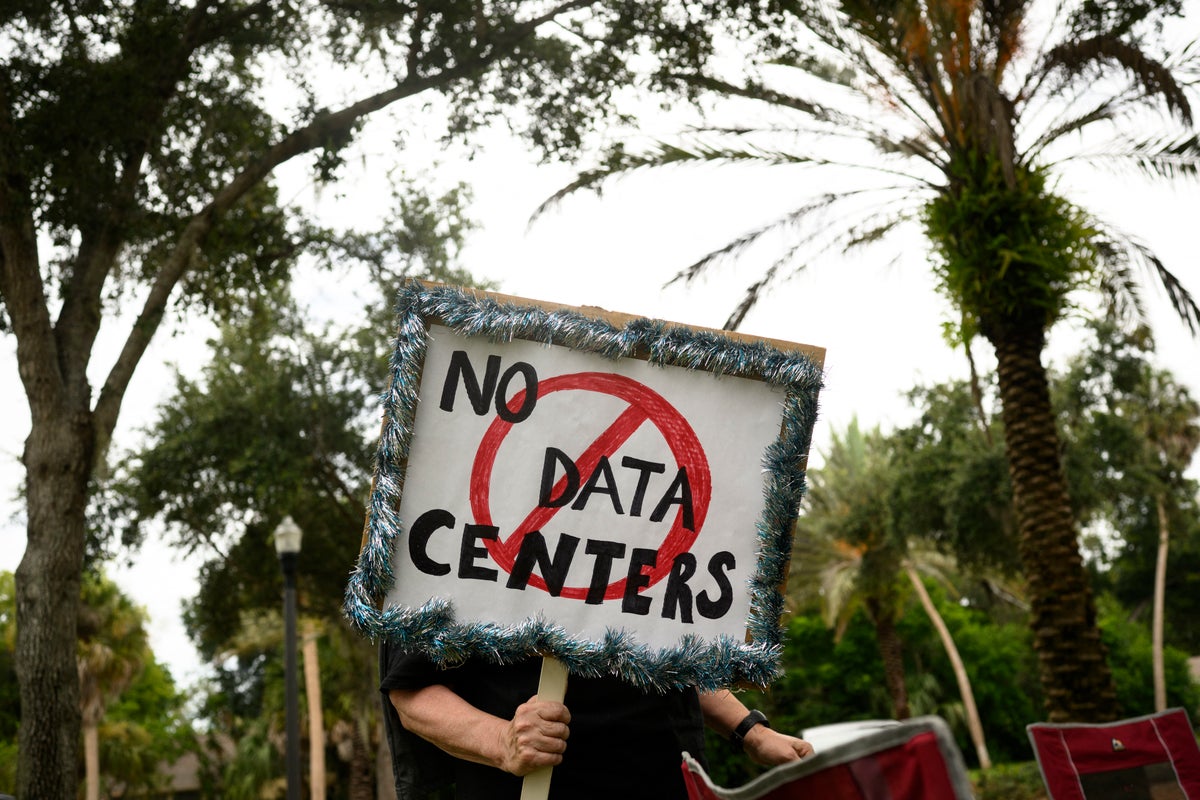
Drive down a two-lane county road in North Carolina or rural Oregon at dusk, past the chain-link fences topped with razor wire and the warning signs about closed-circuit surveillance, and you will see something remarkable. Hand-painted signs nailed to oak trees. Save Our Water. No More Hums. This Land Is Not For Sale.
They are crude. They do not have super PAC funding. They were painted with leftover latex trim paint by people who remember what the stars looked like before the floodlights went on.
The two hundred and sixty-five million dollars will buy a lot of airtime. It will buy consultants, polling data, and targeted digital ads that slip into your social media feed between pictures of your cousin's wedding and recipes for sourdough bread. It will shape the language of the debates on cable news networks. It will try to convince us that the hum outside the window is the sound of progress itself, and that anyone who asks it to quiet down is standing in the dark.
The crickets are gone from the valley now. But the people are still here, listening to the fans, waiting for the election returns, and wondering how much their silence was worth.