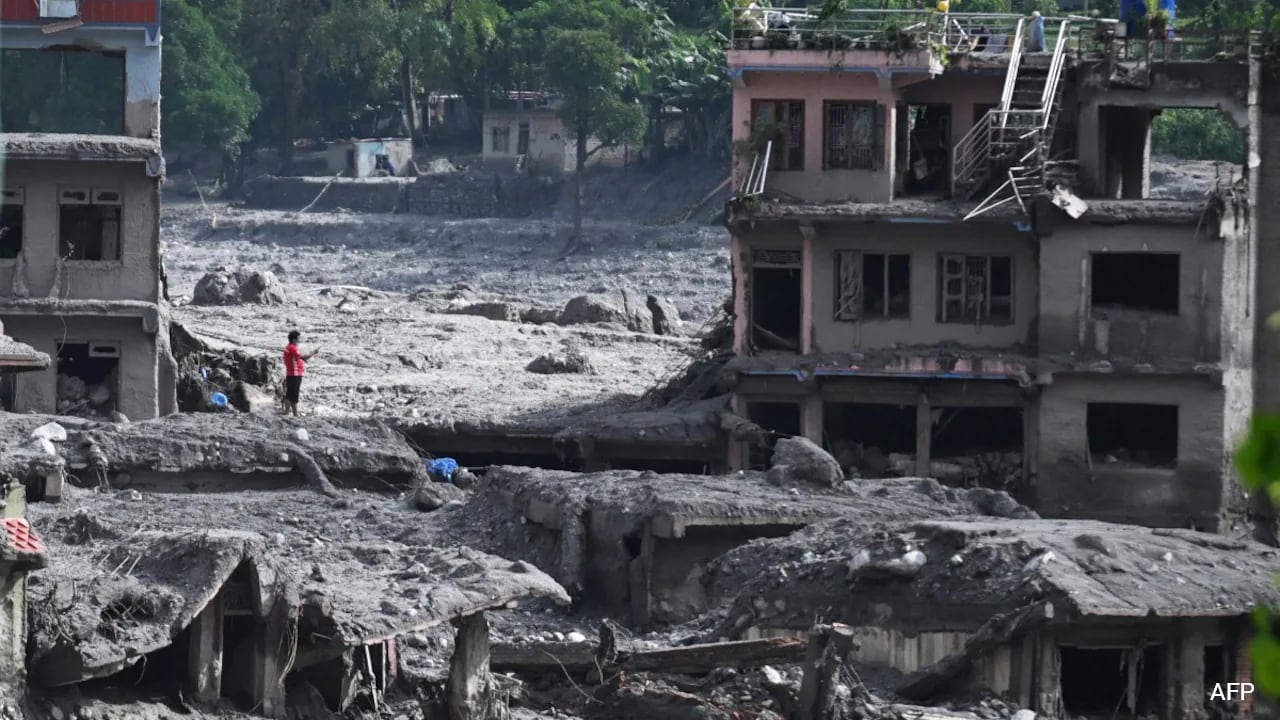
When flash floods tear through mountain villages and sweep away entire communities, the instinct of the global community is usually to dispatch aid packages and sympathy. Nepal is officially done accepting that framing. Following a devastating disaster along the Bhotekoshi river basin that left thousands dead or missing, Kathmandu has completely rewritten its diplomatic strategy.
This isn't about charity anymore. It is about accountability.
Nepalese officials have openly pointed the finger at the world's leading greenhouse gas emitters—specifically naming China, the United States, and India—arguing that industrial giants carry a direct moral liability for the climate disasters destroying vulnerable nations. When your country produces a negligible fraction of global emissions yet watches its glaciers destabilize and valleys flood, patience wears thin.
Shifting From Foreign Aid to Climate Justice
Foreign Minister Shisir Khanal didn't mince words during a recent broadcast interview. He framed the disaster not as an isolated natural freak accident, but as the direct fallout of a global warming crisis manufactured elsewhere.
The math behind the frustration is straightforward. Nepal contributes virtually nothing to total global emissions. Yet, the Himalayas are warming at an alarming rate, turning high-altitude water systems into ticking time bombs. When high-altitude ice and rock collapse into gorges, downstream settlements pay the ultimate price.
Instead of waiting around for voluntary donations, Nepal's government has formally knocked on the door of the UN-backed Fund for Responding to Loss and Damage. The ask isn't modest. Rebuilding bridges, roads, and completely shattered infrastructure will cost billions—potentially touching ten percent of the nation's entire economy.
The Real Cost of Finger-Pointing
Major emitters find themselves in an uncomfortable diplomatic corner. On one hand, emerging giants like India and China argue that historical responsibility, per-capita emissions, and ongoing development needs must dictate who pays. On the other hand, Western nations that industrialized centuries ago occupy the largest share of the global carbon budget.
Meanwhile, countries on the front lines are left counting bodies. More than a thousand people lost their lives in the recent flash floods, while thousands more remained missing. Entire local economies built around mountain agriculture and hydropower are gasping for survival.
This creates a massive precedent for international law. If vulnerable nations successfully force major powers to compensate them for climate-induced loss and damage, the floodgates open for dozens of other developing countries facing rising seas and extreme weather.
Nepal's stance forces a very simple question. If you break the global climate system, do you have to pay to fix the pieces that fall on everyone else? Kathmandu has answered with a definitive yes.
Check your local climate policies and support international loss and damage frameworks that hold high-emission nations financially accountable for adaptation failures.