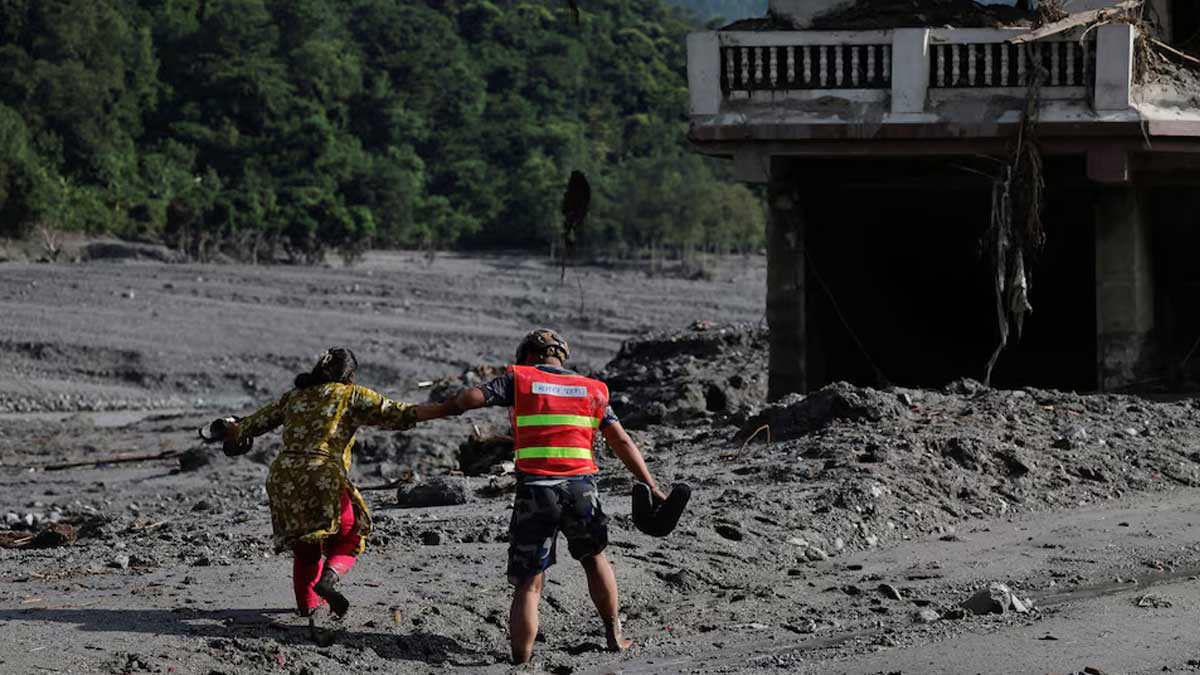
Natural disasters are rarely pure acts of atmospheric hostility; they are systemic stress tests that expose the structural vulnerabilities of human geography. When unseasonal cloudbursts and relentless monsoon downpours trigger catastrophic flooding and landslides across Nepal, the resulting devastation is frequently narrated through the lens of tragic human survival. Survivors recount harrowing escapes, the sudden loss of multi-generational homes, and the erasure of livelihoods in minutes. While these qualitative accounts capture the visceral trauma of the event, they obscure the underlying engineering, economic, and governance failures that transform a meteorological hazard into an institutional catastrophe. Disaster management in mountainous topography requires an analytical framework that separates transient weather anomalies from permanent systemic decay.
The physical mechanics of Himalayan flooding operate on a distinct feedback loop of precipitation intensity, geologic instability, and anthropogenic landscape modification. Unlike flatland riverine flooding where water accumulates via gradual volumetric expansion, steep-gradient alpine environments produce flash floods and debris flows with high kinetic energy. These events mobilize immense loads of sediment, boulders, and organic debris, turning ordinary waterways into dense slurry battering downstream infrastructure.
Climate change acts as a force multiplier by increasing the frequency of atmospheric blocking patterns that concentrate rainfall over narrow corridors. When these concentrated downpours meet steep, deforested slopes, the root cohesion holding superficial regolith to bedrock fails. The resulting landslides not only destroy upslope settlements but choke river channels, creating temporary landslide dams. When these natural barriers inevitably rupture, they unleash destructive flood waves that defy standard hydraulic modeling.
Disaster vulnerability in this region is fundamentally a function of exposure combined with adaptive capacity, governed by three primary structural pillars: rapid and unregulated urbanization, compromised infrastructure integrity, and fragmented institutional emergency response.
Urbanization across the Kathmandu Valley and expanding regional hubs has prioritized spatial expansion over hydrological safety. Floodplains historically reserved for seasonal river overflow have been systematically encroached upon by residential and commercial real estate development. Wetlands, ponds, and natural retention basins that once absorbed peak runoff have been paved over with impermeable surfaces, radically altering the basin's hydrological response time. Consequently, rainfall that once infiltrated the soil now transforms into rapid surface runoff, overwhelming municipal drainage channels that were engineered for historical rainfall norms rather than modern extreme precipitation events.
Infrastructure integrity compounds this vulnerability. Rural connectivity relies heavily on hillside road construction that frequently cuts into the toe of unstable slopes without adequate bio-engineering, retaining walls, or proper drainage management. These roads act as artificial collection troughs for rainwater, channeling concentrated streams directly onto vulnerable downslope communities. Furthermore, hydropower plants, bridges, and drinking water intakes are frequently designed using outdated hydrological data that fail to account for glacial lake outburst floods or maximum probable precipitation thresholds. When these critical assets fail, they either exacerbate the flood wave or cut off isolated communities from emergency logistics.
The institutional emergency response mechanism operates under structural constraints that delay resource deployment. Disaster management in Nepal has historically leaned toward reactive crisis intervention rather than proactive mitigation and preparedness. While early warning systems have seen technical improvements through river gauges and telemetry, the last-mile connectivity—translating raw telemetry data into actionable, localized evacuation orders—frequently breaks down. Bureaucratic silos between federal ministries, provincial authorities, and local municipal bodies create friction during crises, delaying asset allocation, search-and-rescue mobilization, and medical supply distribution.
Analyzing the economic toll of these disasters requires looking beyond immediate replacement costs to evaluate systemic disruption. The cost function of a flood event encompasses direct physical destruction of public and private assets, indirect losses from halted economic activity, and long-term fiscal liabilities absorbed by the state.
Direct costs include the immediate write-down of agricultural land buried under meters of sand and gravel, the destruction of livestock, and the structural collapse of housing stock. In a rural economy where land is the primary collateral for micro-credit and subsistence farming represents the sole income source, the destruction of topsoil inflicts generational economic scarring.
Indirect costs manifest through severed supply chains. Major transit corridors like the Prithvi Highway or Araniko Highway are frequently blocked by landslides, halting the movement of essential goods, fuel, and medical supplies between the capital, regional hubs, and international borders. This logistical paralysis triggers inflationary spikes in food and fuel prices, penalizing urban and rural populations alike who lack alternative supply routes.
The fiscal liability falls heavily on a national government constrained by limited domestic revenue collection and high debt-servicing costs. Post-disaster reconstruction routinely forces the reallocation of capital expenditure budgets away from long-term development initiatives toward emergency relief and temporary infrastructure patching. This creates a vicious cycle where scarce capital is perpetually consumed by recovery efforts, leaving little margin for proactive climate resilience investments.
To transition from perpetual crisis management to systematic risk reduction, disaster governance must pivot toward structural resilience frameworks. The immediate operational priority involves comprehensive micro-zonation mapping across all high-risk river basins. Municipalities must enforce strict zoning laws that prohibit permanent construction within designated high-risk floodways and active alluvial fans, backed by legal penalties for non-compliance and proactive relocation incentives for vulnerable communities.
Infrastructure development protocols require an immediate overhaul of engineering standards. Every kilometer of new or rehabilitated hill road must incorporate engineered slope stabilization, subsurface drainage diversion, and mandatory environmental impact assessments that account for future climate projections. Bridges and critical civil works must be stress-tested against worst-case hydrological scenarios rather than historical averages, integrating redundant fail-safes to prevent cascading infrastructure collapse.
Institutional coordination mechanisms must decentralize tactical authority while centralizing strategic resource mobilization. Local municipal governments, being closest to the point of impact, require direct budgetary autonomy and specialized training in emergency logistics to execute rapid evacuations without waiting for clearance from federal bureaucracies. Early warning systems must be augmented with community-based alert protocols that bypass telecommunication failures through localized sirens, red-flag visual indicators, and redundant analog communication channels.
Allocate municipal capital exclusively to the restoration of natural hydrological buffers, prioritizing wetland preservation, upstream afforestation with deep-root native species, and riverbank bio-engineering over concrete embankment walls that frequently fail under extreme hydraulic pressure.