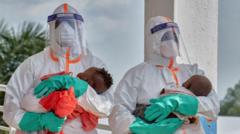
When a viral outbreak spreads at a record-breaking pace, numbers stop being mere statistics and start telling a story of profound vulnerability. The latest Ebola surge in the eastern Democratic Republic of Congo has crossed 3,200 confirmed cases, racing toward the grim milestones of past epidemics in a fraction of the time.
If you are wondering why this specific wave alarms international health authorities so deeply, the answer comes down to velocity and context. This is not just another health emergency. It is a crisis colliding with active conflict, severe food insecurity, and a strain of the virus that lacks widely approved vaccines.
The Anatomy of a Record Breaking Acceleration
Speed defines this outbreak. Declared in mid-May, the current transmission rates caught responders flat-footed. During the devastating 2014-2016 West Africa epidemic—historically viewed as the absolute worst—reaching specific mortality milestones took many months. In eastern Congo's Ituri province, the virus crossed similar thresholds in a matter of weeks.
Why is it moving so fast? Local logistics play a massive role. The epicenter sits in a region plagued by rebel violence, displacement, and infrastructure breakdowns. When families must flee active combat zones, traditional contact tracing collapses.
World Health Organization officials have noted that an alarming percentage of new infections stem from unknown transmission chains. People are passing away in their communities without ever reaching a treatment center. By the time medical teams learn of a case, the virus has already branched out into multiple new households and villages.
The Bundibugyo Challenge
Past outbreaks in the region typically involved the Zaire strain, for which effective vaccines and therapeutics exist. This time, health workers are confronting the Bundibugyo species.
Options remain severely limited. There are no fully approved commercial vaccines or specific treatments ready to deploy off the shelf for this variant. Clinical trials are scrambling to catch up, and diagnostic tools have only recently received emergency listing status. Without a preventative shield, containment relies entirely on old-school epidemiological grunt work: isolation, hygiene, and community trust.
Trust, however, is hard to earn when communities feel abandoned. Decades of institutional neglect, combined with sudden restrictions on movement, border closures, and rising food prices, create deep resentment. Some residents have historically reacted with hostility toward medical teams out of fear or mistrust. Healing that relationship requires local leadership, transparent communication, and immediate humanitarian relief.
A Crisis on Top of a Hunger Emergency
You cannot separate disease control from basic survival. The UN World Food Programme has warned that the outbreak is brutally compounding an existing hunger crisis. Millions of people across eastern Congo already faced acute food insecurity before a single case of Ebola was diagnosed.
Now, market disruptions and travel limits mean farmers cannot reach their fields. Malnutrition rates are climbing inside and outside treatment facilities. When children are malnourished, their immune systems offer zero resistance against aggressive pathogens. Funding shortfalls have forced aid agencies to slash assistance programs precisely when expansion is mandatory.
International support must look beyond medical supplies alone. Supplying hot meals to patients, personal protective gear to frontline workers, and financial stability to local health staff who have gone unpaid are non-negotiable steps. If responders cannot eat, and if patients fear starvation more than the virus, containment efforts will fail.
The window to blunt this trajectory is narrowing by the day. Protecting vulnerable populations requires immediate funding surges, secure humanitarian corridors, and direct investment in local community networks. Supporting established regional response plans and demanding accountability from global health donors are the most effective actions you can take to help turn the tide.