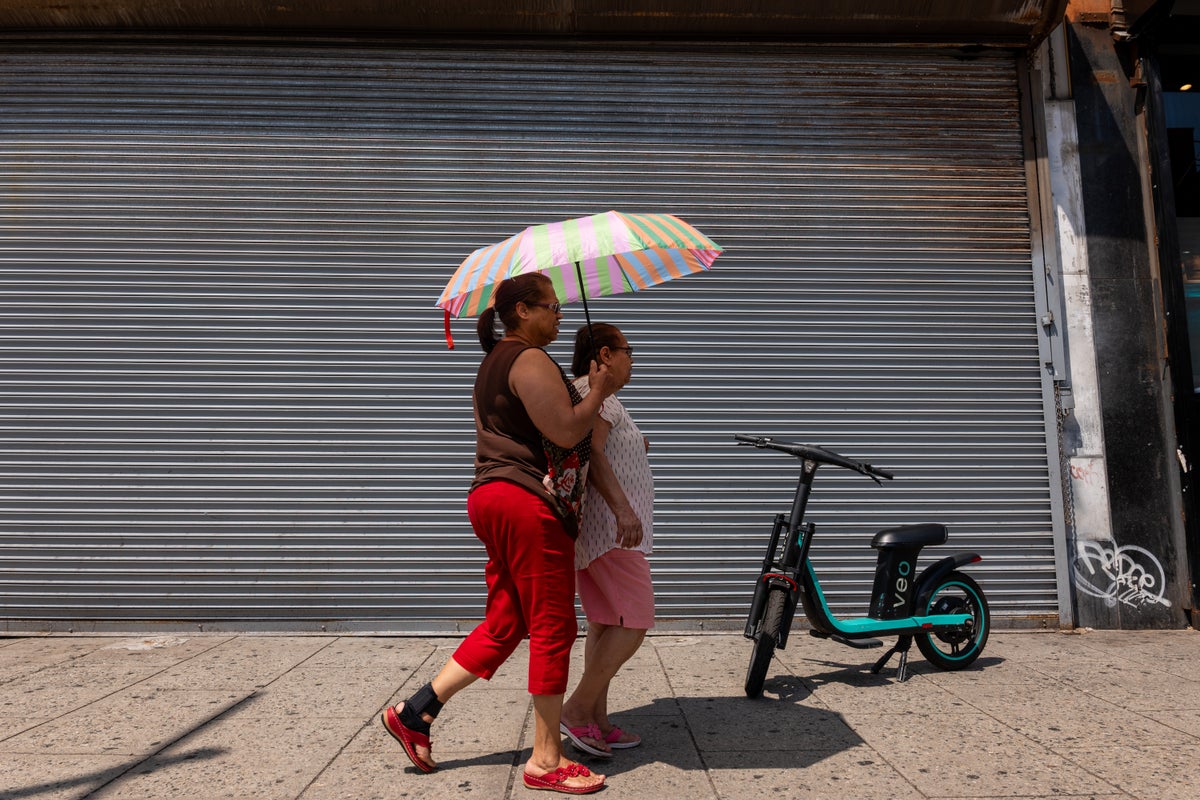
The concept of a relaxing July 4th holiday weekend completely vanished for millions of people along the East Coast. What started as a punishing heat dome quickly turned into a public health crisis and an infrastructure disaster.
By the time the initial counts came in, New Jersey officials reported at least 19 suspected heat-related deaths, a number that later climbed to 22 across 10 counties. The tragedies didn't stop with the heat. A violent line of thunderstorms tore through the region, packing wind gusts up to 71 miles per hour. The storms snapped utility poles, split trees, and instantly knocked out power to nearly 1 million homes and businesses across the central and eastern United States.
This wasn't just a bad run of summer weather. It was a failure of the safety nets we rely on to survive extreme temperatures.
The Relentless Math of a Heat Dome
Most people think extreme heat is only dangerous if you're exerting yourself outside. The reality inside New Jersey homes tells a very different story.
According to State Health Commissioner Dr. Raynard Washington, many victims were found inside their own residences without air conditioning. Others were discovered on streets or inside parked cars. The ages of those who died spanned from the mid-30s to the 80s, proving that extreme heat doesn't just target the frail or elderly.
Governor Mikie Sherrill noted that the state was experiencing the hottest stretch of weather seen in over 14 years. On Thursday, Newark hit a scorching 105 degrees Fahrenheit. Atlantic City broke records by reaching 103 degrees on Thursday, climbing to 105 on Friday, and hitting a stifling 106 degrees on Saturday. Across the river, New York’s LaGuardia Airport shattered a 1966 record by hitting 104 degrees.
The real danger of a heat dome comes down to a lack of recovery time.
Meteorologists point out that these systems trap immense moisture along with high temperatures. When the overnight low in Atlantic City only drops to 80 degrees, the human body never gets a chance to cool down. The heat builds up over multiple days, creating a compounding physical stress that can trigger sudden cardiovascular failure or heat stroke.
When the Cure Makes the Crisis Worse
When temperatures cross into triple digits, air conditioning transitions from a luxury to basic life-support equipment. That is exactly why the subsequent severe thunderstorms were so devastating.
The intense heat dome destabilized the atmosphere, triggering violent winds that tore through New York and New Jersey on Friday and Saturday nights. The storms brought down over 430 wires in parts of New York alone, while New Jersey Transit lines faced major shutdowns.
Suddenly, hundreds of thousands of people who desperately needed cooling were plunged into darkness.
Imagine sitting in a house that has been baking in 105-degree weather for three straight days, and the power suddenly cuts out. The indoor temperature skyrockets within hours. For residents without a vehicle to escape to a cooling center, or those caring for vulnerable family members, a power outage during a heatwave is an immediate emergency.
Reimagining Local Emergency Management
We can no longer treat triple-digit heatwaves and infrastructure-shattering storms as rare anomalies. They are becoming the defining feature of summer. Surviving these events requires a shift in how individuals and local communities prepare.
Relying solely on central air is a single point of failure. If you want to keep your home resilient, you need a backup plan.
- Invest in dual-source backup power: A traditional gas generator helps, but solar-powered portable power stations are increasingly vital for running basic fans or medical devices when utility poles are down.
- Map out local cooling centers before the emergency: Don't wait until your phone is at 10% battery and your house is 95 degrees to look up where to go. Know which local libraries, community centers, or malls have independent backup power.
- Establish a neighborhood check-in grid: The state health department can't walk into every apartment to check on residents. The most effective safety net is a literal knock on the door from a neighbor. If you know someone down the street lives alone or lacks working AC, check on them twice a day during a heat alert.
The events in New Jersey show that extreme heat is a silent threat, but when it pairs with a compromised power grid, it becomes an active hazard. Preparing for the heat now means preparing for the outages that follow it.