Football is a sport obsessed with gods and mortals, yet we rarely witness the exact moment a god is asked to sit on the bench.
The air in Riyadh hung thick with expectation. Tens of thousands of voices roared a singular, familiar name into the floodlights, a rhythmic incantation that had shaken stadiums across continents for two decades. Cristiano Ronaldo stood on the pitch, his silhouette etched against the green grass like a monument to an era. But the scoreboard told a harsher, more urgent story. Al-Nassr was trailing. The machine was stalling. The script was drifting dangerously away from the expected Hollywood ending. You might also find this related coverage useful: The Structural Mechanics of UEFA Champions League Qualification Upsets.
Then, the tactical board went up.
Number seven. As discussed in detailed coverage by Sky Sports, the implications are widespread.
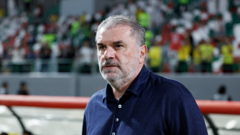
Silence rippled through sections of the stadium, a collective intake of breath so sharp you could almost hear it over the stadium hum. Ange Postecoglou stood on the touchline, hands tucked deep into his pockets, his face a mask of uncompromising resolve. He had just committed the ultimate managerial heresy. He had removed the most famous footballer on the planet while his team was losing.
To understand the audacity of that decision, you have to look past the flashing cameras and the digital hype. Football management is rarely about the grand design; it is about survival in the microsecond. Postecoglou, a manager forged in the crucible of fierce domestic leagues and built on a philosophy of relentless, suffocating collective movement, looked at the pitch and saw a geometry problem. Al-Nassr needed speed. They needed chaos. They needed every single outfield player to press with the fury of a drowning man reaching for driftwood.
And sometimes, the sheer gravitational pull of a legend stops everyone else from running.
(Note: While the tactical analysis here is framed through narrative interpretation of the dynamics of high-level management, the core event reflects the stark reality of modern football decision-making under acute pressure.)
Consider what happens next in stadiums across the world when a star of that magnitude remains untouchable. The passing lanes narrow. Teammates look up, panic slightly, and funnel every possession toward a single focal point. It is safe. It is predictable. And against a well-drilled defense, it is fatal.
Postecoglou saw the stagnation. He did not blink.
When Ronaldo walked off, the body language was scrutinized by millions of lenses. Frustration flickered across the striker's face, a testament to the eternal fire that made him a global icon in the first place. Champions do not like the sideline. They view the bench as an insult to their immortality. But Postecoglou did not look at a statue. He looked at a tactical chessboard and realized his bishop was blocking the rook.
The substitution triggered something feral.
Without the automatic instinct to look for number seven, the rest of the Al-Nassr squad suddenly had to look at each other. They had to invent space. They had to run into the shadows they usually left for their talisman. The shape shifted. The tempo spiked from a measured waltz into a frantic, breathless sprint.
Suddenly, the opponent's defense did not know who to mark. The center-backs, who had spent the entire week studying how to neutralize a single primary threat, found themselves tracking ghosts. Runners flooded the box from blind spots. The collective heartbeat of the team accelerated.
Minutes later, the equalizer hit the back of the net. The stadium erupted, not with the rehearsed roar of a routine victory, but with the chaotic, disbelieving energy of a jailbreak.
This is the hidden cost of brilliance. It protects you, but it can also cage you.
We romanticize individuality in sports because it is easy to consume. A single face on a billboard, a single highlight reel on a phone screen, a single name chanted by an ocean of supporters. We buy the jersey because we want to believe that one human being can conquer time, gravity, and logic entirely on their own.
Yet, sport remains the ultimate team betrayal. It humbles the individual to elevate the collective.
Postecoglou understands this better than most. His career has never been about comfort. It has always been about forcing players into the uncomfortable realization that the system is greater than the sum of its parts, even when those parts include royalty.
When the referee blew the final whistle confirming the dramatic comeback victory, the tension evaporated into the warm Riyadh night. The headlines would inevitably chase the controversy of the substitution, dissecting every micro-expression, every pixel of footage, looking for friction where there was only professional necessity.
But out on the grass, the lesson lingered long after the stadium lights dimmed.
Greatness requires courage to build. Sometimes, it requires even greater courage to interrupt.