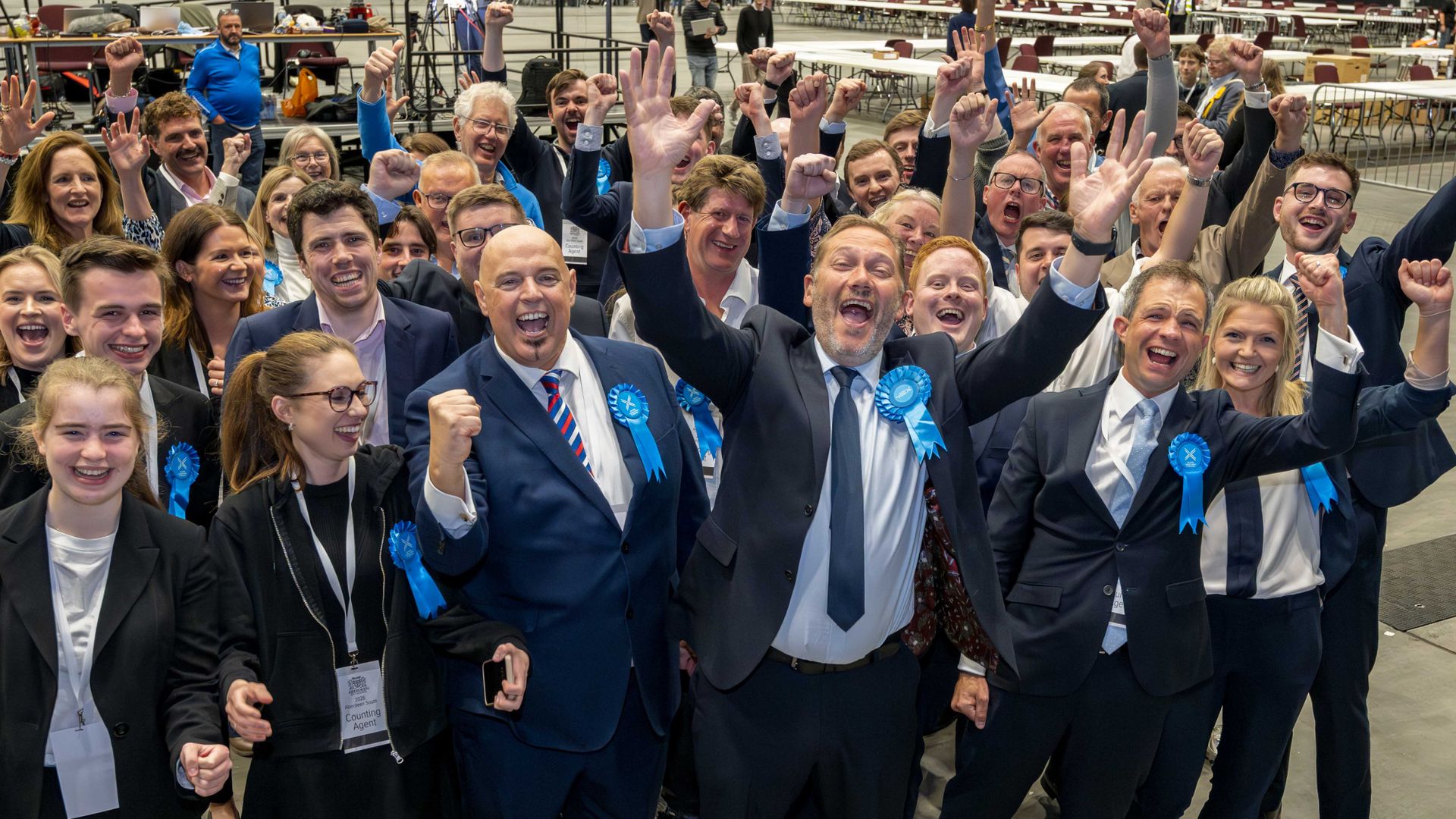
The rain in Aberdeen does not fall; it drifts sideways, sharp and slick with the scent of the North Sea. On a cold June evening, the yellow light from the P&J Live arena cut through the gloom, casting long shadows across tarmac that has, for generations, been paved by the fortunes of oil and gas. Inside, the air smelled of stale coffee and raw tension.
Politicians call these moments turning points. The spreadsheet-wielding analysts in London call them data corrections. But to understand why the Scottish Conservative victory in the Aberdeen South by-election matters, you have to look past the numbers. You have to look at the hands of the people who cast the ballots.
Consider someone like Callum. He is a hypothetical composite of the thousands of engineers, riggers, and surveyors who call this corner of Scotland home, but his anxiety is entirely real. Callum has spent twenty years working the platforms out in the grey waters of the North Sea. He knows the precise weight of an offshore survival suit. He knows the specific hum of a gas turbine. For the last few years, Callum has felt like a ghost in his own country. He listens to politicians in Edinburgh and London speak about a green transition as if it were a simple toggle switch, a painless shift from the old world to the new.
But Callum knows that when you switch off a pipeline, you switch off a mortgage. You switch off a grocery bill. You switch off a town.
For decades, the political logic of Scotland seemed cast in stone. The Scottish National Party held the keys to the kingdom, riding a wave of constitutional destiny that felt, to its supporters, completely irreversible. The Conservatives were a historical footnote in by-elections here, frozen out by a legacy of grievance that stretched back to the deindustrialization of the 1980s. The last time the Tories won a Westminster by-election in Scotland, the Beatles were still recording at Abbey Road. It was 1967.
Then came Thursday night.
When the final boxes were tipped out, the numbers did not just whisper; they screamed. Douglas Lumsden, the Conservative candidate, secured 14,308 votes. The SNP tally, which had stood proud at over 15,000 during the last general election, plummeted to just 8,258. A safe nationalist seat, vacated by their high-flying former Westminster leader Stephen Flynn, dissolved in a matter of hours.
How does a political landscape fracture so completely in a single evening?
The answer lies in the unique, desperate mechanics of survival. This was not a sudden, passionate embrace of right-wing ideology by the people of Aberdeen. It was something far more calculating. It was a siege mentality.
First Minister John Swinney stood before the cameras later, his expression grim, noting that tactical voting had had a real impact. He was right. In the quiet booths of Aberdeen South, voters who had spent their lives loathing the Tory brand looked at their ballot papers and made a cold, transactional choice. Labour voters, Liberal Democrats, and tactical non-aligned citizens looked at the SNP’s energy policies—policies they perceived as vague, weak, or actively hostile to the local economy—and decided that the enemy of their enemy was, for one night only, their representative.
They threw the kitchen sink at the wall, as the defeated SNP candidate Richard Thomson later admitted.
The strategy worked because the fear was greater than the tribal loyalty. For years, the oil and gas capital of Europe has watched the political consensus drift away from it. A windfall tax here, a paused drilling license there, and a rhetorical framework that treated fossil fuel workers as liabilities rather than assets. When Kemi Badenoch visited the constituency three times during the campaign, she did not talk about abstract constitutional theory. She talked about drilling. She talked about the Energy Profits Levy. She turned a local vote into a national referendum on whether the North Sea should be allowed to breathe.
To the workers on the platforms and the business owners in the harbor, the election became an existential ledger.
| Candidate / Party | Votes Secured | The Core Message to the Capital |
|---|---|---|
| Douglas Lumsden (Con) | 14,308 | Stop killing the industry that funds our communities. |
| Richard Thomson (SNP) | 8,258 | Trust the transition, even if the timeline is uncertain. |
| Jo Hart (Reform) | 2,478 | The existing system is fundamentally broken. |
The math tells a story of total displacement. A 14.69% swing from the nationalists to the Conservatives is not a ripple; it is a rogue wave.
Away from the coast, in Arbroath and Broughty Ferry, the SNP managed to hold their ground with Lara Bird taking her seat, proving that the nationalist pulse still beats in the lowlands. But Aberdeen is different. Aberdeen is built on granite and fueled by crude. When you threaten the economic spine of a city, the old political alignments melt away like snow on the hills.
There is a deep vulnerability in admitting that our political systems are no longer driven by grand visions of the future, but by a collective dread of being left behind. The SNP’s defeat suggests that the public patience has expired, worn thin by internal drama—including the recent legal miseries of its former chief executive—but broken ultimately by a perceived failure to protect local bread and butter.
When Stephen Flynn posted on social media that it was a tough night that some will need to reflect on quite heavily, he was acknowledging a deeper truth. You cannot build a nation if the people inside its most productive engine room feel like they are being signaled to shut down.
As the sun rose over the North Sea on Friday morning, the oil supply boats kept moving through the harbor channels, their hulls cutting through the white foam. The workers shifting shifts at the docks did not look like people who had just made history. They looked tired. They looked like people who had simply gone to the ballot box to defend their right to work.
The real lesson of Aberdeen South is not that Scotland has suddenly turned blue. It is that when the cold reality of economic survival collides with the warm rhetoric of political ideals, reality wins. Every single time.


