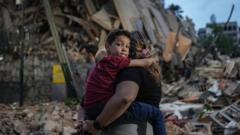
The walls did not just shake. They screamed.
In the coastal towns of northeastern Venezuela, the earth behaves like an old, unpredictable engine. Most of the time, the tremors are small, a low rumble that vibrates through the soles of your shoes and makes the coffee cups rattle on the counter. People smile nervously, wait it out, and go back to their lives. But on that Tuesday evening, the rumble turned into a roar.
Elena, a mother of three living in a modest brick home in Cumaná, felt the air change before she felt the ground move. It was a heavy, suffocating pressure. Then came the sudden, violent lurch that threw her sideways against the kitchen wall. Concrete split open like wet paper. The lights flickered once and died, plunging her family into a terrifying, suffocating darkness filled with the choking dust of pulverised mortar.
When the shaking stopped, the silence was worse than the noise.
This is not a hypothetical horror story. It is the immediate, brutal reality facing thousands of families across Venezuela’s Sucre and Monagas states following the devastating 6.2 magnitude earthquake. While international headlines briefly flashed the news before moving on to the next political crisis, a quiet catastrophe began to unfold. It is a disaster layered upon an existing crisis, a breaking point for a population that was already stretched to its absolute limits.
The Breaking of the Fragile
To understand the true weight of this disaster, you have to look beyond the Richter scale. A 6.2 magnitude earthquake in a country with modern infrastructure, strict building codes, and deep financial reserves is a disruptive emergency. In Venezuela, it is an apocalypse in slow motion.
For years, the country has navigated a complex maze of economic hardship. Hospitals operate with bare shelves. Water systems are erratic. Power grids are prone to sudden, prolonged blackouts. When the earth buckled, it did not just collapse roofs; it shattered the fragile, makeshift lifelines that kept entire communities afloat.
Consider what happens next when a home collapses in a region already starved of resources. There are no heavy rescue vehicles waiting around the corner. Neighbors dig through the rubble with their bare hands, fingernails tearing against rough concrete, driven by the desperate hope of hearing a familiar voice beneath the debris. The local clinics, already struggling to source basic antibiotics and sterile bandages, are suddenly inundated with fractures, crush injuries, and severe shock.
The immediate aftermath of a disaster is often measured in numbers—homes destroyed, casualties reported, financial losses calculated. But these statistics are bloodless. They obscure the mother standing in the rain, clutching a plastic bag containing the few belongings she managed to salvage. They ignore the psychological toll on children who now scream every time a heavy truck drives past, terrified that the world is about to fall apart again.
A Lifeline Across the Ocean
Recognizing the sheer scale of the misery and the inability of local infrastructure to cope, the UK’s leading humanitarian organizations have stepped into the breach. A coalition of major charities has launched a coordinated, nationwide emergency appeal to funnel immediate, life-saving aid directly to the hardest-hit zones.
The strategy is not about sending massive cargo planes filled with generic supplies that get bogged down in bureaucratic red tape. It is about agile, targeted intervention. By partnering with local networks, churches, and grassroots volunteers who are already on the ground, British donations are being converted into the exact items needed for survival within hours of arrival.
Clean water is the first and most critical battleground. When water mains rupture, contaminated groundwater floods the system. Without intervention, waterborne diseases like cholera and typhoid can tear through a displaced population far more efficiently than an earthquake. The appeal is funding the distribution of high-capacity water purification tablets, portable jerry cans, and temporary water stations to ensure that thirst does not turn into a second wave of fatalities.
Emergency shelter is the second priority. Thousands of families are currently sleeping in open fields, public parks, or the ruins of school buildings, exposed to the elements and the compounding vulnerabilities of the night. Heavy-duty, weather-resistant tarpaulins, blankets, and hygiene kits are being distributed to provide at least a thin layer of dignity and protection against the damp night air.
But the real problem lies elsewhere, hidden beneath the immediate panic.
The Invisible Stakes of Delayed Aid
In the calculus of international aid, time is a currency paid in human lives. The first seventy-two hours are crucial, but the weeks that follow determine whether a community recovers or permanently collapses into ghost towns of displacement.
If a family cannot find food or clean water within their home district, they have no choice but to walk. They abandon their damaged homes, their fields, and their local communities to join the growing ranks of internally displaced people. This migration strains neighboring cities, creating a domino effect of scarcity and social tension. By intervening heavily right now, the UK charities are attempting to stabilize the population where they are, preserving the social fabric of these historic coastal towns before it unravels completely.
Furthermore, the psychological anchoring of knowing help is on the way cannot be overstated. When you are sitting in the dark, surrounded by the ruins of everything you have ever built, the feeling of absolute abandonment is crushing. The arrival of aid workers bearing supplies funded by strangers thousands of miles away sends a powerful, silent message: You are not invisible. The world has not forgotten you.
The logistical hurdles are immense. Roads have been blocked by landslides, and fuel shortages complicate the transport of goods from major ports to remote villages. Yet, the local partners funded by the UK appeal are navigating these obstacles with a fierce, quiet ingenuity. They are using motorcycles to transport medical supplies through narrow, debris-filled alleys. They are setting up community kitchens using salvaged gas cylinders to ensure that at least one hot meal a day reaches the elderly and the young.
Beyond the Dust
This emergency appeal is a test of collective empathy. It is easy to look at a map of South America, see a country beset by long-term geopolitical struggles, and decide that the problem is too complex, too distant, or too broken to fix. But an earthquake knows nothing of politics. A collapsing wall does not care about economic theories or international sanctions. It strikes the vulnerable with absolute, indiscriminate fury.
The response from the British public will dictate the trajectory of thousands of lives over the coming months. It will determine whether Elena can find a safe space for her children to sleep tonight, whether a doctor in a dimly lit clinic has the suture thread needed to close a wound, and whether a shattered community can begin the agonizingly slow process of rebuilding.
The dust in Sucre will eventually settle. The news cycle will inevitably drift to other stories, other crises, other corners of the globe. But under the tropical sun, long after the cameras have gone, the people of northeastern Venezuela will still be standing amidst the rubble of their lives, waiting to see if anyone is coming to help them pick up the pieces.
The ground has stopped shaking, but the crisis is far from over.