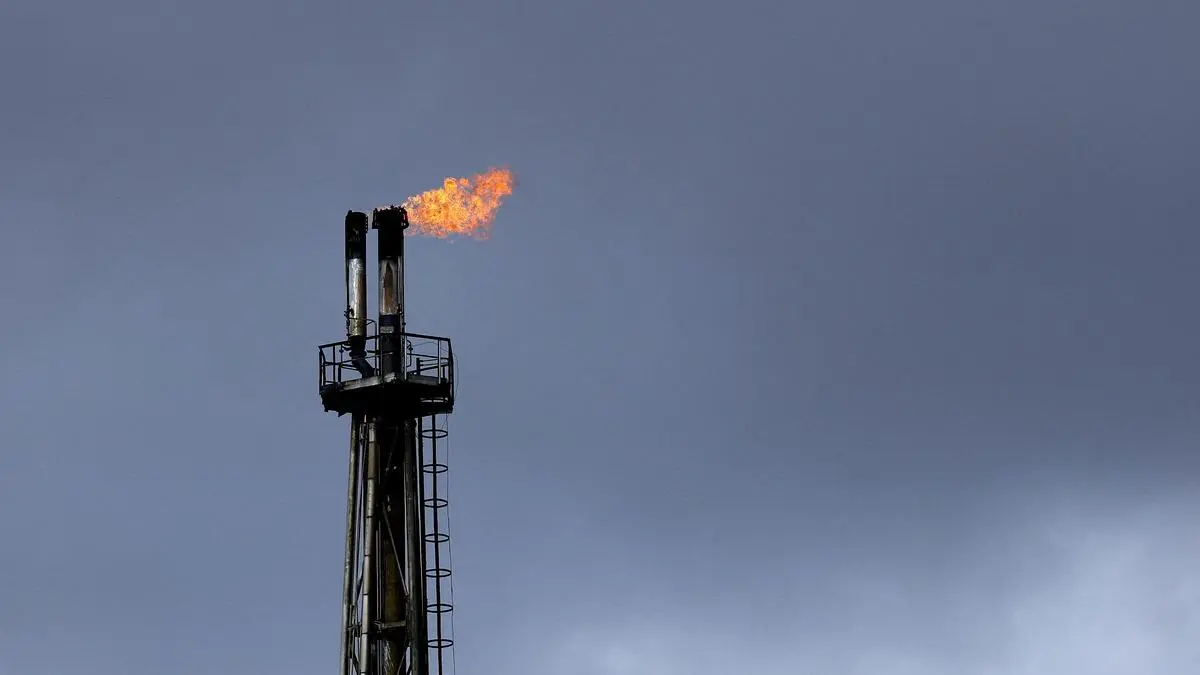
The generator in Elias’s basement makes a sound like a dying animal. It’s a rhythmic, metallic hacking that keeps him awake at 3:00 AM, a reminder that his small grocery store in a coastal village depends entirely on a volatile liquid he can no longer afford. For Elias, "fuel shocks" aren't a headline in a financial paper. They are the reason his milk spoiled last Tuesday. They are the reason his daughter’s school was dark for three days.
Fifty-three nations are currently meeting to discuss how to make that sound stop forever.
These representatives aren't just bureaucrats in suits; they are the architects of a divorce. They are gathered to draft the final papers for humanity’s long, messy, and increasingly toxic relationship with fossil fuels. The goal is a total phaseout. It sounds clinical. It sounds like a policy memo. But for the people living on the front lines of a crumbling energy grid, it is a matter of survival.
The math is brutal. For decades, the global economy has functioned like a high-stakes gambler, betting that the supply of oil would always be cheap and the environmental cost would always be someone else’s problem. That bet has failed. We are now seeing the "cascade" of shocks—not just at the gas pump, but in the price of bread, the cost of shipping a heart valve, and the stability of the climate itself.
The Anatomy of a Breaking Point
When we talk about energy, we often get lost in trillions of barrels and metric tons of carbon. Let’s look at a simpler metric: the anxiety of a father wondering if he can heat his home.
The current crisis is a feedback loop. A geopolitical tremor in one corner of the globe sends a shockwave through the pipelines, which spikes the price of natural gas, which shuts down a fertilizer plant, which raises the price of wheat. Everything is connected. The system is so tightly wound that it has lost its ability to absorb impact.
Consider a hypothetical city—let’s call it Aethelgard. In Aethelgard, the buses run on diesel. The electricity comes from a coal plant forty miles away. When the price of oil jumps by 20%, the city’s budget evaporates. Maintenance on the water filtration system is deferred. The streetlights are dimmed to save money. Crime rises. The human cost of a "fuel shock" is measured in the safety of a sidewalk at midnight.
[Image of hydrogen fuel cell]
This is why fifty-three nations have finally realized that mitigation is a band-aid on a gunshot wound. They are looking at the data, and the data is screaming. To keep the global temperature rise within the $1.5^\circ\text{C}$ threshold set by the Paris Agreement, the world must reduce fossil fuel production by roughly 6% every year for the next decade. Instead, production is still being subsidized to the tune of billions of dollars.
The Invisible Infrastructure of Change
The skeptics will tell you that we aren't ready. They will point to the intermittent nature of wind and the limitations of battery storage. They are right to be cautious, but they are wrong to be cynical.
The transition is already happening in ways that aren't immediately visible to the naked eye. It’s in the salt caverns being repurposed for hydrogen storage. It’s in the software that allows thousands of home batteries to act as a single, massive power plant. This isn't just about swapping a gas car for an electric one; it’s about reimagining the very definition of a power grid.
[Image of a solar microgrid]
In the old world, power was centralized. It flowed from a massive, smoking chimney out to the masses. It was a hierarchy. The new world is a web. In this scenario, Elias’s grocery store doesn't just consume energy; it produces it. The solar panels on his roof feed the grid during the day, and his neighbors’ electric vehicles feed the store at night.
The resistance to this change often stems from a fear of the unknown. We know how to dig a hole and set fire to what we find. It’s primal. It’s easy to understand. Trusting the invisible movement of electrons from a gust of wind feels like magic, and magic feels unreliable. But look at the numbers. In many parts of the world, building new wind or solar capacity is now cheaper than continuing to run existing coal plants. The economics have shifted from a moral argument to a mathematical certainty.
The Human Stakes of the Phaseout
What does a phaseout actually look like for the person on the street?
It means the end of the "pollution tax" that the poorest members of society pay every day with their lungs. In cities where fossil fuels are being phased out, asthma rates in children are dropping. It means the decoupling of basic human needs from the whims of a global commodity market. If your energy comes from the sun hitting your roof or the wind blowing over your hills, you are no longer a hostage to a supply chain crisis halfway across the planet.
But the transition is not without pain. There are millions of workers whose identities and livelihoods are tied to the old ways. A coal miner in Appalachia or an oil rigger in the North Sea isn't a villain in this story; they are the people who built the modern world. A "just transition" isn't a buzzword. it is a requirement. If the fifty-three nations gathered today ignore the workers of the old guard, the phaseout will fail not because of technology, but because of a lack of empathy.
The stakes are invisible until they aren't. They are invisible until a hurricane wipes out a coastal town that can't afford to rebuild. They are invisible until a heatwave kills the elderly in a city where the grid has collapsed.
The Architecture of the New World
The agreement being forged right now by those fifty-three nations focuses on three pillars:
- The Immediate Cessation of New Projects: No more searching for new oil. No more coal mines. We have enough in the "bank" to bridge the gap if we stop digging now.
- The Redirecting of Subsidies: Taking the billions currently used to artificially lower the price of fossil fuels and putting them into grid modernization and renewable research.
- Mandatory Transparency: Forcing companies to disclose the "carbon risk" of their assets, essentially admitting that a barrel of oil in the ground may soon be worth nothing.
It is a terrifying prospect for the status quo. It is an admission that the era of extraction is over. We are moving into the era of stewardship.
Elias doesn't care about the G7 or the COP summits. He cares that his daughter can read her books at night without the smell of kerosene filling the house. He cares that the price of bread stays the same from Monday to Friday. He is waiting for a world where the energy that powers his life is as certain and as free as the air he breathes.
The delegates are finishing their coffee. The drafts are being edited. Outside the conference rooms, the world is waiting. The transition will be messy. It will be expensive. It will be contested by the most powerful corporations in human history.
But the alternative is a slow, grinding decline into a world of permanent shocks. We are choosing between the chaos of the past and the stability of a future we have yet to fully build. The generator in the basement is still hacking, but for the first time in a century, we can finally hear the silence of the sun.
The light is coming, and it doesn’t require a pipeline to find us.