The tea was still warm when the floor gave way.
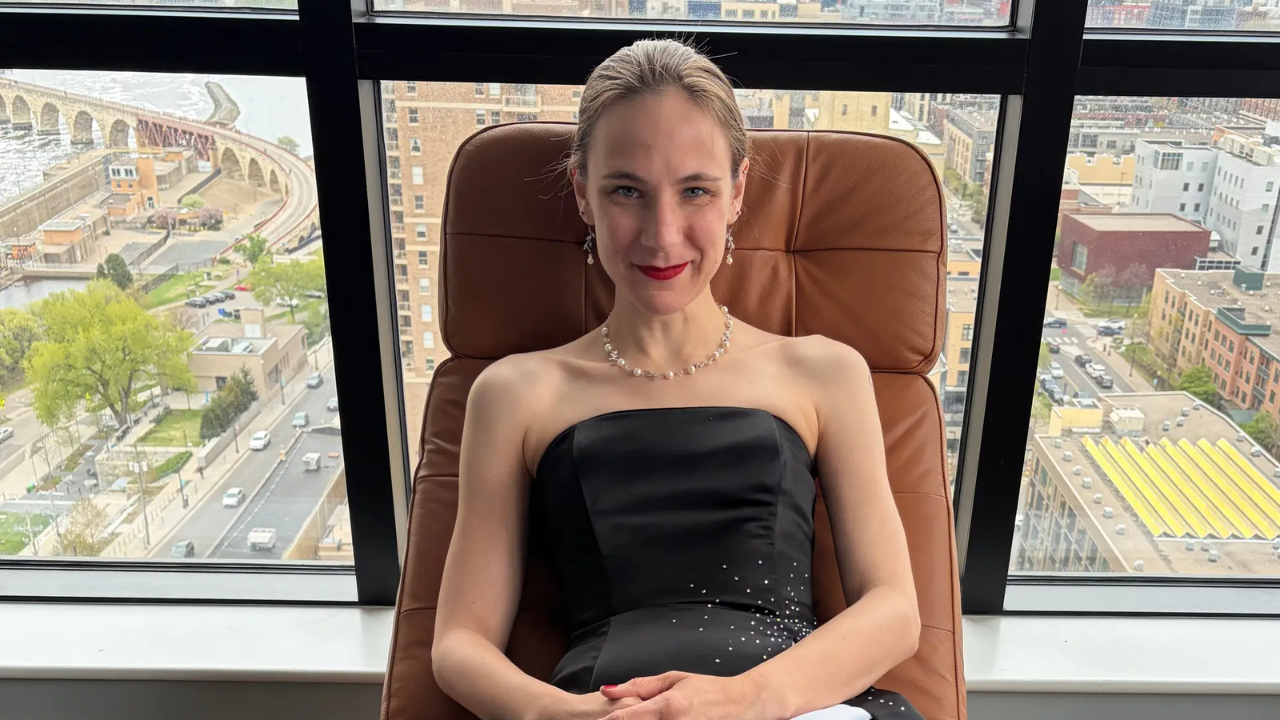
It was a Tuesday evening, the kind of aggressively ordinary night where the biggest conflict should have been deciding what to watch on television. Annabel sat at her kitchen table, sorting through a stack of mail that had accumulated over the week. She was thirty-four, possessed a master’s degree in graphic design, paid her taxes three days early every year, and prided herself on a meticulously curated savings account meant for "rainy days."
She thought a rainy day meant a blown transmission. She thought it meant a leaking roof or a sudden gap between freelance contracts.
Then her phone buzzed. It was a notification from her health insurance portal, followed immediately by a text message from her bank. Within forty-eight hours, the life Annabel had carefully constructed over a decade was dismantled. A rare, aggressive autoimmune flare-up had landed her in an out-of-network emergency room the previous month. She had done everything right. She checked the website. She asked the admitting nurse. She stayed within the lines.
It didn't matter. A bureaucratic technicality involving the specific laboratory used by the hospital meant she was now personally liable for $43,000.
Her savings evaporated by Friday.
We look at people like Annabel and we tell ourselves comforting lies. We whisper that she must have missed a form, that she must have been careless, that she didn’t read the fine print. We do this because the alternative is too terrifying to contemplate. If a sharp, educated, hyper-vigilant woman can be financially ruined by a single bout of illness, then the systems we rely on aren't shields at all. They are spiderwebs. And we are all just waiting for the wind to blow.
The Illusion of the Threshold
There is a psychological phenomenon known as the "just-world fallacy." It is the deeply ingrained belief that good things happen to good people, and bad things only happen to those who deserve them or fail to plan. It is a defense mechanism. It allows us to walk past the wreckage of another person’s life without realizing our own car is heading toward the exact same guardrail.
Consider the reality of modern consumer vulnerability. The average American is one emergency away from insolvency. According to data from the Federal Reserve, nearly half of the population would struggle to cover an unexpected $400 expense without borrowing or selling something.
Let that number sit in your mind. Four hundred dollars.
That is the price of a mid-tier smartphone. It is a grocery bill for a large family. It is a minor dental procedure.
Now, scale that up to Annabel’s $43,000. When the gap between security and catastrophe is that vast, the concept of individual responsibility becomes a cruel joke. We are told to budget, to cut back on artisanal coffee, to invest in index funds. But you cannot budget your way out of a systemic ambush.
Imagine a bridge built with a hidden structural flaw. For years, thousands of cars drive over it every day. The commuters feel safe because the concrete looks solid and the guardrails are painted a cheerful silver. Then, a truck of a specific weight hits a specific spot at a specific angle, and a section of the span drops into the river.
Was it the truck driver’s fault? Should they have inspected the rebar before driving to work?
Of course not. The failure belongs to the architecture. But in our current economic and social framework, the driver is the one left drowning in the current, while the architects sit in boardrooms miles away, pointing to a clause on page eighty-seven of a compliance manual.
The Cost of Staying Above Water
When the crisis hit, Annabel entered the survival phase. It is a cold, sharp state of being that anyone who has faced sudden ruin will recognize instantly. Your world shrinks. The future ceases to exist beyond the next twenty-four hours.
She stopped buying fresh produce. She turned her thermostat down to fifty-five degrees, wrapped herself in wool blankets, and watched her breath mist in her own living room. She took on three extra freelance gigs, working until three in the morning until her eyes burned and her fingers cramped.
The physical toll was immediate, but the emotional erosion was worse. Shame became her shadow.
When you are drowning in debt or facing sudden instability, the world treats you as though you have a contagious disease. Friends stop inviting you out because they know you can’t afford the entree. Family members offer well-meaning but agonizing advice that boils down to "have you tried not being in this situation?"
But the real problem lies elsewhere. It isn't just about the money. It is about the complete loss of agency.
To test this, look at how we handle basic necessities like housing and healthcare. We have turned survival into a high-stakes game of algorithmic compliance. If a computer program flags your credit score because of a medical debt, you can no longer rent an apartment. If you can't rent an apartment, you can't secure a stable job. If you can't secure a job, your health declines.
It is a closed loop. A perfect, devastating circle that traps the middle class just as easily as it traps the impoverished.
The Myth of the Individual Savior
We love stories about resilience. We make viral videos about coworkers buying a car for a man who walks twelve miles to work every day. We cheer for GoFundMe campaigns that successfully raise money for a child’s cancer treatment.
These are beautiful stories of human kindness. They are also symptoms of a profoundly broken society.
Every time a GoFundMe campaign succeeds, it represents a failure of our collective infrastructure. It means we have decided that survival should be a popularity contest, judged by how well you can market your tragedy on social media. If you are photogenic, if your story is compelling, if you know how to use the right hashtags, you might live. If you are quiet, introverted, or lack a digital network, you sink.
Annabel tried the crowdfunding route. She spent hours drafting her story, trying to strike the perfect balance between desperate and deserving. She posted it.
It raised $850. Most of it came from her aunt and an old college roommate.
The internet is a vast, noisy ocean, and her particular drop of misery was swallowed up within minutes by a sea of other, louder crises. The algorithm didn't care about her graphic design degree or her perfect tax record. The algorithm cared about engagement. And a quiet woman drowning in medical debt simply wasn't engaging enough.
The Realignment of the Stakes
So, how do we fix a system where the floor can drop out from beneath anyone at any moment?
It starts by changing how we view vulnerability. We must stop treating misfortune as a moral failure. When we see someone like Annabel, our first instinct shouldn't be to ask what she did wrong. It should be to ask what the system did to her.
True security doesn't come from a personal savings account, because no individual account can withstand a systemic shock. Security comes from collective resilience. It comes from building floors that are thick enough to hold all of us, no matter how hard we fall.
Consider what happens next if we refuse to change: The middle class continues to hollow out. The line between prosperity and destitution becomes so thin that people stop taking risks. They stop starting small businesses. They stop changing careers. They stop buying homes. Innovation dies in an environment where a single mistake or a single stroke of bad luck results in permanent exile from economic life.
Fear becomes the dominant cultural currency. And a society driven by fear is inherently unstable.
The View from the Kitchen Table
Six months after the notification arrived, Annabel sat in her kitchen again. The apartment was different—a smaller, darker space on the edge of the city with a radiator that hissed through the night.
She had managed to settle the debt for a fraction of the original cost, but the price wasn't measured just in dollars. It was measured in the lines around her eyes. It was measured in the way she flinched whenever her phone vibrated. It was measured in the profound loss of faith in the world around her.
She still drinks her tea. She still works hard. But she no longer believes in the silver guardrails.
She knows the truth now, the one that we all try so hard to ignore as we drive across our fragile bridges every single day. She knows that the distance between the person observing the tragedy and the person living it is exactly one phone call, one diagnosis, one bad Tuesday away.
The safety net didn't just break for Annabel. It was never really there to begin with.