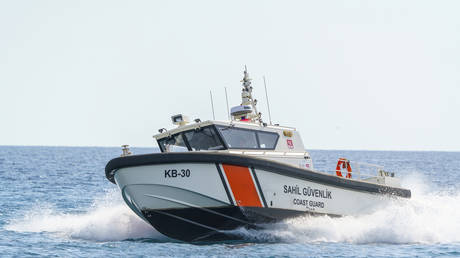
The sea does not care about geopolitics, but the men who watch it do.
On a map, the Strait of Hormuz looks like a choke point. A narrow, jagged throat of water where the Persian Gulf squeezes tight before spilling into the Arabian Sea. If you stand on the coast of Qeshm Island on a clear evening, you can watch the supertankers slide past. They move like slow, rusted titans, carrying roughly a fifth of the world’s petroleum. They are massive, yet fragile. They rely entirely on a delicate, invisible web of radio waves, satellite signals, and radar pulses to navigate the treacherous, crowded shipping lanes.
But on a recent Tuesday night, the electronic eyes watching over this vital choke point suddenly went blind.
A flash of light, a low rumble that vibrated through the limestone cliffs of southern Iran, and the screens inside a military bunker in Goruk turned to static. Millions of dollars of military hardware, designed to track everything from commercial airliners to American warships, dissolved into useless scrap metal. The United States had struck back.
Military briefings later summarized the event in the cold, sanitized language of modern warfare: US forces conducted precision strikes against Iranian radar sites in Goruk and Qeshm Island. It sounds clinical. It sounds clean.
It was anything but.
The Anatomy of the Watchtower
To understand why these specific coordinates matter, you have to understand what a radar site actually is. It is not just a dish spinning on a hill. It is an aggressive act of looking.
For years, the Islamic Revolutionary Guard Corps (IRGC) has used the rocky outcroppings of Qeshm Island and the coastal bluffs of Goruk as electronic watchtowers. Consider the geography. Qeshm sits like a long, protective shield just off the Iranian coast, right at the narrowest bend of the Strait. Goruk lies further east, tracking ships as they make their approach from the open ocean. Together, they formed a pair of high-tech binoculars pressed firmly against the glass of global commerce.
Every time an international vessel passed through, these sites mapped its speed, its cargo, and its vulnerability. They were the electronic scaffolding that allowed Iran to threaten the shipping lanes, launch drone attacks, or seize commercial tankers.
When those radar dishes were functioning, Iran held the joystick.
Then came the decision to pull the plug. The American strikes were not a random escalation; they were a deliberate, surgical blinding. By targeting the transmitters and the receiver arrays, the US military did not just destroy physical buildings. They stripped away the tactical vision of an entire regime.
Imagine driving a car down a winding mountain road at midnight, and suddenly, someone cuts your headlights. That is the reality now facing Iranian commanders along the coast.
Inside the Blast Radius
The dry press releases omit the human friction of that night. They do not mention the young operators sitting in the glowing hum of the Goruk command center, sipping tea, confident in the air defense systems meant to protect them. They do not describe the sudden, terrifying scream of incoming ordnance, a sound that splits the sky before it splits the earth.
Precision munitions do not just blow up a target. They create a vacuum of power.
In the immediate aftermath of the strikes, confusion reigned. Local fishermen on Qeshm Island reported a tremor that felt like an earthquake, followed by the distant wail of sirens. For hours, the Iranian government said nothing. The state media apparatus, usually quick to blast propaganda or deny Western military success, remained paralyzed.
They were paralyzed because the loss was absolute.
This was not a symbolic gesture. This was a direct strike on Iran's early-warning network. Without the radar installations at Goruk and Qeshm, large swathes of the Gulf are now a black hole for Iranian air defense. If a hostile aircraft or a drone flies through those corridors today, Iran’s military might not know until the bombs hit the ground. The hunter became the hunted in the span of a single second.
The Invisible Stakes of Global Shipping
It is easy for someone sitting thousands of miles away to view this as just another entry in the endless ledger of Middle Eastern conflict. A radar site explodes, a statement is issued, life goes on.
But the economic reality is tied directly to those smoking ruins on Qeshm Island.
The global economy is a creature of habit and reassurance. Lloyd's of London, the massive insurance market that underwrites global shipping, calculates premiums based on risk. When radar sites are active and aggressive, threats loom large. Tanker captains worry about being harassed or struck by loitering munitions. Insurance rates spike. When insurance rates spike, the price of a gallon of gas in Ohio goes up. The cost of shipping grain to Africa rises.
By taking out the eyes of the IRGC, the strike temporarily shifted the balance of fear. It sent a message to the shipping industry: the lanes are being cleared.
Yet, this action brings a terrifying counterweight. Dictatorships do not accept humiliation quietly. When a regime loses its high-tech eyes, it often resorts to blunter, more dangerous instruments. Unable to track targets with precision, the risk of a catastrophic miscalculation skyrockets. A nervous commander with a shoulder-fired missile or a fast-attack boat might mistake a civilian container ship for a military threat.
The silence that currently hangs over Goruk is not peace. It is the breath held before a counterpunch.
A World Built on Static
The smoke has long cleared from the limestone ridges of Qeshm Island, but the geopolitical landscape has permanently shifted. The radar arrays are gone, replaced by tangled nests of rebar and charred concrete.
We live in a world that assumes connectivity is permanent. We trust that our GPS will guide us, that the ships carrying our goods will arrive on time, and that the modern military apparatus is too sophisticated to fail. We forget how easily those systems can be unplugged.
Somewhere in the Pentagon, analysts are already looking at satellite imagery of the craters, measuring the success of the mission in centimeters. Somewhere in Tehran, generals are huddled around maps, debating how to rebuild their broken vision or how to strike back without starting a full-scale war.
And out in the dark waters of the Strait of Hormuz, a lone commercial tanker plows through the waves. The captain looks at his monitors. The sea is quiet for now, but everyone on board knows that just over the horizon, the darkness is watching.