The coffee in the paper cup had gone cold hours ago, sitting on the dashboard of a sedan parked just off the ring road. Outside, the Moscow night was heavy, stitched with the faint, persistent hum of modern anxiety. People inside those sprawling apartment blocks were sleeping—or trying to. They had grown accustomed to the distant thrum, the sudden flash of light that turned the bedroom curtains orange for a split second, the abrupt rattle of windowpanes that didn't quite shatter.
Then came the swarm.
Over a thousand times in a single, staggering operational pulse, the air above Russia became a theater of high-stakes mathematics and burning fuel. For months, the calculus of modern conflict had been shifting, inch by terrifying inch, but this was a threshold crossed. Hundreds of unmanned aerial vehicles—cheaply assembled bodies of fiberglass, off-the-shelf microprocessors, and military-grade explosives—pushed past the outer horizons and converged directly on the capital.
History is rarely written in grand halls anymore. Sometimes, it is written in the frantic telemetry of a radar screen in a bunker forty feet underground, where green blips multiply like bacteria in a petri dish.
To understand why this matters, you have to strip away the dry prose of military briefings. You have to look at the geometry of distance. Moscow is thousands of kilometers from the muddy trenches of the eastern front, a vast expanse designed by geography and history to feel unassailable. For generations, the Russian capital existed behind a psychological fortress of strategic depth. Missiles could cross oceans, yes, but the daily, grinding reality of war always stayed out there, safely contained on the periphery.
That illusion evaporated in the span of a few hours.
Consider the sheer industrial logic of what happened. A drone costs a fraction of the sophisticated air-defense missile required to intercept it. It is an economic asymmetry that haunts generals in every capital of the world. When you launch a thousand of them, you are not just executing a tactical strike; you are performing an economic stress test on a nation's nervous system. Every interceptor fired is a depleted resource. Every radar operator scanning the horizon is a human mind edging closer to exhaustion.
In a suburban kitchen fifty miles outside the city center, a woman named Elena stood by her window, her tea untouched. She didn't hear the drones themselves—they were too high, too small, ghosts riding the wind. But she heard the stuttering roar of the defense batteries responding.
"It sounds like thunder," she said later, her voice flat, devoid of panic because panic had long since burned out into a dull, grey fatigue. "Except thunder doesn't make the floor vibrate in your chest."
That vibration is the invisible stake of this entire conflict. Wars do not merely destroy infrastructure; they compress the psychological distance between the battlefield and the bedside. When the sky above a metropolis becomes a contested zone, the psychological contract between a government and its populace shifts. The front line is no longer a place on a map. The front line is wherever the horizon happens to be.
The engineers who designed these long-range systems knew what they were doing. They were solving a brutal physics problem. How do you pierce the heart of an adversary without crossing the ultimate nuclear red line? You use a thousand paper cuts. You build weapons that are small enough to evade early warning paradigms, numerous enough to overwhelm localized shielding, and cheap enough to manufacture in suburban garages converted into makeshift assembly lines.
It is a terrifying democratization of destruction.
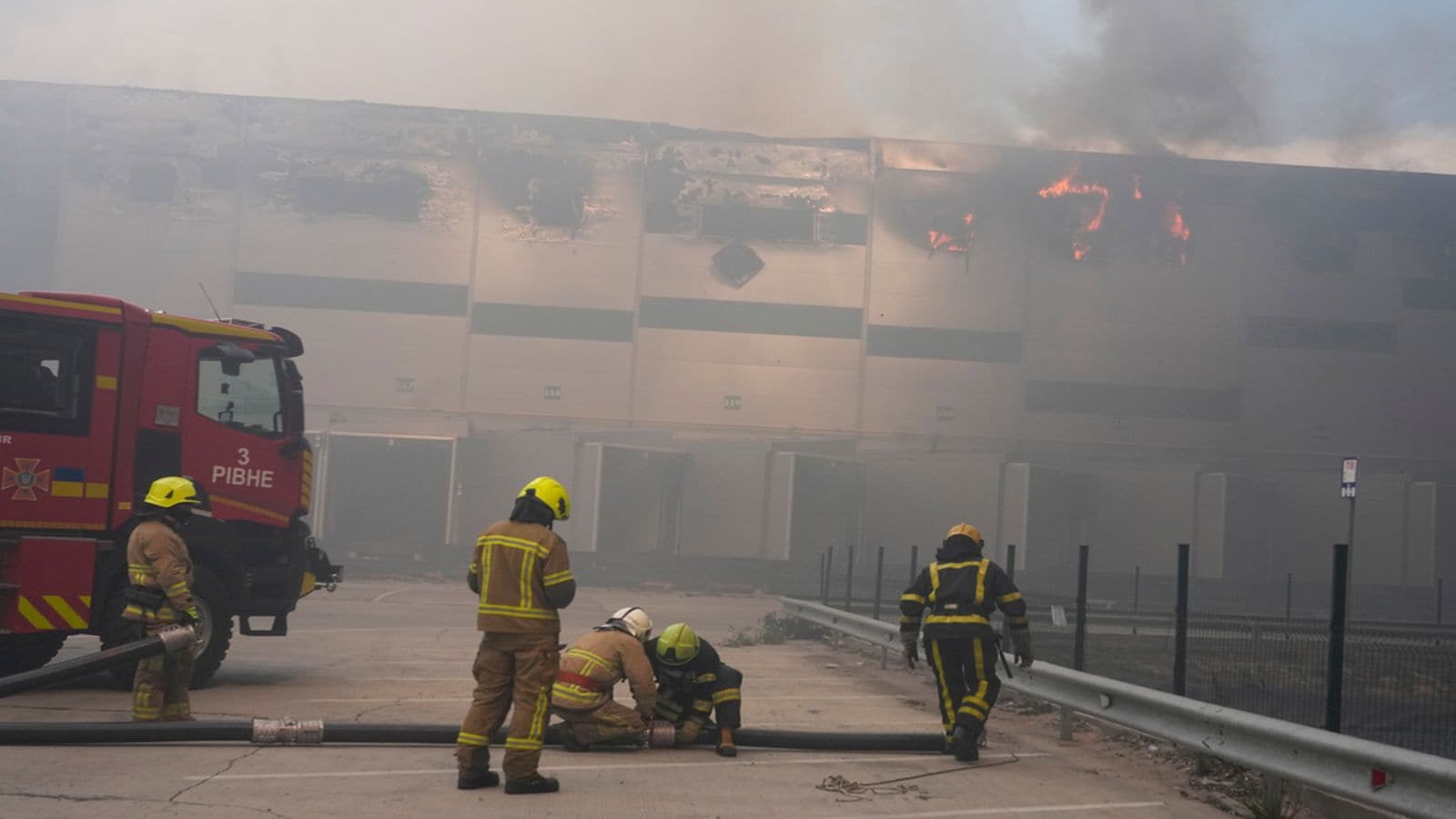
As the first light of dawn began to bleed through the smog over Moscow, the scale of the operation became clear. Smoke drifted from charred fields where debris had fallen. Flights had been diverted, ground transport halted, the rhythmic pulse of a city of twelve million people stuttered and missed a beat.
The numbers are cold. Over a thousand drones. Hundreds aimed at the capital. Interception rates that sound impressive on paper but obscure the terrifying reality of what slips through. But behind every percentage point is a shattered roof, a frantic phone call in the dark, a collective intake of breath from a population realizing that geography is no longer armor.
We are living through the painful rewriting of how nations defend themselves. The old rules—built on massive armored columns, stationary bases, and predictable vectors of attack—are gathering dust in military academies. In their place is a new, erratic grammar written in buzzing rotors and silent circuit boards.
The sun rose fully over the golden domes of the city, catching the thin, grey trails of smoke lingering in the upper atmosphere. Down below, cars began to move again. Pedestrians stepped out onto the sidewalks, collar buttons fastened against the morning chill, eyes occasionally flickering upward to check the blue. The silence returned, but it was a brittle thing, waiting for the next dark shape to cross the horizon.