The room smells of stale pepperoni and nervous sweat. It is mid-January, freezing outside, but inside the thermostat is losing a battle against six grown adults packed onto a sectional couch. My friend Dave is staring at a television screen with an intensity usually reserved for bomb defusal. His knuckles are white. His left leg bounces with a manic, rhythmic vibration that vibrates the floorboards.
When the opposing quarterback lofts a deep pass into the end zone, Dave stops breathing entirely. For four seconds, he is a statue. The pass falls incomplete. Dave unlenses a ragged exhale, slumping backward, only to bolt upright three seconds later because it is third down.
We call this entertainment. We call it fandom. But if you strip away the team colors, the logos, and the chips on the table, you are looking at something else entirely. You are looking at a controlled, voluntary, ninety-minute medical emergency.
For years, sports media has treated the physical toll of football as a localized problem. We talk about the men on the field. We discuss concussions, torn ligaments, and the brutal physics of human collision. We rarely talk about the millions of people sitting on couches whose hearts are beating like they are sprinting up a mountain, all while eating processed cheese.
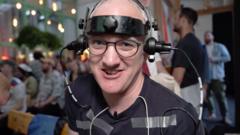
I wanted to understand what we are actually doing to ourselves when we watch the game. So, during a recent playoff run, I strapped on a continuous heart rate monitor, a blood pressure cuff, and a metabolic tracker. I wanted to see the invisible stakes. What I found altered how I view every Sunday of my life.
The Chemistry of the Couch
To understand what happens to a fan, you have to understand the brain’s inability to separate fiction from reality. When Dave watches his team play, his prehistoric brain does not realize he is sitting safely in a suburban living room. It believes he is facing a pack of wolves.
The moment the game kicks off, the sympathetic nervous system takes the wheel. This is the body’s fight-or-flight mechanism. It floods the bloodstream with cortisol and adrenaline. Under normal circumstances, these hormones are a gift. They sharpen your vision, dump glucose into your blood for quick energy, and prepare your muscles to fight or flee.
But Dave isn’t running. He is sitting perfectly still.
During a normal, quiet afternoon, my resting heart rate hovers around sixty-two beats per minute. During the first quarter of a rivalry game, as I watched from the safety of my armchair, it climbed to eighty-five. By the fourth quarter, during a crucial drive, it spiked to one hundred and thirty-four. That is not a resting rate. That is the cardiovascular equivalent of a brisk jog or a intense session on a stationary bike.
Consider what happens next: your heart is pumping furiously, demanding oxygen, but your skeletal muscles are completely idle. Because you are sitting down, your blood vessels do not dilate the way they would during actual exercise to accommodate the increased flow. The result is a massive, sudden spike in blood pressure. My systolic reading shot up by thirty points during a simple video review of a disputed touchdown.
Medical literature calls this "sports-induced cardiovascular stress." A famous study published in the New England Journal of Medicine examined the population of Munich during the 2006 World Cup. On days when the German national team played, cardiac emergencies in the city more than doubled. For men, the risk tripled. The stress of watching a game was literally triggering heart attacks in people with underlying, often undiagnosed, cardiovascular issues.
We are volunteering for this. We pay money for it. We build our weekends around it.
The Invisible Buffet
The physiological assault is only half the battle. The true danger lies in the toxic synergy between emotional stress and behavioral habit.
When cortisol spikes, your body enters survival mode. It craves fast, dense energy. It wants carbohydrates, fat, and sodium. It does not want a salad. This is why the traditional football spread looks like a cardiologist's nightmare.
Imagine a hypothetical fan named Sarah. Sarah eats well all week. She monitors her steps and drinks her water. But on Sunday, she sits down for a four-hour broadcast. As the game tightens, her anxiety climbs. Without thinking, her hand moves back and forth from the bowl of tortilla chips to her mouth.
This is not mindless eating; it is stress mitigation. Chewing actually sends signals to the vagus nerve that help dampen the fight-or-flight response. It is a primitive self-soothing technique.
But look at the cost. A single afternoon of watching football can easily result in the consumption of three thousand calories of high-sodium, ultra-processed food. High sodium causes the body to retain water, which increases blood volume. Increased blood volume forces an already stressed heart to push harder against constricted arteries.
Add alcohol to the mix, and the equation becomes dangerous. Alcohol is a mild depressant that initially lowers blood pressure, but as the liver processes it, it causes a rebound effect, driving blood pressure higher hours later. It also disrupts sleep architecture, preventing the deep, restorative stages of rest that the body desperately needs to clean out the stress hormones accumulated during the afternoon.
The next morning, fans wake up with what they assume is a standard hangover or simple Monday morning fatigue. In reality, their bodies are experiencing a metabolic hangover from a self-inflicted storm of adrenaline, salt, and dehydration.
The Tribal Tax
Why do we do it? If the physical cost is so high, why do millions of us subject ourselves to this weekly ritual?
The answer is rooted in our deep, evolutionary need for belonging. Being part of a fan base provides a profound sense of tribal identity. When your team wins, your brain releases a massive surge of dopamine, the neurotransmitter associated with reward and pleasure. You feel a collective euphoria that is difficult to replicate in modern, atomized life. You are part of something bigger than yourself.
But that high has a dark twin: collective defeat.
When your team loses, the drop in dopamine is steep and painful. It mimics the psychological sensation of a personal failure or social rejection. Studies have shown that domestic violence reports, traffic accidents, and even workplace errors spike in cities following a loss by the local football team. The emotional hangover translates directly into real-world harm.
We are trading our physical homeostasis for a chance at a psychological high. It is a high-stakes gamble played out on the stage of our own arterial walls.
Rewriting the Sunday Ritual
The goal of measuring this damage is not to advocate for the abandonment of sports. Fandom is a beautiful, unifying force in a culture that often lacks shared spaces. The goal is to strip away the ignorance and change how we occupy the couch.
You can protect your body without abandoning your team. It requires shifting from a passive participant in a stress storm to an active manager of your own biology.
First, recognize the physical state. If your heart is racing, give that energy an outlet. Stand up during commercials. Pace the room during tense reviews. Do air squats or push-ups when your team scores. By engaging your muscles, you force your blood vessels to dilate, providing a release valve for the dangerous pressure building in your chest.
Second, re-engineer the environment. Hydrate ruthlessly. For every beer or soda, consume twelve ounces of water to combat the dehydrating effects of stress hormones and sodium. Swap out the bowls of deep-fried chips for options that provide crunch without the sodium bomb, like raw vegetables or air-popped popcorn.
Most importantly, maintain perspective. It is a simple phrase, almost a cliché, but it is a biological necessity: it is only a game. The players on that screen are elite athletes making millions of dollars to endure physical stress. They have a medical staff waiting on the sidelines.
You do not.
The game ended two hours ago. The television is dark. Dave has gone home, and the house is quiet. But my heart rate monitor shows that my body is still cleaning up the mess. My resting pulse is still elevated, hovering in the mid-seventies, a lingering echo of a third-down failure that occurred three hours in the past.
We watch the screen, completely unaware that the most dangerous game is the one being played inside our own skin.