The air inside the stadium did not smell like a typical soccer match. There was no stale beer, no roasted peanuts, no easy laughter drifting across the concourse. Instead, the air tasted of cold metal, damp concrete, and the heavy, suffocating weight of absolute silence.
Look at the grass. It is green, trimmed to a perfect millimeter, identical to the turf you would find in London, Madrid, or Los Angeles. But this pitch sat in Incheon, South Korea. And the young men stepping onto it from the tunnel wore the stark, unadorned red of North Korea. Don't miss our earlier post on this related article.
For decades, we have looked at the Korean Peninsula through the lens of geopolitics, satellite imagery, and military briefings. We see a jagged line drawn across the 38th parallel—a demilitarized zone that is, in reality, the most heavily armed border on Earth. We treat the division as an abstract puzzle for diplomats to solve. But when eleven athletes from Pyongyang walk into a stadium filled with thousands of South Koreans, the abstraction evaporates. The Cold War stops being a chapter in a textbook. It becomes a breathing, sweating reality.
This was a match that almost could not happen. In the rare instances where North and South Korea are drawn to play each other in international tournaments, the games are almost always moved to neutral territory. They play in Beijing. They play in Doha. They play anywhere else because the logistics of hosting North Korean citizens on South Korean soil require a mountain of diplomatic clearances, security details, and whispered agreements. To read more about the background of this, CBS Sports provides an excellent summary.
But on this afternoon, the red jerseys walked onto South Korean grass.
Consider the silence that greeted them. It was not a silence of hostility. It was the silence of profound shock. To the South Korean spectators in the stands, many of whom have grandparents born north of that barbed-wire line, looking at the North Korean players is like looking into a distorted mirror. They speak the same language, though their accents have drifted apart over seventy years of isolation. They share the same history, yet they inhabit entirely different universes.
The whistle blew. The abstraction ended.
Soccer is a game of brutal simplicity. You run, you pass, you tackle, you score. It does not care about your ideology. A ball inflated to nine pounds of pressure behaves exactly the same way whether it is kicked by a millionaire in the English Premier League or a young man from the streets of Pyongyang who dines on state-rationed rice.
From the opening kickoff, it was clear this would not be an exhibition of polite diplomacy. The North Koreans played with a ferocious, almost desperate intensity. Every tackle was a thud that echoed into the upper decks. Every sprint looked like a sprint for survival.
Imagine the psychological weight carried by those eleven men in red. In South Korea, a loss on the pitch means a bad news cycle, some criticism on social media, and a disappointing ride home. For the North Korean squad, the stakes are wrapped in the opaque, terrifying machinery of a totalitarian state. Defeat is not just an athletic failure; it is a betrayal of the Supreme Leader. They were playing inside the house of their sworn enemy, surrounded by the dizzying wealth of modern Seoul—a skyline of glass and neon that stands as a silent, glaring critique of the economic stagnation back home.
The South Korean team, heavy favorites packed with tactical experience from overseas leagues, looked caught off guard by the sheer velocity of the North Korean attack. The home side wanted to play a chess match. The visitors wanted a street fight.
Midway through the first half, the breakthrough came. A loose ball on the edge of the penalty box. A North Korean midfielder, whose name will likely never be known to global sponsors or transfer markets, struck it on the volley.
The sound of leather hitting the back of the net is universal.
For a fraction of a second, the stadium forgot who it was supposed to root for. A collective gasp rose from the crowd, followed by a surreal, scattered polite applause. It was the instinctive reaction of soccer fans witnessing a beautiful goal, instantly checked by the sudden realization of who had just scored it.
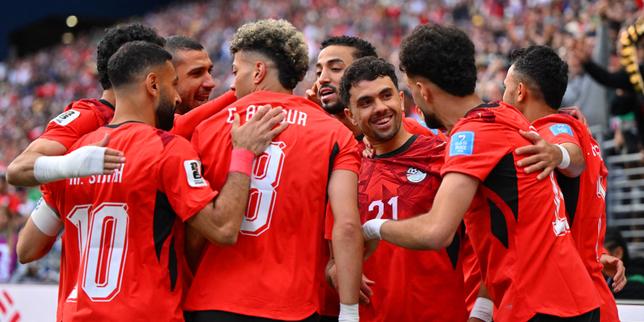
The North Korean players did not celebrate with the practiced, theatrical choreography we see on television. There were no backflips. No sliding on knees toward the corner flag. They simply gathered in a tight, fierce huddle, faces buried in each other’s shoulders, pounding each other's backs with an intensity that looked closer to grief than joy.
They held that one-goal lead like a precious, fragile glass ornament. As the clock ticked down through the second half, the South Koreans poured forward, launching attack after attack. The North Korean defense did not just play; they threw their bodies into the path of the ball. They blocked shots with their chests, their faces, their shins.
It was an exhausting, agonizing display of human endurance. By the eighty-fifth minute, several North Korean players were cramping, their muscles locking up under the immense physical strain. In any other match, an opposing player might help a rival stretch out a cramped calf. Here, even that simple act of human empathy was loaded with tension. Can a South Korean touch a North Korean without creating a political incident?
The final whistle did not scream; it relieved.
North Korea 1, South Korea 0.
A historic upset on paper. A statistical anomaly for the record books. But the scoreboard was the least interesting thing about the afternoon.
What happened next is what lingers in the memory. When the game ends in standard sports culture, jerseys are swapped. Players hug. They chat about their respective clubs.
Here, the two teams lined up at the center circle. They stood a yard apart, facing each other. No jerseys were exchanged—the North Korean players could not risk bringing a South Korean crest back through customs in Pyongyang. Instead, they looked each other in the eye.
A few hands were extended. A few brief, firm clasps. No words were spoken that could be picked up by the pitch-side microphones. But in those fleeting seconds, the political machinery of two nuclear-armed states faded into the background. There were just twenty-two young men, exhausted, breathing heavily in the cooling afternoon air, standing on a patch of grass that, for ninety minutes, belonged to neither side.
The North Korean team turned and walked toward the tunnel. They did not wave to the crowd. They did not celebrate their victory on the enemy's soil with any outward signs of triumph. They simply walked away, back into the shadows of the most closed society on earth, leaving behind a stadium of people who had just watched a ghost story come to life.
We look for meaning in sports because the rest of life is messy, complicated, and often devoid of clear endings. We want to believe that a game can heal wounds, that a ball can bridge a chasm opened by decades of war and propaganda. It cannot. A soccer match cannot dismantle nuclear weapons or reunite torn families.
But for an hour and a half, it did something smaller, yet perhaps just as vital. It reminded everyone watching that across that impenetrable border, behind the military parades and the fiery rhetoric, there are people. They bleed when they are cut. They tire when they run. And sometimes, against every imaginable odd, they can look their captors and their cousins in the eye, and simply play.