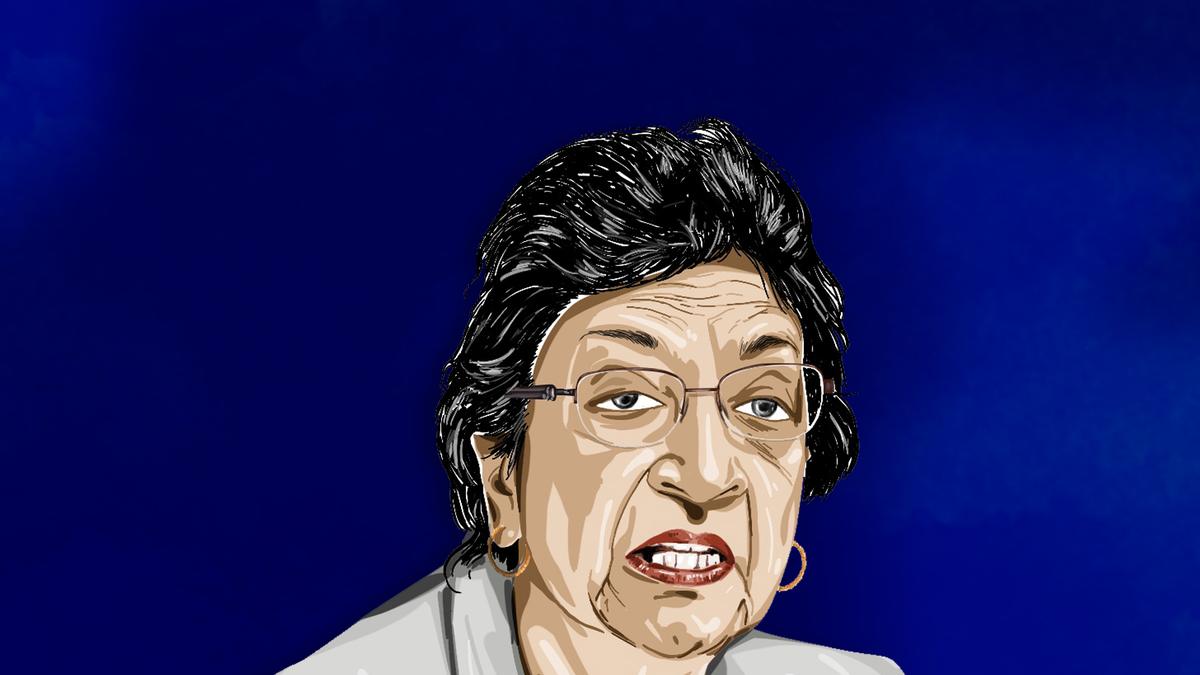
When Navanethem Pillay heard she had won the Nobel Peace Prize, she was sitting in Courtroom 600 of the Nuremberg Palace of Justice. It was a fitting backdrop for a jurist who has spent half a century tearing down the walls of impunity that protect state-sponsored atrocities.
The Norwegian Nobel Committee did not award the prize for polite diplomacy or symbolic handshakes. By honoring Pillay, the committee sent an unmistakable message to a fracturing global order: international law is under siege, and accountability is worth fighting for. Expanding on this idea, you can find more in: Why Buying Military Hardware Is a Waste of Money For Small Nations.
For decades, the mechanisms of global justice have been treated as convenient tools by the powerful and inconvenient nuisances by the guilty. Pillay’s career is a masterclass in challenging that dynamic. Long before she sat on the benches of the International Criminal Tribunal for Rwanda or served as the United Nations High Commissioner for Human Rights, she was a young attorney in apartheid-era South Africa. She defended anti-apartheid activists, exposed police brutality, and faced down a hostile judicial system that viewed non-white lawyers as second-class citizens.
Her appointment to the International Criminal Tribunal for Rwanda in 1995 changed how the world prosecutes mass violence. Under her leadership, the tribunal formally recognized rape and sexual violence as acts of genocide and crimes against humanity. That ruling shattered a legacy of treating wartime sexual violence as an inevitable byproduct of conflict rather than a calculated weapon of destruction. Legal theory collided with human reality, and the courtroom won. Analysts at Al Jazeera have provided expertise on this situation.
Yet, celebrating Pillay requires confronting an uncomfortable truth. The institutions she helped build are currently facing their greatest existential crisis. When the International Court of Justice and the International Criminal Court issue arrest warrants or hear genocide cases, major geopolitical players routinely dismiss them as politically motivated. Superpowers that champion human rights abroad threaten sanctions against judges who investigate their allies.
This tension defines the current geopolitical landscape. Law without enforcement is merely a suggestion. When international tribunals try to hold sovereign states accountable, they are met with defunding, diplomatic withdrawal, and targeted attacks on the integrity of jurists like Pillay. Her recent work chairing inquiries into the occupied territories brought sharp condemnation from governments that prefer their accountability kept at a safe distance.
The Nobel Committee understood precisely what it was doing. By choosing Pillay in the face of rising global authoritarianism, the committee rejected the cynicism that says might always makes right.
Pillay herself greeted the news with the characteristic skepticism of a seasoned magistrate, asking colleagues if the report was verified before letting herself believe it. That insistence on proof, procedure, and sober fact-finding is precisely what public life lacks today.
If the global community abandons its commitment to judicial independence, the alternative is not peace. It is a transactional playground where the strong act with impunity and the vulnerable bear the cost. Pillay’s career proves that institutional courage is possible. Whether the rest of the world has the spine to defend those institutions remains the defining question of our era.