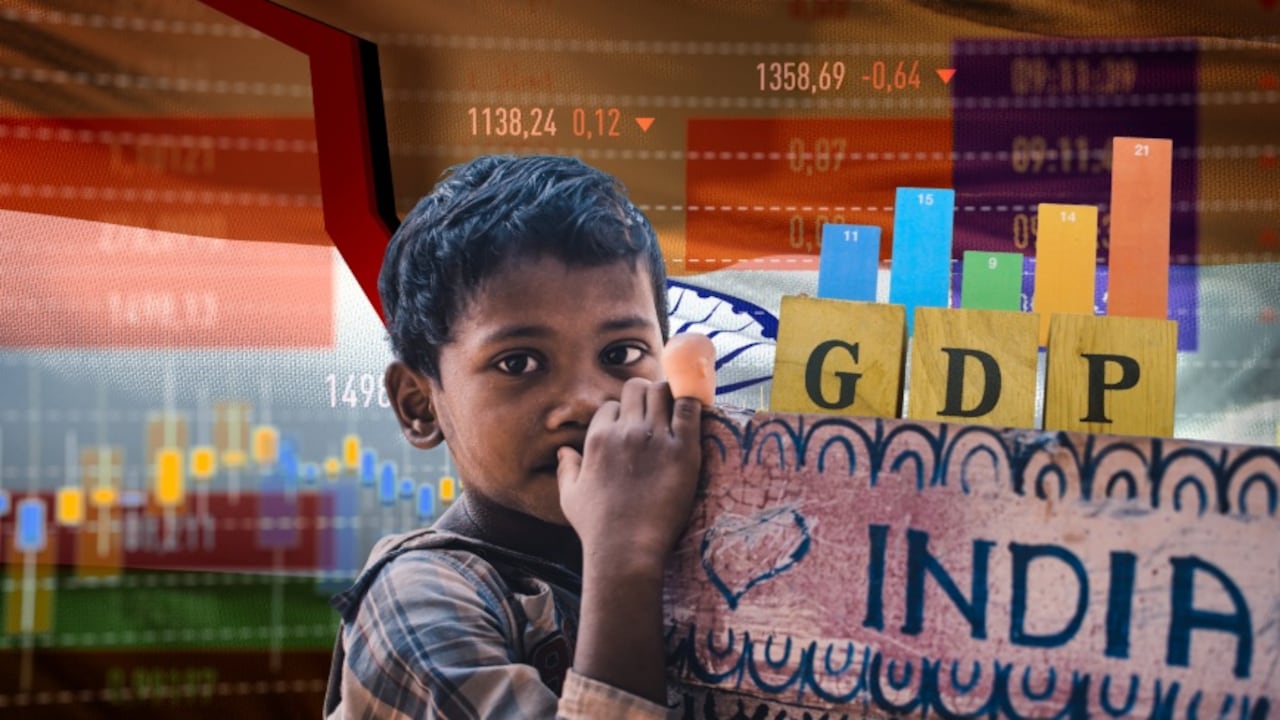
We love big numbers. Politicians love them even more. When a major economy flashes a glowing GDP growth rate of nearly eight percent, markets cheer and headlines write themselves. But behind the celebratory press releases in New Delhi, a quiet crisis is brewing. Economists, data scientists, and former government advisors are sounding alarms. They argue that the numbers don't match the ground reality.
When official statistics stop matching everyday economic friction, trust evaporates. That trust deficit now threatens the credibility of India’s entire financial apparatus.
The Anatomy of the Statistical Rift
The friction isn't new. For years, critics have pointed to methodological changes introduced in data collection. Back in 2015, a revised calculation method dramatically altered how growth was perceived. Independent economists scratched their heads. The newly minted numbers showed surging momentum while credit growth, corporate tax collections, and job creation figures told a completely different story.
Fast forward to recent quarterly releases, and the pattern repeats. Headlines highlight robust expansion, yet consumer demand in rural sectors remains sluggish. Joblessness among younger demographics stays persistently high. When high-level growth coexists with widespread underemployment, people start asking basic questions. How can the macro indicators look so brilliant while micro hardships persist?
Part of the problem lies in institutional erosion. Statisticians who traditionally guarded the independence of bodies like the National Statistical Commission have occasionally resigned in protest over delayed reports or disputed revisions. Take the decennial census as a glaring example. Delayed significantly past its original schedule, policymakers have been forced to rely on outdated demographic models. Allocating welfare entitlements and tracking urban migration using decade-old population baselines introduces massive distortion into any economic equation.
Defenders Push Back
It is unfair to paint the entire debate as a one-sided grievance. Major institutions, including the State Bank of India, routinely push back against external critics. They argue that alternative interpretations of growth often rely on flawed comparisons or politically motivated narratives.
For instance, defenders frequently label outside critiques as "intellectual dishonesty" when analysts compare unrevised historical bases against newly adjusted series. Quarterly estimates always undergo heavy revisions. Between fiscal years 2022 and 2025, economic data saw dozens of upward and downward adjustments. Proponents argue that revisions are standard global practice, not sinister manipulation. They insist that corporate balance sheets and digital payment volumes validate the underlying strength of the market.
Yet, even within these fierce defenses, a defensive tone creeps in. When state-backed banks spend significant time debunking independent research, it highlights how sensitive the regime is to credibility losses.
Why This Matters Beyond Wall Street
Data integrity isn't just an academic obsession for nerds in ivory towers. Global investors rely on these metrics to allocate billions of dollars in foreign direct investment. If institutional transparency degrades, risk premiums rise. Investors hate uncertainty more than they hate bad news. If they cannot trust the GDP print, they price that skepticism directly into asset values and borrowing costs.
Domestically, skewed data misguides fiscal policy. If policymakers believe growth is running hot when actual momentum is tepid, central banks might keep monetary policy too tight for too long. Conversely, misjudged economic slack can delay crucial structural reforms.
Fixing this gap requires a return to transparent methodology. Statistical agencies must publish raw sub-components openly, resist political pressure to massage outcomes, and prioritize rigorous census gathering. Until raw data speaks louder than political PR, the cloud of suspicion will linger over every positive statistic coming out of South Block.
Look past the headline percentages. Pay attention to credit growth, wage trends, and household savings rates. Those metrics rarely lie.