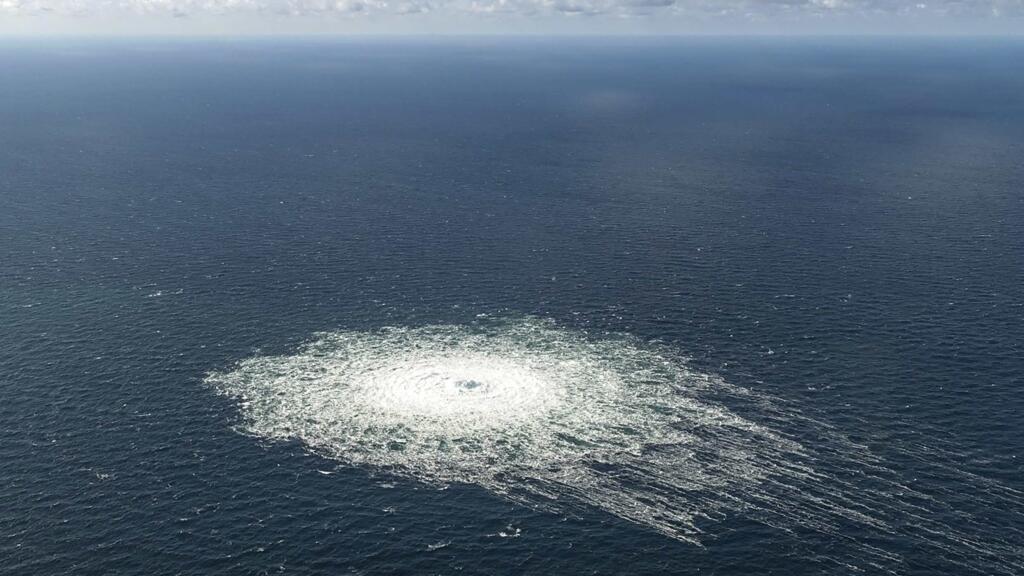
Four years after underwater explosions tore through the Baltic Sea, a former Ukrainian military officer is sitting inside a Hamburg courtroom accused of helping blow up the Nord Stream pipelines. For Berlin and Kyiv, it's an awkward moment nobody really wanted on the docket.
The trial of Serhii Kuznietsov—identified in German court filings as Serhii K.—opened at the Hanseatic Higher Regional Court in Hamburg on October 14, 2026. Prosecutors allege he helped organize the September 26, 2022 blasts near the Danish island of Bornholm that ruptured Nord Stream 1 and damaged Nord Stream 2, claiming a team operated on behalf of Ukrainian state authorities. Kuznietsov denies involvement, and Kyiv has repeatedly rejected allegations of state responsibility. If you found value in this article, you might want to look at: this related article.
Still, putting this case in front of judges changes the conversation. Once a murky geopolitical mystery full of competing narratives, the sabotage is now being tested against courtroom evidence, defense motions, and strict German legal standards.
http://googleusercontent.com/lmdx_content/SjOyaBOLZgFztjIiqQZeJkAbwbgJmHbrpBvPAlCpXRTkgioCUjeaXuontNRHUHghOWLWNxDbIsTsNXqRBuTLZMuyBLQSpvzAgwHikTrHYGGPTaGAzgMzcufwGJBysZTeYBjjIoUQFsZBVzPkZHMXtnfrBhZOmGCOcCvyfDDVb47159 For another look on this story, check out the latest coverage from The New York Times.
How the Nord Stream Trial Reached Hamburg
Getting a suspect into a German dock took years of quiet detective work and cross-border legal wrangling. Investigators tracked a rented yacht—widely reported in German media as the Andromeda—that departed Rostock in September 2022. Prosecutors allege operatives planted at least four explosive devices weighing between 14 and 27 kilograms at depths of 70 to 80 meters in the Baltic Sea.
Kuznietsov was arrested in Italy in August 2025 following a raid on a bungalow where he was staying with his family, then extradited to Germany that November. Another suspect, Volodymyr Zhuravlev, was arrested on a European warrant in Pula, Croatia, in August 2026, where he has fought extradition to Germany.
If you've watched international investigations drag out, you know how easily leads go cold. Four years is a long time in intelligence and criminal law. Witnesses forget details, digital trails age, and defense lawyers scrutinize every link between a suspect and a physical vessel or explosive device. Already at the start of the Hamburg proceedings, Kuznietsov's defense team pointed to the lack of fingerprints placing him on the yacht and the absence of witness sightings aboard, while filing motions challenging aspects of the case that the court rejected on its second day of hearings.
The court scheduled an initial stretch of hearings through mid-December 2026 and into early 2027, with more than 100 accredited journalists showing up from countries including Britain, China, France, Ukraine, and Russia. Outside the building, small groups of pro-Ukraine demonstrators turned out to show solidarity with the defendant while insisting the court alone must decide guilt or innocence.
Why Prosecutors Point to Ukrainian State Ties
The sharpest edge of the indictment isn't just the accusation of sabotage. It's who prosecutors say stood behind it.
German prosecutors have accused Kuznietsov of working with others to plan the blasts on behalf of unidentified Ukrainian state entities, aiming to sever gas deliveries permanently and choke off revenue Moscow could use to fund its war effort. Reports have also noted that German prosecutors identified seven Ukrainian suspects overall, even though only Kuznietsov is currently standing trial in Hamburg.
That framing puts Berlin in a tight spot. When the pipelines blew up in September 2022, many Western officials initially suspected Russian involvement, while Moscow claimed Western intelligence agencies were behind the attack. Over time, German investigators shifted focus toward a Ukrainian-linked crew—even as Germany remained one of Ukraine's largest financial and military backers.
Kyiv's official line hasn't budged. President Volodymyr Zelenskyy has denied any Ukrainian role in the explosions and emphasized cooperation with partners to preserve trust in Europe. Meanwhile, some Ukrainian commentators and analysts have called the prosecution's theory far-fetched or pointed to unverified false-flag claims, while noting that inside Ukraine many citizens would view sabotage of Russian energy infrastructure differently than German prosecutors do.
Honestly, that gap between legal classification and wartime logic is where misunderstandings multiply. A German court looks at criminal liability, jurisdiction, and evidence under peacetime or statutory rules—and court documents even sparked friction over how prosecutors framed the offense. In Kyiv, people fighting a full-scale invasion see energy pipelines tied to Russian war financing through a completely different lens.
The Legal Hurdles Ahead in Court
Proving a covert maritime operation years after the fact is harder than connecting dots on a map. Prosecutors have to show not only how the explosives got into the water, but also Kuznietsov's specific role in organizing or carrying out the plot.
Defense attorneys have a clear playbook:
- Challenge physical and circumstantial links: Highlight missing fingerprints, contested witness accounts, or intermediaries used when booking boats.
- Question attribution: Argue that evidence of a vessel or route doesn't prove individual criminal responsibility or state direction.
- Test procedural boundaries: Raise legal motions on defendant rights, jurisdiction, and admissibility, just as the defense did during early Hamburg hearings.
Even if prosecutors present strong investigative material, every step will be fought line by line. That's why legal observers expect a slow, methodical trial stretching well into 2027 rather than a quick verdict.
Will This Crack the Berlin-Kyiv Alliance?
A lot of people assume a court case accusing a Ukrainian-linked team of blowing up German-bound pipelines must wreck bilateral ties. In practice, realpolitik is rarely that neat.
First, Germany's energy reality already changed before the trial even began. Nord Stream 2 never entered commercial service after certification was suspended ahead of Russia's 2022 invasion, and Moscow had already cut gas flows through Nord Stream 1 in August 2022. Germany moved away from Russian pipeline gas years ago, so the explosions didn't suddenly turn off a tap that was still gushing.
Second, Berlin's security calculus still revolves around containing Russian aggression and supporting Ukraine. Look at Chancellor Friedrich Merz's diplomacy, including his October 2026 trip to Kyiv with fresh support such as joint production of interceptors against Russian jet-powered drones. Security analysts like Joachim Weber at the University of Bonn have noted that the German government has kept quiet on the judicial proceedings while arguing that even a conviction likely wouldn't trigger sweeping punishment against Kyiv because Europe still has a strategic interest in Ukraine's survival.
Still, "no immediate rupture" doesn't mean "zero friction." Political rivals in Germany can use the trial to argue for caution or criticize aid levels, and mistrust over covert actions can linger behind closed doors. You can keep shipping weapons and funding defense while still feeling irritated that an ally's alleged plot played out in European waters.
What You Should Watch Next
If you're following this story past the headlines, don't get sucked into hot takes from social media or partisan commentators on either side. Look at the actual record coming out of the courtroom instead.
- Track court rulings, not rumors: Pay attention to what evidence the Hanseatic Higher Regional Court admits in Hamburg and how judges rule on defense motions over the winter sessions.
- Watch extradition cases like Croatia's: Proceedings involving additional suspects, such as Volodymyr Zhuravlev in Croatia, can reveal new details or test how willing neighboring European courts are to transfer defendants to Germany.
- Separate legal findings from policy moves: Check whether Berlin's military aid, sanctions policy, or EU backing for Kyiv actually shifts—or whether governments keep treating the trial as an independent judicial track separate from day-to-day statecraft.
- Rely on primary reporting: Stick to established court dispatches from outlets like AP News and The Guardian rather than viral claims that outrun the evidence.