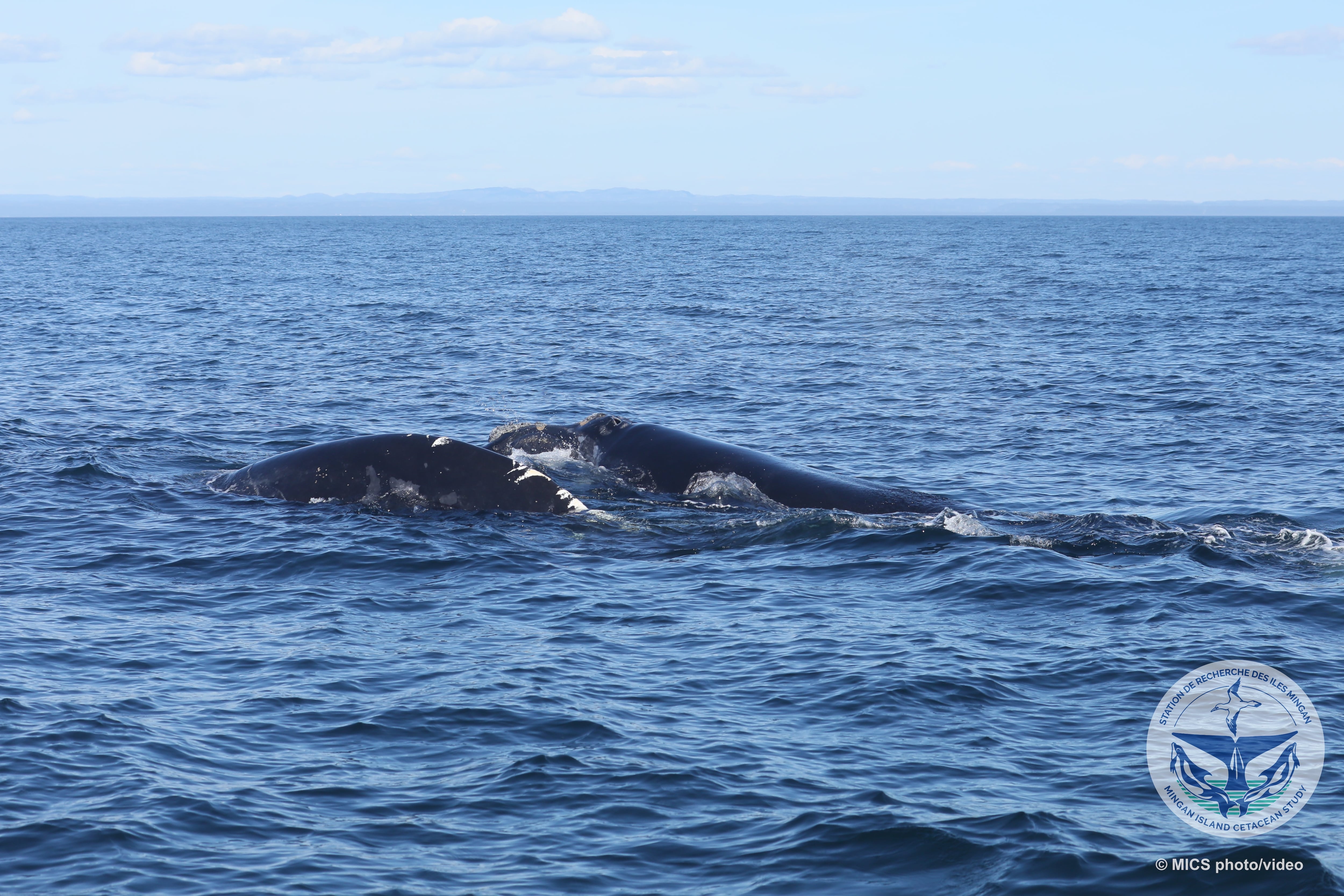
The detection of a North Atlantic right whale calf in Canadian waters is not merely a wildlife milestone; it is a critical diagnostic signal within a severely constrained biological recovery model. Standard reporting treats a rare calf sighting off Canada as an isolated moment of celebration, stripping away the underlying population dynamics, energetic bottlenecks, and maritime risk matrices that govern whether that animal survives to reproductive maturity. To evaluate what a single birth actually means for Eubalaena glacialis, analysts must treat the species as a high-capital, slow-turnover demographic system operating under acute anthropogenic friction.
The Demographic Arithmetic of a Bottlenecked Species
North Atlantic right whales operate on a life-history strategy characterized by late sexual maturity, low fecundity, and high juvenile survival requirements. Females typically do not calve until they reach nine to ten years of age, and the biological minimum calving interval under optimal nutritional conditions is three years. In a healthy population, steady recruitment offsets natural mortality. In a critically endangered population numbering fewer than 400 individuals—with fewer than 100 breeding females—the demographic margin for error collapses to zero.
When a calf is documented off the coast of Canada, particularly in the Gulf of St. Lawrence or the Scotian Shelf, researchers are observing the output of a multi-year physiological investment that began years prior in southeastern United States calving grounds off Florida and Georgia. A single calf represents a fractional percentage increase in total headcount, yet its true strategic weight lies in two variables:
- Maternal Reproductive Viability: The birth confirms that an adult female accumulated sufficient blubber reserves to sustain a 12-to-13-month gestation and initiate lactation, despite systemic disruptions to prey distribution.
- Spatial Shift Adaptation: The presence of a mother-calf pair in northern Canadian feeding habitats demonstrates successful navigation across high-traffic shipping corridors during the spring and summer northward migration.
Treating the birth as a standalone victory ignores the recruitment bottleneck. A calf is not a breeding adult; it is an unvested demographic asset. Until that animal survives nearly a decade of transboundary migration and reaches sexual maturity, its contribution to net population growth remains strictly theoretical.
Prey Distribution Shifts and Energetic Deficits
To understand why any calf sighting off Canada triggers intense scientific scrutiny, one must examine the trophic cascade driving right whale movement. North Atlantic right whales are specialized ram-filter feeders dependent on dense aggregations of late-stage copepods, primarily Calanus finmarchicus. These lipid-rich crustaceans undergo diapause—a period of suspended development—in deep, cold water basins.
Historically, predictable oceanographic currents concentrated Calanus in traditional spring and summer foraging zones, including the Bay of Fundy, Roseway Basin, and Cape Cod Bay. Rapid warming in the Gulf of Maine and adjacent Northwest Atlantic waters has altered water column stratification and current velocities, dispersing copepod patches and reducing caloric density in historical feeding grounds.
This oceanographic shift forced a macro-scale redistribution of the right whale population northward into the Gulf of St. Lawrence beginning around 2015. The energetic consequences of this relocation are severe:
- Transit Costs: Whales must expend significantly more metabolic energy swimming hundreds of additional kilometers north to locate viable feeding patches.
- Foraging Efficiency: If copepod concentrations fall below a critical density threshold, the energetic cost of opening the mouth and overcoming hydrodynamic drag exceeds the caloric return of the prey ingested.
- Reproductive Suppression: Female baleen whales regulate reproduction through body condition. When energetic intake drops, the endocrine system suppresses ovulation, extending inter-birth intervals from the three-year baseline to five, seven, or even ten years.
A calf appearing in Canadian waters indicates that at least one mother successfully solved this energetic equation. She located high-density prey aggregations, maintained a positive caloric balance through pregnancy, and migrated north while lactating—the most energetically expensive phase of the mammalian reproductive cycle.
The Canadian Maritime Risk Matrix
While the Gulf of St. Lawrence provided a necessary caloric refuge following the collapse of traditional feeding grounds, it introduced an acute spatial overlap between whales and industrial maritime operations. Unlike the Bay of Fundy, where shipping lanes had been reconfigured and acoustic monitoring networks were mature, the Gulf of St. Lawrence lacked baseline right whale protection infrastructure when the whales arrived in large numbers.
A mother-calf pair operating in Canadian waters faces two primary mechanical threats, both of which carry high mortality and sub-lethal morbidity penalties:
1. Vessel Strike Dynamics
Mother-calf pairs spend a disproportionate amount of time at or near the water's surface. Calves have smaller lung capacities, require more frequent breathing intervals, and lack the deep-diving endurance of adults. Mothers remain near the surface to nurse and thermoregulate alongside their offspring. This surface-bound behavior places them directly within the draft zone of commercial cargo vessels, tankers, and cruise ships transiting the St. Lawrence Seaway.
Hydrodynamic draw—the suction effect created by the hull of a large ship moving at high speed—can pull a nearby whale into the vessel's path or propellers even if the ship does not score a direct bow hit. Furthermore, calves lack the maneuverability and acoustic threat recognition required to evade fast-moving hulls.
2. Entanglement in Fixed Fishing Gear
The Gulf of St. Lawrence supports high-value commercial fisheries, notably snow crab and lobster, which rely on vertical buoy lines connecting bottom traps to surface markers. Right whales feed with their mouths open, swimming through dense prey clouds with low visual awareness of vertical lines suspended in the water column.
When a whale encounters a line, the rope often catches in the baleen plates or wraps around the pectoral flippers and tail stock. Modern synthetic ropes possess tensile strengths far exceeding those used decades ago, preventing whales from breaking free. For a calf, entanglement is rapidly fatal due to drowning or severe lacerations. For a lactating mother, even a non-lethal entanglement imposes catastrophic drag, burning through the lipid reserves required to produce milk and frequently leading to calf starvation or reproductive failure in subsequent cycles.
Surveillance Architecture and Detection Bias
When media reports highlight the "discovery" of a rare calf, they frequently conflate first detection with actual birth. Right whales give birth exclusively in the warmer, shallower waters of the southeastern United States between November and April. A calf spotted off Canada in late spring or summer is already several months old; it survived the initial neonatal period and completed a 1,500-to-2,000-kilometer northward transit without being logged by southern aerial survey teams.
This detection lag exposes a critical operational reality in marine mammal monitoring: surveillance coverage is uneven, and absence of evidence is not evidence of absence.
Scientists rely on a multi-layered identification protocol to track individuals:
- Callosity Pattern Mapping: Right whales possess rough, raised patches of skin on their heads called callosities, colonized by light-colored whale lice (cyamids). The shape and distribution of these patches are unique to each individual, functioning like a human fingerprint.
- Aerial Photogrammetry: High-resolution vertical photographs allow researchers to measure body length, width, and blubber thickness, assessing health status without physical contact.
- Passive Acoustic Monitoring (PAM): Underwater gliders and moored hydrophones detect the distinct "upcall" vocalizations of right whales, triggering dynamic management zones even when fog or high sea states ground survey aircraft.
Because calves do not develop fully distinct, permanent callosity patterns until several months after birth, researchers identify a calf in Canadian waters primarily through close physical association—specifically, echelon swimming—with a known, cataloged adult female. Identifying the mother allows biologists to cross-reference her reproductive history, age, and injury record against the North Atlantic Right Whale Consortium catalog.
Sub-Lethal Stressors and the Hidden Cost of Survival
Standard mortality counts underestimate the true operational drag on right whale recovery because they fail to capture sub-lethal trauma. Over 85 percent of cataloged North Atlantic right whales bear scars from at least one entanglement, and more than half have been entangled multiple times.
Chronic stress and physical trauma degrade population performance through distinct physiological mechanisms:
- Cortisol Elevation: Persistent entanglement or chronic underwater noise from shipping elevates glucocorticoid levels, suppressing immune function and disrupting reproductive hormones.
- Hydrodynamic Drag Penalties: Dragging heavy fishing gear increases the energetic cost of swimming by up to 100 percent or more. A female forced to drag gear for months depletes her blubber layer, preventing her from reaching the body-mass threshold required to conceive.
- Growth Stunting: Whales entangled as juveniles often exhibit permanently stunted body lengths. Because total body volume dictates blubber storage capacity, smaller adult females have lower lifetime reproductive output than uninjured cohorts.
Evaluating a calf sighting in Canada requires factoring in this sub-lethal baseline. If the mother of the newly spotted calf carries heavy entanglement scarring or exhibits poor body condition in aerial photogrammetry, the long-term survival probability of that calf drops sharply, regardless of immediate celebration.
Limits of Dynamic Management Frameworks
To mitigate vessel strikes and entanglements in Canadian waters, Transport Canada and Fisheries and Oceans Canada (DFO) deployed a hybrid regulatory system combining static speed restrictions, dynamic shipping slow-down zones, and temporary fishery closures triggered by visual or acoustic whale detections.
While these interventions measurably reduce acute mortality inside designated zones, the strategy faces structural limitations:
- Detection Latency: Dynamic closures rely on spotting a whale or recording an acoustic call before vessels are slowed or gear is removed. Whales do not vocalize continuously; silent whales transiting outside active aerial survey grids remain unprotected until a detection occurs.
- Climate-Driven Spatial Drift: Because ocean temperatures and current patterns continue to shift, copepod aggregations do not remain fixed within established protection boundaries. Whales follow their food, often moving into unregulated coastal corridors or unmonitored offshore banks faster than regulatory agencies can redraw management polygons.
- Economic and Operational Friction: Sudden fishery closures and mandatory speed reductions impose direct financial costs on coastal communities and maritime supply chains, generating political resistance against expanding static protection zones.
No single regulatory intervention acts as a silver bullet. Speed limits reduce the kinetic energy of vessel collisions—lowering the probability of lethality—but do not prevent strikes entirely. Gear modifications, such as weak links designed to break under 1,700 pounds of tension, reduce fatal entanglements for large adults, yet a calf or juvenile lacks the body mass and thrust required to snap a 1,700-pound weak link.
Strategic Imperatives for Population Stabilization
A rare calf sighting off Canada is an operational data point proving that the species retains biological capacity for recovery when prey availability and safe passage align. Capitalizing on that biological capacity requires shifting conservation execution from reactive detection to structural risk elimination.
- Accelerate On-Demand (Ropeless) Fishing Gear Deployment: Eliminating vertical buoy lines from the water column is the only mechanism that removes entanglement risk entirely without shutting down commercial fisheries. Regulatory agencies must transition from small-scale pilot programs to subsidized, fleet-wide adoption of acoustic-release traps in high-risk Canadian and U.S. foraging corridors, paired with standardized subsea geolocation databases so different gear sectors do not deploy traps over each other.
- Transition from Dynamic to Seasonal Static Vessel Slowdowns: Relying on real-time whale sightings to trigger speed limits leaves silent, unspotted mother-calf pairs vulnerable. Mandatory 10-knot speed restrictions must be applied across broad seasonal windows covering known migratory bottlenecks and foraging basins, enforced via Automatic Identification System (AIS) tracking with automated financial penalties for non-compliance.
- Integrate Oceanographic Prey Forecasting into Spatial Management: Instead of waiting for whales to appear in new areas before enacting protections, management agencies must use satellite sea-surface temperature data, current modeling, and copepod sampling to predict where prey aggregations will form weeks in advance, establishing preemptive exclusion zones before whales arrive.
Without eliminating vertical lines and enforcing universal vessel speed discipline across shifting habitats, individual calf sightings will remain statistical anomalies rather than the foundation of a sustained demographic recovery.