Pyongyang doesn't care about your condemnation. Every time North Korea fires a fresh batch of ballistic missiles into the sea, Western media runs the same tired playbook. Analysts scratch their heads on television, politicians issue stern warnings about UN resolutions, and nothing actually changes.
If you
Why North Korea Keeps Testing Ballistic Missiles Right Now
news
category: news
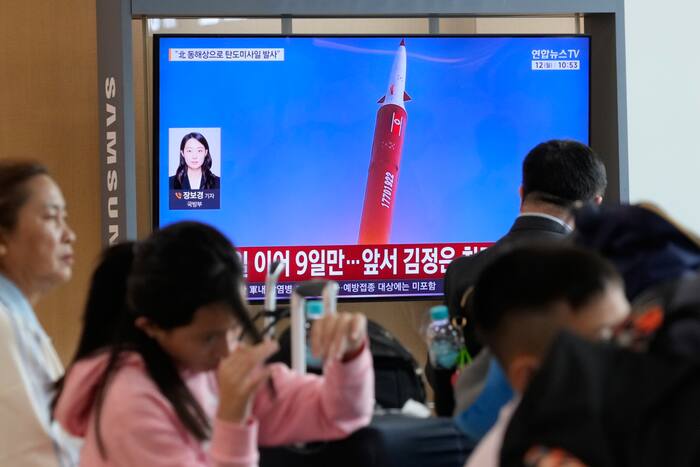
Pyongyang just launched another series of ballistic missiles toward regional waters. If you follow international security, you're experiencing severe déjà vu. The headlines repeat every few weeks. North Korea fires a cluster of short or intermediate-range weapons, Washington and Seoul issue stern warnings, Tokyo tracks flight trajectories, and analysts dissect the telemetry.
Nothing changes. Or so it seems.
The reality on the ground is shifting. Kim Jong Un isn't just tossing expensive hardware into the ocean for the sake of noise. Every single launch serves a precise military, economic, and political purpose. If you look past the standard media panic, a much clearer picture emerges of how and why North Korea keeps testing ballistic missiles with such relentless frequency.
The Technical Reality Behind the Launches
Let us be completely honest about what is happening technically. Modern missile development requires iteration. You cannot build a solid-fuel intercontinental ballistic missile or a maneuvering hypersonic warhead on a computer screen alone. You have to fly them. You have to stress the guidance systems, test the stage separation mechanisms, and verify telemetry under real atmospheric conditions.
When state media boasts about successful tests, they are partly exaggerating for domestic consumption. However, dismissing these launches as mere tantrums is a dangerous mistake. Each test cycle provides engineers in Pyongyang with real-world flight data that computer simulations simply cannot replicate.
Look at the shift toward solid-fuel technology. Liquid-fueled rockets take hours to fuel on a launchpad, making them sitting ducks for preemptive strikes by South Korean or American forces. Solid-fuel missiles, on the other hand, sit ready in hardened underground silos or mobile transporter-erector-launchers for immediate deployment. North Korea's recent tests heavily focus on reducing preparation time. That changes the strategic calculus completely. If a missile can launch in minutes instead of hours, early warning windows shrink to terrifying margins.
The Geopolitical Timing You Are Missing
Missile tests never happen in a vacuum. Pay attention to the calendar. Pyongyang times these provocations to exploit maximum geopolitical leverage.
When joint military drills between the United States and South Korea ramp up, the test frequency spikes in direct retaliation. It is a tit-for-tat messaging campaign. North Korea tells Washington that every display of allied force will be met with an asymmetric response.
Beyond regional exercises, domestic and international politics dictate the schedule. Electoral cycles in the United States and South Korea draw intense focus from North Korean state planners. By turning up the heat with missile tests during transition periods or election seasons, Pyongyang attempts to force its way back to the negotiating table on its own terms. They want recognition as a de facto nuclear weapons state, and they use kinetic escalation to compel attention from an otherwise distracted international community.
Breaking Down the Domestic Narrative
We often forget to look inward at North Korea's domestic audience. Life inside the country is extraordinarily harsh, marked by chronic economic isolation, international sanctions, and severe food insecurity.
How do you keep a population loyal and focused when the economy is struggling? You manufacture a permanent external threat.
State television broadcasts footage of successful missile tests as proof of national strength and scientific achievement. The ruling regime frames these billion-dollar weapons programs as the ultimate shield protecting the nation from foreign invasion. Citizens are taught that every missile in the sky represents a direct deterrent against American aggression. It is a powerful propaganda tool. When you have little food on the table, you are encouraged to take pride in national defense milestones.
The Nuclear Doctrine Shift No One Is Talking About
For decades, North Korea maintained a defensive-sounding nuclear posture. They claimed their arsenal existed solely to deter a preemptive attack.
That rhetoric changed dramatically. Legislative updates in Pyongyang codified a preemptive nuclear strike policy. The leadership explicitly stated that nuclear weapons are not just for deterrence, but can be used to repel an attack and seize the initiative in a broader conflict.
This brings us to the tactical nuclear weapons testing we see today. The regime is actively developing smaller warheads designed to fit onto short-range ballistic missiles. These weapons are meant for use on the Korean peninsula itself, lowering the threshold for actual deployment in a conventional skirmish. This evolution transforms the threat profile from a distant strategic standoff to an immediate, frontline tactical danger for Seoul and regional military bases.
What Comes Next for Regional Security
Sanctions have failed to stop this trajectory. Decades of diplomatic pressure, economic embargoes, and naval monitoring have only pushed Pyongyang closer to other isolated global actors, forging deeper military and technological cooperation that bypasses Western-led financial systems.
You cannot starve a nuclear program out of existence when the state prioritizes military modernization above all else. The traditional playbook of maximum pressure has hit a hard ceiling.
Managing this reality requires acknowledging that North Korea is a permanent nuclear actor, regardless of whether formal diplomatic recognition ever arrives. Regional defense strategies must adapt to a permanent baseline of low-level conflict, constant missile tests, and shrinking warning times. The sooner policymakers accept that the old paradigm is dead, the better prepared everyone will be for the security environment of the next decade.