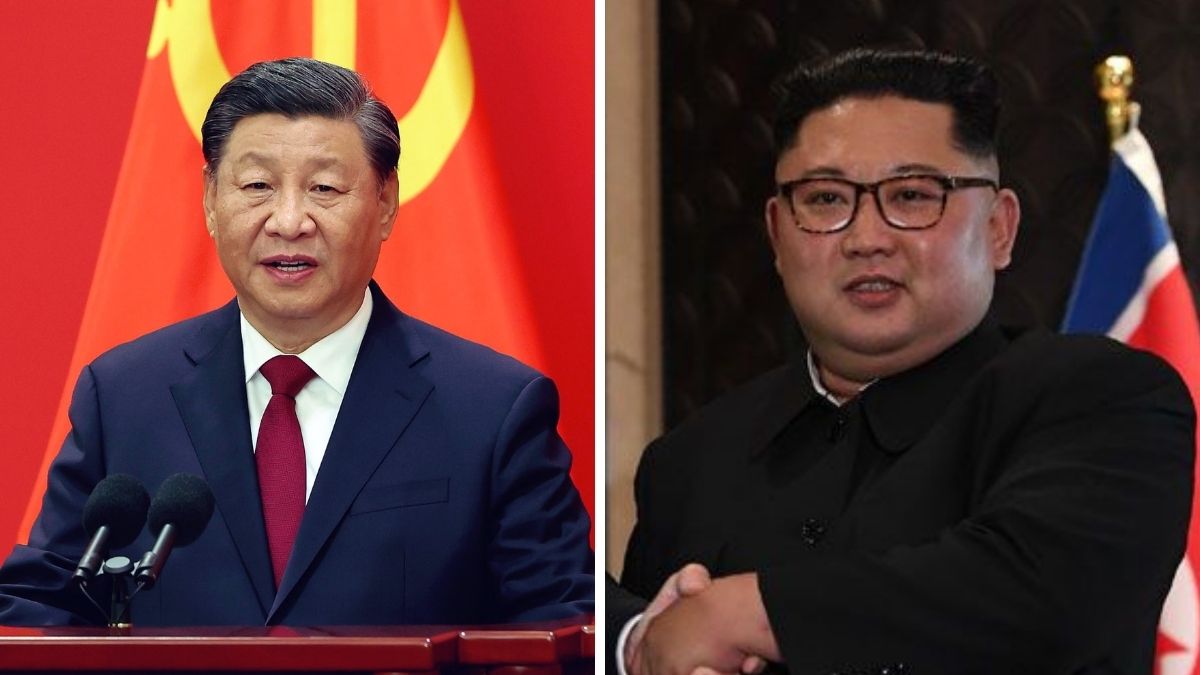
The bilateral state visit of Chinese President Xi Jinping to Pyongyang on June 8–9, 2026, marks a structural realignments across the East Asian security perimeter. This engagement—Xi’s first travel to North Korea since June 2019—occurs within a highly complex geopolitical matrix following his successive, discrete summits with US President Donald Trump and Russian President Vladimir Putin in May 2026. Traditional narratives mischaracterize this summit as a routine realignment of authoritarian states or a superficial display of solidarity. A rigorous strategic audit reveals a precise mechanism of geopolitical arbitrage. North Korea, under Kim Jong Un, is leveraging a transient window of asymmetric security dynamics to convert military capital into structural economic concessions, while China seeks to re-establish its regulatory primacy over its periphery.
The Tri-Polar Balance Equation and the Russian Variable
The core driver of the structural shifts in East Asian security is the transformation of North Korea’s strategic leverage, catalyzed by its defense integration with the Russian Federation. The conflict in Ukraine established an acute supply bottleneck for conventional artillery ammunition and ballistic systems, which Moscow resolved by importing North Korean materiel.
This transaction altered the equilibrium of the Beijing-Pyongyang-Moscow triad. Estimates place the value of Russian capital, technological transfers, and economic compensation to Pyongyang at up to $14.4 billion. This capital injection, coupled with advanced missile and satellite technology transfers, has modified North Korea's dependency function. Historically, Beijing operated as Pyongyang’s exclusive economic lifeline, granting China unilateral veto power over North Korean strategic choices. The introduction of Russian demand for North Korean defense outputs has decentralized this dependency.
       [ Beijing ]
       /         \
  Economic     Strategic
  Lifeline     Regulator
    /             \
[ Pyongyang ] ---- [ Moscow ]
        Defense Inputs /
        Advanced Tech Transfers
From the perspective of Chinese grand strategy, this security integration introduces an unquantifiable variable along its immediate border. Beijing’s primary security directive on the Korean Peninsula is the maintenance of systemic equilibrium: preventing a collapse of the Kim regime that would bring a unified, US-aligned state to the Yalu River, while simultaneously suppressing provocative behavior from Pyongyang that triggers a defensive build-up by the US-Japan-Republic of Korea (ROK) trilateral alliance. The uncontrolled infusion of Russian military technology into North Korea threatens this equilibrium by accelerating Pyongyang’s ICBM capabilities, thereby forcing Tokyo and Seoul to advance their own defensive and offensive deterrence architectures. Xi’s intervention in Pyongyang is a calculated effort to reassert China's position as the primary external regulator of North Korean behavior.
The Dual-Track Posturing Framework
North Korea's state behavior ahead of the summit demonstrates a sophisticated dual-track strategy designed to optimize its bargaining position with Beijing. This strategy operates via two distinct mechanisms: tactical diplomatic alignment on peripheral issues and uncompromising deterrence on core sovereignty vectors.
Track One: Tactical Diplomatic Alignment
Pyongyang has actively integrated its diplomatic rhetoric with Beijing’s core security concerns regarding Taiwan and Japan. Following the May 2025 meeting between Kim Jong Un and Chinese Foreign Minister Wang Yi, and accelerating after Japanese domestic political declarations regarding Taiwan late last year, North Korea adjusted its external messaging. The state has formally reiterated its absolute adherence to the One-China principle and systematically increased its anti-Japan rhetorical output. By absorbing a share of the diplomatic costs associated with countering the US-led regional architecture in the Western Pacific, North Korea presents itself to Beijing as an indispensable, low-cost security asset.
Track Two: Non-Negotiable Nuclear Institutionalization
Concurrently, Pyongyang has signaled that its nuclear weapons program is outside the scope of bilateral negotiation. The public disclosure in June 2026 of a third uranium enrichment facility, featuring advanced centrifuge cascades, was timed to precede Xi’s arrival. This disclosure provides empirical validation of Kim’s stated directive to expand North Korea’s fissile material production at an exponential rate.
By presenting an expanded, structurally secure nuclear infrastructure as a fait accompli, North Korea seeks a fundamental shift in Chinese foreign policy: moving Beijing from a posture of tacitly supporting UN sanctions relief to a posture of formal acceptance of North Korea as a permanent, non-negotiable nuclear weapons state.
The Economic Compensation Matrix
The survival architecture of the North Korean state depends on its ability to extract material inputs without permitting structural domestic political liberalization. Kim Jong Un’s domestic political legitimacy relies on a bifurcated promise: the continuous expansion of strategic deterrence capabilities alongside the modernization of the civilian economy, specifically high-visibility infrastructure projects such as the newly constructed coastal resort zones.
While Russia provides high-technology inputs and immediate financial liquid capital, it lacks the supply chain proximity and the diversified consumer markets required to sustain the broader North Korean macroeconomic baseline. China remains the sole entity capable of fulfilling these structural economic requirements. During the summit, the negotiation framework will focus on three distinct operational economic vectors:
- Cross-Border Logistic Optimization: Activating the long-delayed international bridge over the Yalu River to increase dry-cargo throughput capacities between Dandong and Sinuiju.
- Controlled Tourism Inflows: Resolving foreign currency liquidity constraints within the North Korean banking sector through the state-directed resumption of Chinese tour groups to North Korean special economic zones.
- Geostrategic Commercial Access: Beijing is targeting structural concessions from Pyongyang, specifically navigational and maritime access rights to the Tumen River estuary. This acquisition would unlock direct commercial shipping routes from China's Jilin province into the Sea of Japan, bypassing Russian and Japanese choke points.
Strategic Repercussions for the ROK-US Alliance
The consolidation of the Beijing-Pyongyang axis occurs at a period of pronounced strategic stress for the Republic of Korea. Under the administration of Lee Jae Myung, Seoul has attempted to maintain a policy of strategic ambiguity—anmi gyeongjung—which attempts to decouple national security dependencies on the United States from macroeconomic dependencies on Chinese consumer markets and critical mineral supply chains.
The outcomes of the June summit expose the structural limitations of this strategy. China’s long-term calculus regarding the Korean Peninsula prioritizes the minimization of US strategic footprint over the denuclearization of Pyongyang. The joint statement issued during the May US-China summit contained standard boilerplate language regarding the shared goal of denuclearization, yet China’s systematic vetoes at the UN Security Council regarding ballistic missile sanctions confirm that Beijing views North Korea's military survival as a necessary buffer.
As Beijing and Pyongyang formalize their trade and security arrangements, South Korea's capacity to maintain a middle-power bridge function decays. The acceleration of the North Korean threat vector, backed by Chinese economic stabilization and Russian technological integration, creates a structural imperative for Seoul to abandon strategic ambiguity in favor of explicit strategic clarity. This will likely manifest in an intensified integration into the US nuclear deterrence umbrella and expanded trilateral security frameworks with Tokyo.
Regional Security Forecast
The outputs of the Xi-Kim summit will not yield a return to the denuclearization dialogues of the previous decade. The strategic reality is defined by an irreversible shift toward a multi-theater, competitive security landscape.
The immediate consequence of the summit will be the formalization of a normalized, transactional relationship between China and North Korea. Beijing will provide sufficient food security, energy inputs, and tourist capital to ensure the macroeconomic stabilization of the Kim regime, thereby neutralizing any immediate threat of state collapse or uncontrolled humanitarian crises. In return, North Korea will modulate the timing—though not the trajectory—of its nuclear and missile testing cycles to avoid causing severe embarrassment to Beijing during critical diplomatic windows.
This stabilization, however, guarantees a long-term escalation of the regional arms race. By underwriting the economic baseline of a nuclear-armed North Korea, China effectively subsidizes Pyongyang’s long-range strike options. Consequently, the United States will be forced to increase its forward-deployed strategic assets in the Western Pacific, a development that Beijing seeks to prevent but directly incentivizes through its defensive buffering of Pyongyang. The East Asian security architecture is settling into a durable, high-friction equilibrium where peace is preserved not by institutional agreements, but by the precise, competitive calibration of mutual deterrence.