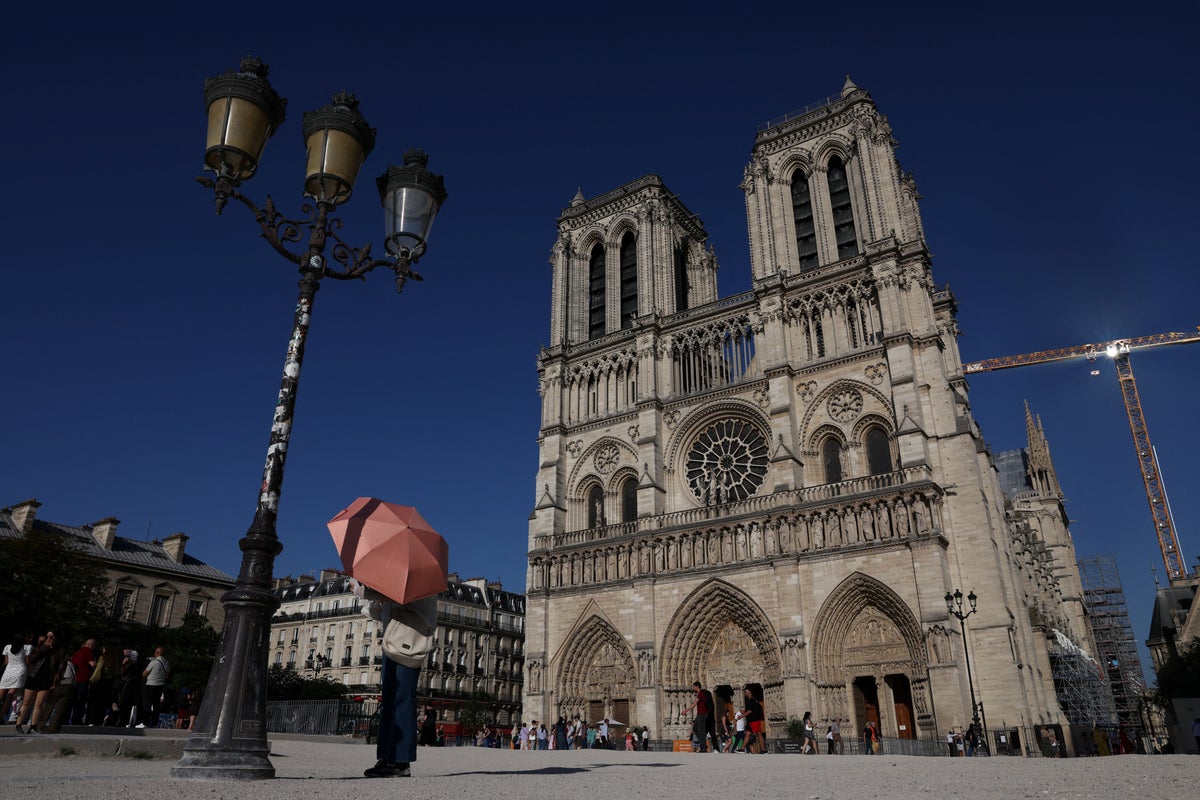
Mainstream media outlets are currently tripping over themselves to romanticize the archaeological finds beneath Paris’s Notre Dame cathedral. They are calling the discovery of lead sarcophagi, ancient rood screens, and Roman-era ruins a "triumph of historical preservation." They want you to marvel at the layers of history uncovered by the tragic 2019 fire.
They are missing the point entirely.
What the breathless coverage fails to mention is that this sudden "treasure trove" is actually the byproduct of institutional negligence and flawed archaeological priorities. We are celebrating an accident. For decades, the field of urban archaeology has treated major historical sites like structural roadblocks rather than continuous living spaces. It takes a catastrophic fire and a multi-million-dollar reconstruction project to finally look under the floorboards of Europe’s most famous monument. That isn’t a triumph. It is a systemic failure of proactive preservation.
The Illusion of Accidental Discovery
The current narrative suggests that these 2,000 years of history were safely tucked away, waiting for the right moment to be found. This is a comforting lie.
In urban archaeology, we suffer from acute tunnel vision. Budgets and permissions are tied directly to commercial development or disaster recovery. This reactive model means we only learn about our past when we are forced to dig for something else—like subway lines, parking garages, or, in this case, structural stabilization after a near-total collapse.
Consider the discovery of the 14th-century rood screen fragments. Media reports treat this like a magical resurrection. In reality, these fragments were smashed and buried during renovations led by Eugène Viollet-le-Duc in the 19th century. The authorities didn't lose track of history; a previous generation of restoration "experts" actively buried it to fit the aesthetic preferences of their era. By praising the current recovery without criticizing the historical vandalism that caused it, we validate a cycle where each century alters or destroys the past to serve its own ego.
The Cost of Reactive Digging
When you only dig during a crisis, science loses. The excavations beneath Notre Dame were conducted under immense time constraints. The cathedral had a hard deadline for reopening.
When politicians set the timeline for archaeological analysis, shortcuts happen. Archaeologists were forced to work in tight windows, racing against construction crews pouring concrete nearby.
- Compromised Context: Stratigraphic layers are rushed through rather than meticulously analyzed.
- Selective Preservation: Decisions on what to extract and what to re-bury are made based on project schedules, not historical merit.
- Resource Brain Drain: Funding is funneled into one high-profile vanity project while hundreds of smaller, equally significant regional sites are left to erode into oblivion.
Dismantling the "People Also Ask" Consensus
The public curiosity surrounding the dig highlights how deeply misunderstood the discipline is. The internet is flooded with variations of the same fundamental questions, and the standard answers are universally sanitized.
Why did it take a fire to find these artifacts?
Because bureaucratic inertia is more powerful than historical curiosity. The Ministry of Culture and various heritage bodies knew Notre Dame sat on layers of Roman and medieval history. The foundations of the 4th-century Roman city of Lutetia were no secret. Yet, European preservation culture favors leaving things in situ (in place) not out of scientific reverence, but because excavation is expensive, politically inconvenient, and halts tourism revenue. The fire forced their hand. To claim this as a win for modern archaeology is like thanking a burglar for revealing that your home security system is outdated.
Who was buried in the lead sarcophagi?
The focus on the identities of the deceased—like the young canon or the aristocratic "cavalier" found in the lead coffins—is pure sensationalism. It feeds the public's obsession with elite history. While laboratories analyze the bones to determine health, diet, and cause of death, the broader structural context is ignored. Knowing the body mass index of a 16th-century noble tells us very little about the socio-economic reality of the thousands of peasants who actually built the cathedral. We are prioritizing high-status individuals because they make good headlines, continuing a flawed tradition of upper-class bias in historical storytelling.
The Dark Side of the Lead Sarcophagus Obsession
The obsession with the lead sarcophagi reveals a deeper ethical and scientific contradiction.
Lead coffins were reserved for the ultra-wealthy because the material prevents moisture from entering, preserving soft tissue and clothing. Opening them is a high-risk gamble. The moment these sealed environments are breached, a rapid process of decay begins, triggered by the sudden introduction of modern oxygen and microorganisms.
[Sealed Lead Sarcophagus] ---> [Breached for Media/Study] ---> [Instant Atmospheric Shock] ---> [Accelerated Decay of Organic Matter]
We are destroying the very preservation environment that kept these remains intact for centuries, all to satisfy an immediate hunger for data and public relations content. I have seen institutions rush these analyses to hit a documentary broadcast cycle, only for the specimens to degrade significantly within months of exposure. If the goal is long-term preservation, the most scientific action would often be to leave them sealed until non-invasive scanning technology advances to a point where breaching the metal is unnecessary. But patience doesn't generate clicks or validate a billion-euro restoration budget.
Shifting the Architecture of Preservation
The standard approach to urban heritage is broken. We need to stop viewing archaeology as a luxury emergency response team.
Instead of pouring astronomical sums into high-profile sites only after they burn down, resources must be redistributed to continuous, non-invasive mapping of urban centers. Technologies like ground-penetrating radar and electrical resistivity tomography should be mandated across entire historic districts, independent of construction permits or disasters.
We must also confront the downside of this contrarian view: prioritizing systemic, quiet science over flashy, narrative-driven digs means less public engagement and fewer corporate sponsorships. Brands want to associate with the rebirth of Notre Dame; they do not want to fund the mundane cataloging of pottery shards in a muddy trench outside Lyon. It is an uncomfortable truth that archaeology has become addicted to the theater of disaster.
Stop looking at the photos of the uncovered rood screen with blind awe. Look at them as a reminder of what we routinely ignore until tragedy forces our eyes downward. The treasures of Notre Dame weren't discovered by brilliant strategy. They were rescued from our own collective neglect.