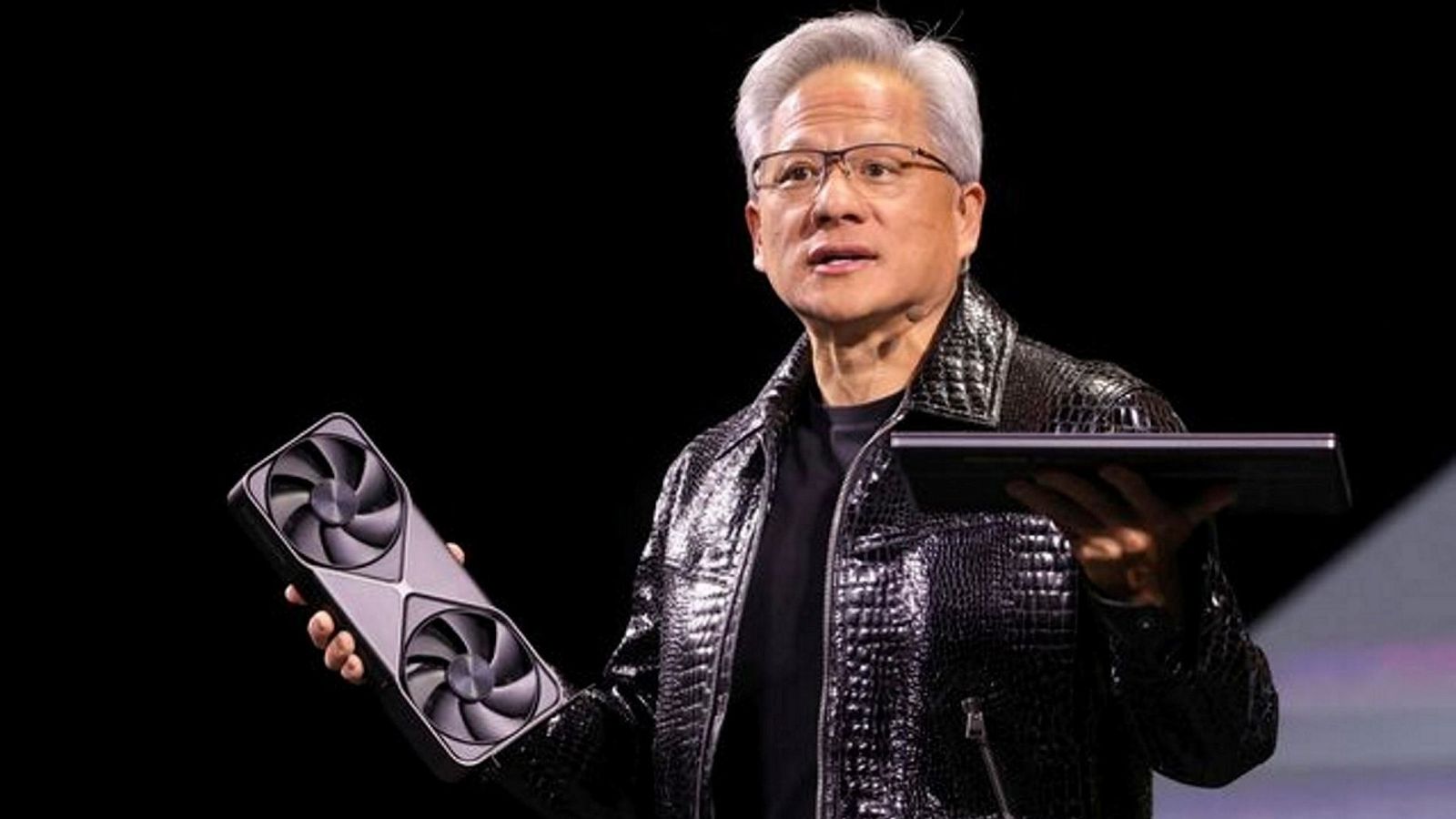
Nvidia faces a structural leadership anomaly that breaks conventional corporate governance models. Unlike standard Fortune 500 transitions where a board replaces an outgoing chief executive with an operational optimizer, replacing Jensen Huang requires decoupling a founder-architect from a flat, non-hierarchical organization that he designed specifically around his own cognitive bandwidth. As of late 2026, Huang remains firmly in control, having guided the company through its transition from a discrete graphics vendor into the primary infrastructure provider for global artificial intelligence compute. Yet the sheer scale of Nvidia’s market capitalization and its systemic importance to global supply chains make succession planning a critical risk-management exercise rather than a distant theoretical exercise.
To evaluate what happens after Huang, analysts must discard standard executive search metrics—such as prior public-company CEO tenure or traditional P&L management—and examine the specific organizational mechanics of Nvidia. The company operates without traditional business unit silos, utilizes a direct-report structure exceeding fifty executives, and relies on founder-led capital allocation across multi-year hardware and software cycles. Any successor will inherit not just a semiconductor company, but a full-stack computing monopoly whose moat depends on continuous architectural synchronization between silicon, networking, and the CUDA software ecosystem. For another perspective, consider: this related article.
The Architecture of Founder Dependence
Most technology companies evolve from founder-led product obsession to process-driven scale. Apple transitioned from Steve Jobs to Tim Cook by separating product vision from supply chain execution, allowing Cook to institutionalize operational excellence. Microsoft shifted from Bill Gates to Steve Ballmer and later Satya Nadella by reorganizing around distinct enterprise cloud and productivity divisions. Nvidia has deliberately resisted this structural maturation.
Under Huang, Nvidia operates as a functional organization rather than a divisional one. Engineering, marketing, sales, and operations are centralized, meaning no single executive below Huang owns an end-to-end profit-and-loss statement for data center, gaming, or automotive segments. This creates three specific structural dependencies that complicate succession: Related coverage on the subject has been provided by TechCrunch.
- The Span-of-Control Bottleneck: Huang maintains roughly 50 to 60 direct reports. He bypasses middle-management layers by conducting open-forum reviews where junior engineers and senior vice presidents receive identical feedback simultaneously. A traditional CEO entering this structure would either suffer immediate information overload or be forced to install a layer of divisional presidents, which would slow down the cross-stack product velocity that defines Nvidia’s competitive advantage.
- Simultaneous Hardware-Software Synchronization: Nvidia does not build chips and then write software for them; it co-designs silicon architectures (such as Hopper, Blackwell, and Rubin) alongside networking interconnects (NVLink, InfiniBand) and system-level software libraries years before market demand materializes. Huang acts as the single integrating node across these domains.
- Asymmetric Capital Allocation: Semiconductor manufacturing requires multi-billion-dollar commitments to foundry partners like TSMC and memory suppliers years ahead of revenue realization. Huang’s founder status insulates him from short-term institutional investor pressure when making binary bets on unproven architectures—a latitude rarely granted to an incoming, non-founder chief executive.
The Four Functional Archetypes for Succession
Because no single internal or external candidate possesses Huang’s exact combination of electrical engineering depth, software ecosystem intuition, and multi-decade institutional authority, the Nvidia board faces a strategic choice among four distinct leadership archetypes. Evaluating specific internal executives requires mapping them against these operational profiles rather than viewing them as direct clones of the founder.
1. The Systems Architect (Internal Technical Continuity)
This archetype prioritizes maintaining Nvidia’s cadence of annual architecture releases and protecting the CUDA software moat. A leader in this mold views the company as an integrated computing platform rather than a component supplier.
- Primary Candidate Profile: Ian Buck, Vice President of Hyperscale and High Performance Computing, represents the purest version of this archetype. Having led the creation and commercialization of CUDA since its inception, Buck understands the exact mechanism by which Nvidia locks in developer mindshare. Deepu Talla, Vice President of Embedded and Edge Computing, offers a similar technical profile with deeper exposure to physical AI, robotics, and automotive inference systems.
- Operational Advantage: Preserves engineering culture and prevents the fragmentation of the software stack. Hyperscalers and sovereign AI buyers retain confidence that the architectural roadmap will remain coherent.
- Structural Vulnerability: A purely technical successor risks under-indexing on geopolitical navigation, export control compliance, and complex supply-chain negotiations with foundry and packaging partners.
2. The Commercial Scaler (Go-To-Market and Ecosystem Dominance)
As Nvidia transitions from selling discrete GPUs to selling entire data center racks and sovereign AI factories, the primary constraint shifts from pure silicon design to enterprise deployment, channel management, and customer concentration risk.
- Primary Candidate Profile: Jay Puri, Executive Vice President of Worldwide Field Operations, has managed Nvidia’s global sales, partner ecosystem, and customer relationships for nearly two decades. Puri acts as the primary commercial interface between Nvidia and its largest cloud service provider customers, as well as enterprise buyers.
- Operational Advantage: Maximizes revenue capture across enterprise verticals and manages the delicate channel conflict between Nvidia and its OEM partners (such as Dell, HPE, and Supermicro) while navigating hyperscaler custom ASIC competition.
- Structural Vulnerability: Commercial leaders often struggle to make counter-intuitive, multi-year R&D bets that cannibalize existing high-margin product lines before competitors force their hand.
3. The Capital Allocator (Financial and Governance Discipline)
When a company reaches multi-trillion-dollar scale, regulatory scrutiny, antitrust litigation, and capital return policies become primary drivers of shareholder value. This archetype treats Nvidia as an institutional asset requiring rigorous margin defense and regulatory insulation.
- Primary Candidate Profile: Colette Kress, Executive Vice President and Chief Financial Officer, has been the architect of Nvidia’s financial communication, margin expansion narrative, and balance sheet management since 2013. Her deep familiarity with institutional investors and supply-chain purchase commitments provides unmatched stability.
- Operational Advantage: Delivers immediate credibility to Wall Street, manages gross margin fluctuations during architectural transitions, and enforces discipline on operating expenses and M&A activity.
- Structural Vulnerability: Financial executives rarely command the deep technical deference required to arbitrate architectural disputes among senior silicon and software fellows inside a flat engineering culture.
4. The External Turnaround or Scale Operator
Hiring an outside CEO from another semiconductor or enterprise software giant represents the highest-variance option. This path assumes that internal lieutenants are too specialized within Nvidia’s functional silos to manage the entire enterprise.
- Operational Reality: External candidates—whether drawn from rival chipmakers, cloud providers, or industrial conglomerates—face a severe cultural rejection risk. Nvidia’s elimination of traditional corporate hierarchies and formal status symbols means an outsider attempting to impose standard corporate governance would likely trigger an exodus of principal engineers to competitors like AMD, Broadcom, or custom silicon teams at Google and Amazon.
The Structural Fix: Splitting the Founder Role
The central flaw in mainstream succession analysis is the assumption that one individual must inherit all of Huang’s current responsibilities. In complex founder-led transitions, boards frequently mitigate single-point-of-failure risk by bifurcating the role into a Chief Executive Officer focused on commercial execution, supply chain, and regulatory defense, paired with a Chief Technology Officer or President of Platforms who controls R&D roadmaps and architectural integration.
If Nvidia executes an internal transition over the next three to five years, the highest-probability mechanism is a paired leadership structure:
- Commercial and Operational Lead: An executive like Jay Puri or Colette Kress assumes the CEO title to manage global supply commitments, hyperscaler contracts, and antitrust defense.
- Architectural and Product Lead: A technical veteran like Ian Buck or Jonah Alben (Senior Vice President of GPU Engineering) is elevated to President or Chief Architect, retaining final authority over silicon specifications and CUDA roadmap priorities.
This dual-track structure preserves the flat organizational model by preventing the installation of divisive business unit presidents, while ensuring that neither commercial execution nor engineering velocity degrades.
What Huang’s Post-CEO Trajectory Actually Looks Like
Speculation regarding Huang’s departure often misinterprets his incentives. Unlike founders who exit to pursue detached philanthropic foundations or passive venture capital roles, Huang’s identity and operational habits are entirely fused with Nvidia’s technological trajectory. Furthermore, his substantial equity stake aligns his personal net worth directly with the company's long-term architectural dominance.
When Huang eventually steps back from day-to-day operational management, the transition will follow the established blueprint of dominant technology founders (such as Bill Gates at Microsoft or Larry Page at Alphabet, though with higher technical engagement):
- Transition to Executive Chairman and Chief Architect: Rather than a clean break, Huang will likely shed administrative, investor-relations, and regulatory compliance duties first. By moving to an Executive Chairman role, he can remain the final arbiter on multi-year architectural bets and sovereign AI diplomacy while allowing a successor to manage quarterly execution.
- Focus on Physical AI and Sovereign Infrastructure: Huang has consistently framed accelerated computing as a multi-decade industrial revolution rather than a transient software cycle. His post-CEO focus will center on the next compute frontier: autonomous physical systems (robotics, industrial digital twins via Omniverse) and national AI infrastructure treaties, where his personal brand carries geopolitical weight that no successor can replicate.
Strategic Forecast and Governance Playbook
Investors and enterprise buyers evaluating Nvidia’s long-term durability should monitor specific structural indicators rather than relying on press releases or executive rumor mills. A sudden, unplanned departure remains a severe tail risk that would compress Nvidia’s valuation multiple due to uncertainty over architectural continuity. However, a managed transition will telegraph itself well in advance through identifiable organizational shifts:
- Watch for Layering in the Org Chart: The moment Nvidia introduces formal business-unit presidents or consolidates its 50-plus direct reports under three or four executive vice presidents, the board is actively preparing the company for a non-founder CEO.
- Track Earnings Call Airtime: Institutional boards groom successors in public before making formal announcements. An expansion of speaking roles during quarterly earnings calls or keynote presentations beyond Huang and Kress—specifically elevating technical leads like Ian Buck or commercial leads like Jay Puri—will signal the chosen internal tandem.
- Evaluate Capital Commitment Horizons: Nvidia’s long-term purchase obligations with foundry and memory suppliers serve as a proxy for leadership stability. Multi-year capacity reservations extending three to four years forward indicate that Huang remains actively locked into the architectural delivery cycle.
The ultimate test for Nvidia’s board is not finding a charismatic communicator to replace Jensen Huang’s signature leather jacket on stage. It is preserving a flat, high-velocity engineering machine that can design, manufacture, and deploy entire data center architectures faster than any competitor can build a single chip. Any succession plan that sacrifices that organizational speed for conventional corporate governance will erode the very moat it was designed to protect.