Every time a defense lawyer utters the word "contamination" in a high-profile murder trial, courtroom reporters sprint to their keyboards as if the prosecution's entire case just evaporated.
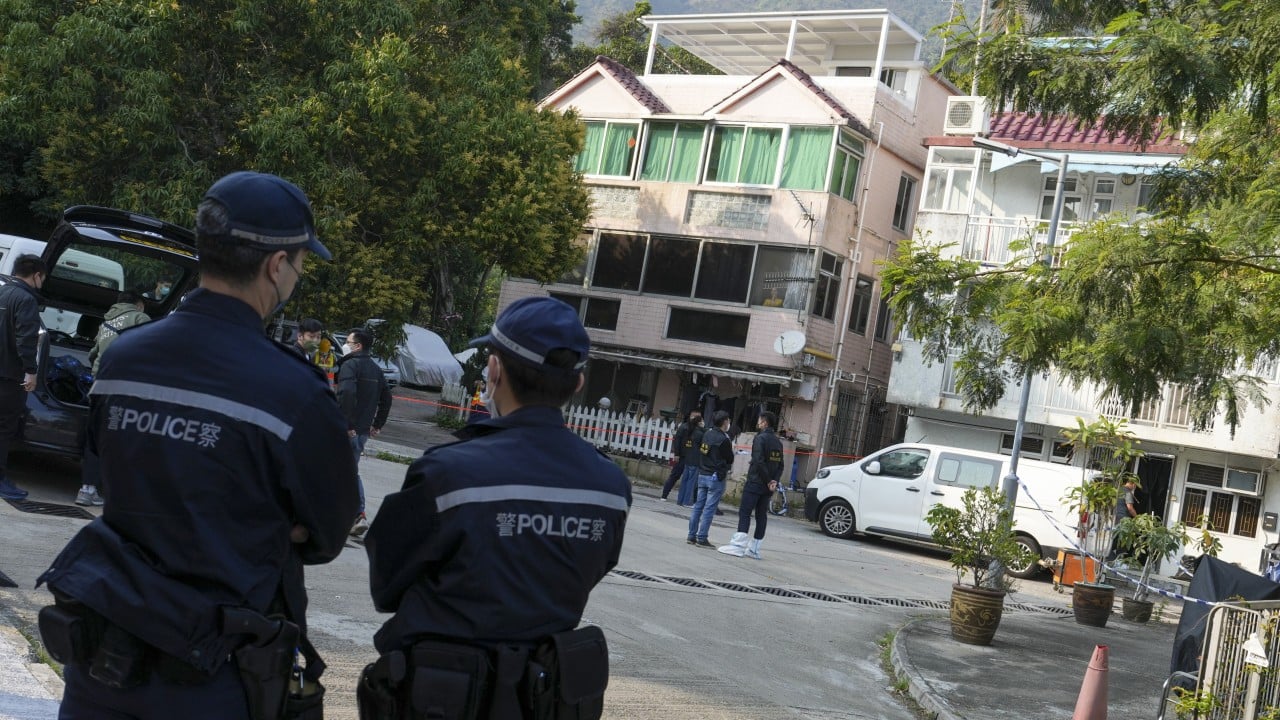
The coverage surrounding the Abby Choi murder trial in Hong Kong is following that exact, predictable script. Standard news reports fixate on a single, sensational courtroom exchange: a police officer testifying under cross-examination, flatly denying that forensic evidence at the Lung Mei Village flat was compromised. The media frames this as a binary tug-of-war. Either the scene was pristine, or the prosecution is doomed.
That framing is legally illiterate.
Having spent years dissecting forensic testimony and criminal procedure, I can tell you that a defense attorney yelling "contamination" is rarely trying to prove that evidence was fabricated. They are trying to trigger a cognitive trap in the minds of the jury and the public—a phenomenon known in legal psychology as the CSI Effect, inverted. Instead of expecting magical technology to solve the crime, observers expect sterile, laboratory-grade perfection from chaotic, real-world crime scenes. When they don't get it, they assume reasonable doubt.
In the Abby Choi case, focusing on whether an officer breached an imaginary bubble of absolute sterility completely misses how forensic integrity, chain of custody, and criminal prosecutions actually function in Hong Kong's High Court.
The Myth of the Sterile Crime Scene
Let's dismantle the foundational lie perpetuated by crime dramas and lazy court reporting: there is no such thing as an uncontaminated crime scene.
The moment a crime occurs, the environment is already compromised. Victims shed DNA; perpetrators leave trace evidence; environmental factors like humidity, temperature, and airflow immediately begin degrading biological samples. In a subtropical climate like Hong Kong's, biological degradation happens rapidly. By the time law enforcement breaches a door—especially in a case involving frantic missing-person searches turning into homicide investigations—the scene is a dynamic, messy biological soup.
First responders do not enter a flat in hermetically sealed hazmat suits before knowing what is inside. Their primary statutory duty is the preservation of life, not the preservation of trace DNA. If there is a 1% chance a missing person is alive behind a locked door, officers kick the door down. They walk across the floor. They check rooms. Every footstep technically alters the scene.
When a defense counsel grills an officer on cross-examination about movement within the Lung Mei Village flat, they are exploiting a semantic gap between scene alteration and evidentiary cross-contamination.
- Scene alteration is inevitable. It means the physical state of the room changed after the crime occurred.
- Cross-contamination is specific. It requires proving a mechanism by which DNA or trace material from Source A was physically transferred to Item B in a way that creates a false link to the accused.
A police officer walking through a hallway does not magically teleport a defendant's DNA onto a murder weapon. Unless the defense can establish a plausible vector of transfer—such as an officer handling a suspect's personal effects and then touching an unbagged exhibit without changing gloves—generalized accusations of "contamination" are courtroom theater.
What Actually Matters in the Lung Mei Village Flat
To understand why the officer's denial holds weight, you have to look at the sheer volume and nature of the forensic evidence recovered from the Tai Po village house.
In cases built on a single, microscopic touch-DNA sample—say, three skin cells lifted from a doorknob—a minor procedural slip in glove-changing protocol can be fatal to the prosecution. Touch DNA is notoriously mobile. Secondary and tertiary transfer are real, documented risks. Forensic scientists like Dr. Peter Gill, one of the pioneers of DNA profiling, have spent decades warning courts about the dangers of over-interpreting low-template DNA where transfer mechanisms are ambiguous.
The Abby Choi investigation is not a low-template touch-DNA case.
The forensic recovery at the Lung Mei Village property involved massive, macro-level physical evidence: heavy machinery, personal identification documents, clothing, and biological remains found inside containers. You do not "accidentally" cross-contaminate a room with industrial meat-processing equipment or human tissue through a sloppy boot print.
When police testify that the scene was not contaminated, they are speaking to the integrity of the exhibits, not the philosophical purity of the air in the room. In Hong Kong, the Government Laboratory handles the forensic analysis independently from the Hong Kong Police Force. Once an exhibit is seized, photographed in situ, sealed in a tamper-evident bag, and logged into the exhibit register, the police officer's job is done.
The real battleground isn't whether an officer stepped on the wrong tile. The real battleground is the chain of custody and packaging integrity.
If a biological sample is sealed in a plastic bag instead of a breathable paper bag, moisture builds up, bacteria proliferate, and the DNA degrades into an unreadable smear. Notice the difference: degradation destroys evidence, helping the defense; it does not fabricate evidence against the defendant. True contamination—the kind that frames an innocent person—requires a very specific chain of incompetence that rarely survives scrutiny under Hong Kong's strict common law rules of evidence.
The Defense Playbook Why They Ask Questions They Know the Answer To
If defense attorneys know that macro-level evidence cannot be conjured out of thin air by a footstep, why do they spend hours hammering police witnesses on scene protocols?
Because in a trial where the physical evidence is overwhelming, the defense cannot win on the facts. They have to win on process.
I have watched seasoned defense barristers dismantle prosecutions not by proving their client was elsewhere, but by convincing a jury that the investigators were careless. The strategy is psychological erosion. If the defense can get a police officer to admit to one minor procedural deviation—a delayed log entry, an unrecorded entry time, a moment of uncertainty about who opened a specific door—they use that admission as a lever to discredit the entire investigation.
The logic they sell to the jury goes like this: If the police were sloppy about logging who entered the flat at 2:00 PM, how can you trust them when they say they found Exhibit X in the kitchen?
This is why the officer's flat denial is so critical. When an officer refuses to concede loose, undefined allegations of "contamination," they deny the defense the soundbite needed to build that narrative of systemic sloppiness.
However, there is a massive trap here for prosecutors and police witnesses alike. Over-defensiveness on the stand can backfire spectacularly. When an officer claims a chaotic crime scene was handled with 100% textbook perfection, a skilled barrister will pull out the scene logs, find a three-minute discrepancy between two officers' notebooks, and paint the witness as either a liar or delusional.
The most credible witnesses in high-stakes trials are the ones who admit to minor, irrelevant human imperfections while holding the line on the integrity of the core exhibits. Denying contamination outright works only if the contemporaneous scene logs, body-worn camera footage, and exhibit-seizure photographs back up every single minute of the timeline.
Dismantling the Public's Wrong Questions
Whenever a major murder trial hits the headlines, public search queries and comment sections flood with the same predictable, flawed questions. Let's look at what people are actually asking—and why the premises are broken.
"If evidence is contaminated, does the whole case get thrown out?"
No. Outside of television scripts, evidence is rarely tossed out wholesale because of alleged contamination. Under Hong Kong's common law system—which mirrors the English legal tradition—contamination goes to the weight of the evidence, not its admissibility.
Unless the defense can prove deliberate police misconduct, tampering, or a breach so severe that admitting the evidence would render the trial fundamentally unfair, the judge lets the evidence in. The jury then decides how much weight to give it. If a DNA profile is mixed and the defense argues transfer, the jury simply evaluates whether the prosecution's expert or the defense's expert offers a more logical explanation for how that DNA got there.
"Why didn't police wait for forensic specialists before entering the flat?"
Because real life doesn't pause for a press release. Missing-person investigations operate on an escalating triage model. When officers arrive at a property linked to a missing person, they are executing a search and rescue operation until the exact moment they find evidence of a crime.
The second that threshold is crossed—the moment a suspicious item or biological trace is spotted—the protocol flips. Officers freeze the scene, withdraw, establish a cordon, and summon the Scene of Crime Officers (SOCO) and Government Laboratory chemists. Expecting patrol officers or detectives to treat every routine door-knock as a Level-4 biohazard containment zone is detached from operational reality.
"Doesn't an officer denying contamination just mean they are covering up mistakes?"
Assuming a denial equals a cover-up is pure cynicism masquerading as critical thinking. Police officers in major crimes units know that every single exhibit they seize will be scrutinized by independent chemists, defense-hired forensic experts, and senior barristers. Lying about scene integrity when there are timestamped photographs, CCTV logs, and multiple officers present is career suicide. A flat denial usually reflects a simple reality: the defense is using a broad, inflammatory buzzword to describe routine police work that had zero impact on the integrity of the evidence.
The Unspoken Vulnerability in High-Profile Forensics
If we stop obsessing over imaginary crime scene contamination, where does the actual vulnerability lie in high-profile prosecutions like the Abby Choi trial?
It lies in cognitive bias and tunnel vision during the interpretation phase—not the collection phase.
Dr. Itiel Dror, a cognitive neuroscientist who has extensively researched forensic decision-making, has repeatedly demonstrated that forensic examiners are human beings susceptible to contextual bias. When investigators brief laboratory technicians on the horrific details of a high-profile case, or when an examiner knows which sample belongs to the primary suspect, subconscious bias can creep into the interpretation of complex, degraded, or mixed DNA profiles.
Furthermore, the sheer pressure of public outrage in a case that dominates international headlines creates an institutional gravity toward swift, airtight narratives. In my experience, the greatest threat to a prosecution isn't a detective forgetting to sign a clipboard at a crime scene; it's investigators failing to aggressively test alternative hypotheses because they believe they already have their culprit.
In the Lung Mei Village flat, the defense doesn't need to prove the police planted evidence to create friction. They only need to probe whether the investigation's speed led to assumptions about who did what inside that room. In a multi-defendant case, physical presence at a scene and forensic links to an environment do not automatically prove specific intent or individual roles in a homicide. That is a legal distinction, not a forensic one.
Stop Reading Court Reports Like Thriller Novels
If you want to understand what is actually happening in the Abby Choi murder trial, stop treating every cross-examination exchange as a plot twist.
Cross-examination is a stress test. A defense lawyer's job is to push against every pillar of the prosecution's case—forensic, procedural, and testimonial—to see if anything cracks. Asking a police officer if they contaminated a crime scene is the legal equivalent of a boxer throwing a jab to test an opponent's guard. It is standard, expected, and largely procedural.
The real story isn't that an officer denied contaminating a flat. The real story is that the prosecution's case rests on a mountain of physical, documentary, and circumstantial evidence that exists entirely independent of minor scene-entry debates. Until the defense demonstrates an actual, physical mechanism by which key exhibits were compromised—not just theoretical possibilities—the word "contamination" remains exactly what it is in 90% of criminal trials: noise.